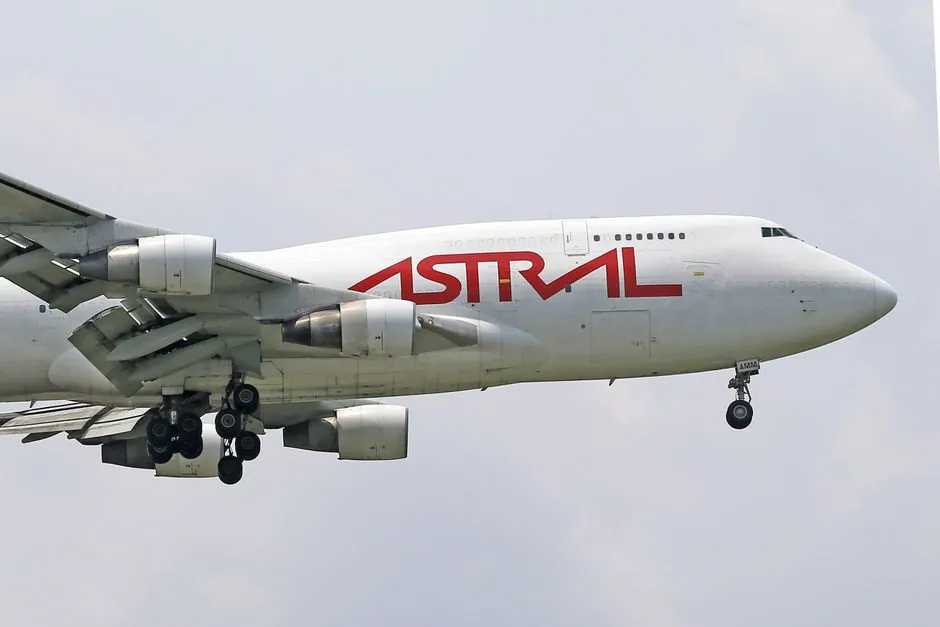
Air-cargo terminals handling unit load devices (ULDs), engine stands, and high-value rotables need storage that protects parts, frees floor space for tugs and dollies, and interfaces with cargo-handling software. A vertical lift module meets all three: two columns, an extractor that presents the right tray at an ergonomic window, and full enclosure against dust, FOD, and temperature swings common on apron-adjacent bays.
The global VLM market was valued at US$ 950.19 million in 2024 and is projected to reach US$ 1,766.08 million by 2031 at a 9.7% CAGR (2025-2031), with the addressable market sized at US$ 9,798.36 million over the same window [S3]. Dual-level delivery units held a 65.3% share of installed base in 2024, confirming that air-cargo buyers consistently want two access windows per unit [S3].
Air-Cargo Use Cases That Justify a VLM
Air-cargo terminals handle mixed SKUs: ULD pins and locks, fire bottles, galley carts, rotables, and HazMat packages. Storing them in standard shelving wastes 60-85% of cubic volume, and a VLM recovers most of it, an operations manager at Innomed reported storing "approximately 90% of our inventory" inside a Modula unit [S2]. For air-cargo, the same density gain applies to MRO stores where tray height varies from 50 mm (small fasteners) to over 1,500 mm (engine dollies), and a VLM bins each tray to its measured height.
Closed cabinets also reduce foreign-object debris (FOD) risk, a hard requirement on any bay adjacent to apron operations. The Insight Partners' 2024 segmentation lists automotive as the largest end-use at 32% share, but air-cargo MRO, e-commerce fulfillment, and pharma cold-chain all rely on the same dust-sealed, WMS-integrated VLM architecture [S3].
Spec Gates: Payload, Height, Delivery Type, Throughput
Tray payload is the first hard spec: standard VLM trays carry 500 kg with optional 1,000 kg heavy-duty configurations; air-cargo MRO often needs the 1,000 kg rating for engine support cradles. Unit height typically runs 3-12 m, and bay depth 1.2-3.2 m, so a single VLM can replace 7-10 standard pallet racks in a 30-50 sqm footprint. [S2]
Delivery type is the second gate. Single-level delivery fits low-throughput stores, but the Dual Level Delivery segment's 65.3% 2024 share [S3] reflects buyer preference for two independent access windows, critical for air-cargo where one picker is staging ULD locks while another restocks galley carts. Non-refrigerated storage is the fastest-growing storage type at a projected 10.7% CAGR (2025-2031), consistent with most air-cargo dry stores, but refrigerated VLMs are available for pharma cool-chain hand-offs [S3].
Throughput should be benchmarked at 60-120 tray presentations per hour per window with simultaneous picker access; a VLM with two windows can clear 200+ presentations/hour under continuous picking.
Software Integration: WMS, ERP, IoT, and the Air-Cargo Stack
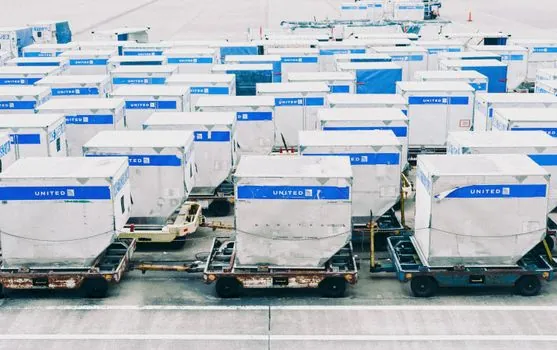
VLMs are not standalone, and the 2025-2031 forecast explicitly cites IoT-enabled predictive maintenance, real-time analytics, and cloud-based inventory control as growth drivers [S3]. For air-cargo, the VLM must expose APIs or OPC-UA endpoints to the terminal's WMS (e.g., Cargo Spot, Sabre Cargo, or proprietary ramp systems) so that pick lists driven by inbound ULD manifests can trigger tray presentations automatically.
Modula units ship with a controller that integrates with major WMS/ERP suites and offers optional cloud dashboards; the company reports 20,000+ clients worldwide and 25% year-over-year growth over the past five years [S2]. For air-cargo operators that already run a linear module for tote buffering, the VLM should be specified with a common fieldbus (PROFINET, EtherNet/IP) so a single PLC coordinates both.
Comparison: VLM vs. Alternatives in an Air-Cargo Bay
Against the four most common air-cargo storage options, the VLM scores on footprint and FOD protection but lags on capex: [S2]
1. Standard pallet racking: lowest capex, ~35-40% cubic utilization, no FOD seal, high pick-walk time.
2. Static shelving with mezzanine: medium capex, ~50% cubic use, no automation, two levels of ergonomic risk.
3. Horizontal carousels: medium capex, ~60% cubic use, good for small parts, poor for large rotables.
4. Vertical lift module: highest capex, up to 90% cubic use [S2], full enclosure, ergonomic delivery, WMS-native.
For air-cargo, the VLM is the right call when SKU count exceeds ~500, average pick frequency exceeds 20 lines/order, or FOD-classification of the stored items rules out open shelving. A buyer's map on spec-driven VLM selection breaks down the same decision tree in more detail and is worth reading before any RFQ.
Limitations: Capex, Integration, and Safety Compliance
High preliminary investment is the most cited barrier to VLM adoption in The Insight Partners' 2025 analysis, alongside integration complexity and the cost of meeting safety standards [S3]. For air-cargo operators, that translates into a payback window of 2-4 years, usually justified by reclaimed floor space (air-cargo bay rent in major hubs runs US$ 150-300/sqm/year), labor savings on pick-walks, and reduced rotable damage.
Safety compliance is non-negotiable. VLMs must meet applicable machinery safety standards for enclosed automated storage, including risk-assessment requirements under ISO 12100 for the lift, extractor, and access-door interlocks, and any regional electrical codes for the drive cabinet. Buyers should verify that the OEM's safety circuit meets PL d or higher per ISO 13849-1 and that the access-door interlock is category 3 or 4. Fire-suppression integration is increasingly specified for air-cargo bays, and the VLM controller should accept a fire-panel interlock to drop power on alarm.
Vendor Landscape: Who Builds What for Air-Cargo
The Insight Partners' 2024 vendor list names Daifuku, Kardex, Mecalux, Autocrib, SSI SCHAEFER, Bastian Solutions, Modula, Hänel, White Systems, and Weland Solutions as key players [S3]. For air-cargo, the practical shortlist is Kardex, Hänel, Modula, and SSI SCHAEFER, all four offer heavy-duty 1,000 kg tray options, dual-level delivery, and certified safety packages.
Modula states it has 35+ years of experience, 20,000+ clients worldwide, 70+ dealers in North America, and a 25% five-year growth rate [S2]. Its US-made units are sold through a North American dealer channel, an important consideration for air-cargo operators that need rapid on-site service within 2-4 hours, a service level one customer at Rotor Clip reported receiving [S2]. European operators tend to standardize on Kardex or Hänel for parts availability and CE/ATEX documentation.
Decision Criteria for an Air-Cargo RFQ
A spec-driven RFQ for an air-cargo VLM should list, in order: (1) tray payload (500 or 1,000 kg), (2) number of trays and measured unit height to ceiling, (3) single vs. dual-level delivery, (4) refrigerated vs. ambient, (5) WMS/ERP integration protocol (PROFINET, EtherNet/IP, OPC-UA, REST), (6) safety-circuit performance level per ISO 13849-1, (7) fire-panel interlock, and (8) service-level agreement with response time. [S3]
For a related read on the vertical lift module selection criteria, the buyer's map on spec gates applies the same eight-point checklist to general industrial use, with notes on tray-pitch, bay depth, and extractor speed that complement the air-cargo specifics above.
Two trackable signals for the next quarter: (1) the Asia Pacific VLM segment is forecast to grow at 12.3% CAGR through 2031, faster than the global 9.7% [S3], and air-cargo hubs in Singapore, Incheon, and Shanghai are the likely first adopters of refrigerated VLM variants for pharma cool-chain hand-offs. (2) The US VLM market is forecast at 9.4% CAGR, slightly below global, but US-made units like Modula's will continue to dominate federal-air-cargo and DoD MRO tenders through 2026 [S3].
Component reference pages worth checking: air pick.