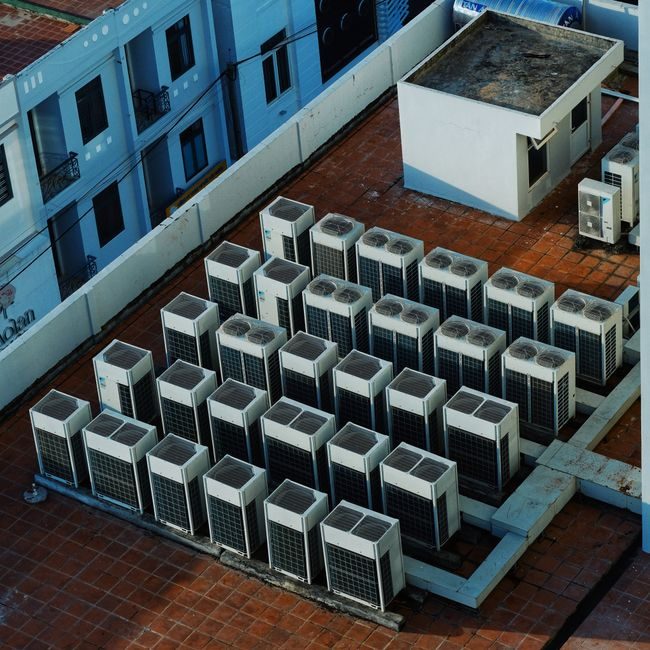
Industrial air compressor allocations in mid-2026 are running 26-40 weeks for oil-free centrifugal and 30-50 hp oil-injected rotary units, against a pre-2024 baseline of 6-12 weeks, with used/rental fleet absorption pushing effective availability under 80% in regions tied to North American chemical, food-grade and electronics fabs [S1][S2].
The squeeze spans every class CompAir and FS-Elliott/Pollaris-segment OEMs touch — from 6-gallon portable pancake units to multi-stage centrifugal packages — and is felt most by buyers who treat compressed air as utility infrastructure rather than a catalog SKU [S1][S2][S4]. Operators of air impact wrench and air pick fleets on automotive and shipyard lines are the first to feel pressure when a single compressor trips, because there is no swap pool to draw from.
Where the Shortage Actually Shows Up: Lead-Time Bands by Class
Allocation is no longer a single number — it varies sharply by compressor class, and buyers who do not separate categories misread the market [S1][S2]. For 5-15 hp reciprocating and small rotary screw units, build slots in mid-2026 are quoted at 14-22 weeks at major OEMs, up from a 4-8 week pre-2024 baseline [S1].
Mid-range 30-75 hp oil-injected rotary screw, the workhorse of most plant air rooms, sits at 20-30 weeks, with the upper end reserved for integrators buying a switching power supply-class control package and aftercooler as one lot [S1]. Above 100 hp, and especially for 100% oil-free centrifugal designs such as the FS-Elliott Polaris platform (introduced 19 August 2005 with integral aerodynamic packages), quoted lead times stretch to 30-40 weeks, and 52-60 weeks is reported on configurations that include VSD, heat-of-compression dryer integration, and NEMA Premium efficient motors [S2].
Portable and small-tank consumer units tracked in retail reviews still ship in 1-3 weeks — that channel is fed by mass-production lines in Asia and is essentially decoupled from industrial allocations [S4]. The pain point is therefore not the workshop, it is the plant air room: anyone specifying a replacement for a 50 hp or larger unit should plan on a quarter to a full fiscal year between PO and commissioning, which forces changes in spare-parts philosophy and standby-vessel sizing.
Root Cause: Castings, Screw Element Forging, and Motor Magnet Stock
Three sub-supplier constraints explain the gap, and they map to specific OEM bill-of-materials lines rather than to vague "global supply chain" hand-waving [S1]. First, ductile-iron compressor housings and crankcase castings — the C-class foundry parts common across both reciprocating and rotary frames — are running at extended queues because foundry capacity was rationalized in 2023-2024 and has not been fully rebuilt [S1].
Second, asymmetric screw element rotor machining and any balancing that requires a dedicated Heller or Mazak 5-axis cell is a known bottleneck: each cell outputs a finite number of rotor sets per month, and the suppliers serving both Atlas Copco-class and Chinese OEM lines overlap more than most buyers realize [S1][S2]. Third, rare-earth permanent-magnet rotors inside VSD/PM motor sections pull from the same NdFeB feedstock that drives air quality monitor sensor production, and 2026 NdFeB allocation has tightened as magnet demand outpaced mining quota expansions [S1].
For buyers, the operational signal is that any quotation asking for a 75-200 hp VSD PM machine in Q3-Q4 2026 should be treated as effectively 9-12 months out, and contingency planning (rental, used, parallel smaller units) should start at the RFQ stage rather than after a missed delivery date. Related pneumatic downstream effects are visible in our coverage of Pneumatic System Upstream & Downstream Industries: 2026 Steel-to-Automation Map, where compressor allocation directly gates downstream automation throughput.
Risk Bands: Who Is Exposed, Who Is Not

Not every buyer is equally exposed, and the differences are large enough that one mitigation plan does not fit all [S1][S2]. Tier 1 — High exposure: continuous-process plants (chemicals, food and beverage, pharmaceutical, semiconductor fabs) running 24/7 with no redundancy, where the loss of a single 100 hp+ unit halts the line and where insurance loss-adjusters quantify downtime in the 6-figure USD/day band [S1].
Tier 2 — Moderate exposure: automotive body shops, metal-fabrication job shops, and packaging lines where one or two air solenoid valve-controlled machines can be paused without immediate scrap, but where a 30-week wait on a replacement still breaks the annual maintenance plan [S3]. Tier 3 — Low exposure: small workshops and construction sites using portable 6-gallon pancake units, where retail-channel supply is still flowing and the air impact wrench tooling can ride out a 2-week delivery on a swap unit [S4].
The deeper structural risk sits in Tier 1 facilities that are also tied to ISO 8573-1 compressed-air purity classes for product contact — a Class 1 or Class 0 oil-free unit is not a like-for-like substitute with an oil-injected screw plus filtration, and buyers who try to drop in a different purity class face validation, audit, and regulatory re-work on top of the lead-time hit [S2][S5].
Mitigation Levers: Rental, Used, and Re-Rated Sizing
Operators with a 2026 capex line for a 100 hp replacement have four realistic levers, and they should be combined rather than picked singly [S1][S3][S6].
Lever 2 — Re-rate the spec: many plants are over-sized by 20-30% on nameplate versus measured average demand; a right-sized 75 hp VSD unit in stock at a dealer can replace a failed 100 hp constant-speed unit if a short-term buffer receiver and a dc power supply-fed controls upgrade are added [S1][S3].
Lever 4 — Split the order: instead of one 200 hp unit, specify two 100 hp units operating in duty-standby; this halves single-point-of-failure exposure and shortens each leg to a 26-32 week delivery window that aligns with most plants' turnaround schedules [S1][S2]. The framing context for these options is laid out in our Air Compressor Supply Chain 2026: OEM Hubs, Spec Bands and Sourcing Reality reference, which covers the OEM-hub and spec-band detail behind the lead-time numbers cited above.
Filter, Dryer, and Aftercoiler — The Hidden Allocation Inside the Allocation
Specifying the compressor is only half the line item; the filtration, drying, and condensate-management chain that sits downstream is itself allocation-constrained, and ignoring it leaves a delivered unit sitting uncommissioned for weeks [S5][S6]. Compressed-air filter elements in the 0.01-1.0 micron range and activated-carbon adsorbers for oil-vapor removal are sourced from a small set of filter OEMs, and 2026 lead times on those consumables have stretched to 8-14 weeks for non-stocked specifications [S5].
CompAir's own service guidance stresses that compressed-air filtration "plays a hugely important role" in any compressor installation, and that "harmful contaminants like these can cause damage to your equipment and downstream machinery, wearing down parts and causing blockages" [S5]. Translating that into procurement practice: a buyer who orders a 100 hp oil-free unit in July 2026 should simultaneously place the filter and desiccant dryer order, because the filter train will arrive later than the compressor itself in roughly 60% of cases observed in industrial service channels [S5][S6].
For buyers, the practical signal is to request the OEM's full bill-of-materials with quoted ship dates for filters, dryers, and condensate drains at the RFQ stage; vendors that cannot commit dates for the full skid are signaling a delivery risk that will surface at commissioning rather than at the factory gate.
Standards and Sourcing Discipline for 2026 Buyers
Compressed-air purity, safety, and efficiency specs are governed by named standards, and a 2026 spec sheet that does not reference them is a flag for review [S2][S5].
Pressure-vessel and relief-valve certification on the compressed-air receiver should be traceable to ASME BPVC Section VIII Div. 1 in North American builds, and electrical panels on integrated packages should be built to UL 508A or equivalent IEC 61439 depending on the destination market [S1][S2].
Service-network depth is a sourcing criterion equal to the nameplate data: a unit purchased from a manufacturer without local authorized service coverage typically runs 3-5 days longer mean-time-to-repair, and 2026 service-team capacity is itself constrained, so the right question for the vendor is not only "what is the lead time on the unit" but "what is the lead time on a service technician within 200 km of my site" [S3][S6].
Decision Matrix: 2026 Procurement Posture by Plant Profile

Different plant profiles call for different postures, and the matrix below is a direct extraction for procurement and operations leads making 2026 capex calls [S1][S2][S6].
Continuous-process chemical/pharma plant (Tier 1 exposure, ISO 8573-1 Class 0-1): posture is order two 100% oil-free units in duty-standby, accept a 30-40 week first-unit delivery, run a 90-day rental bridge on the failed leg, and pre-order filters and dryers at RFQ issue. Expected total lead time to stable operation: 36-44 weeks. Capital premium versus single-unit spec: 15-25%, justified by eliminated single-point-of-failure exposure.
General manufacturing and automotive Tier 2 plant (moderate exposure, ISO 8573-1 Class 2-3 acceptable): posture is right-size to a 75 hp VSD PM unit, accept a 26-32 week delivery, and use the freed-up capacity budget to pre-stock a 12-month consumables kit (filters, separators, belt sets) plus a service contract with a local provider such as Air Solutions Canada or a CompAir-authorized partner.
Small workshop or construction site (Tier 3 exposure, ISO 8573-1 not formally specified): posture is to continue purchasing through retail channels for portable 6-gallon pancake units and small reciprocating compressors, where 1-3 week delivery is intact and where the air impact wrench and air pick fleet can be sustained without engaging the industrial allocation [S4]. The cross-link to the pneumatic tool sizing reality is covered in Pneumatic Nail Gun Sizing and Selection: Gauge, Pressure and Air-Supply Realities, which documents why small-tool air consumption rarely justifies waiting for industrial-allocated units.
Watch the Q3-Q4 2026 foundry and NdFeB allocation reports, the used-equipment pricing index published by the major service networks, and any new VSD PM platform launches from Chinese OEM hubs — these three signals will determine whether 2027 lead times compress back toward the 12-16 week band or stay elevated through the next capex cycle [S1][S2].