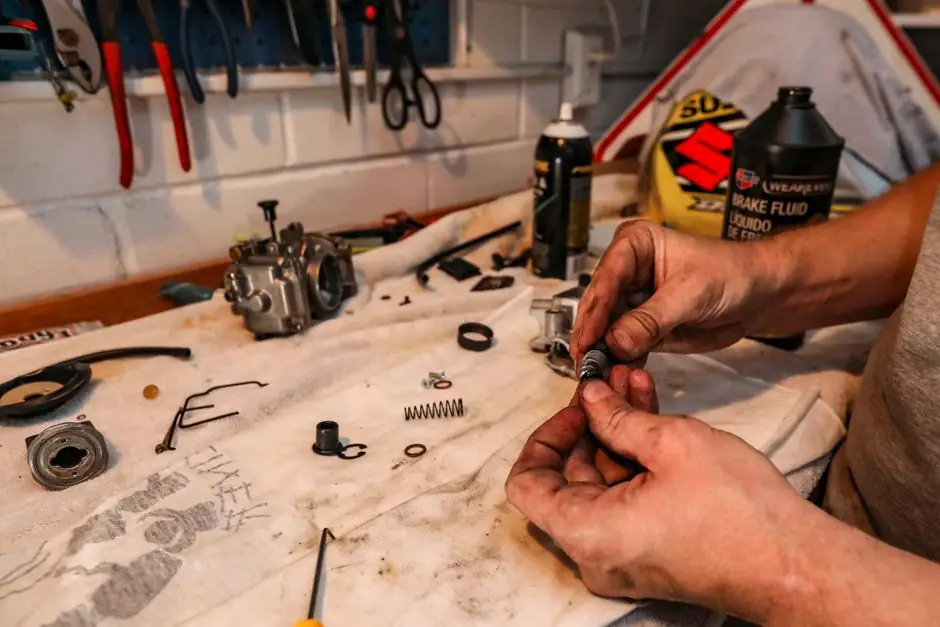
An air pick is a handheld pneumatic hammer used for chipping concrete, scaling boiler tubes, descaling ship hulls, and breaking road surfaces; its consumable footprint is small but absolute, dominated by filter elements, lubricant, seals, and the working tool itself [S1].
Generic spare parts catalogs for piston and screw compressors carry the same six SKU families that an air pick relies on: pressure switch, safety valve, fittings, belts, oil and lubricants, and pressure gauges [S1]. Sizing those SKUs to a pick-rated compressor (typically 2-4 HP, 4-6 CFM at 90 psi) keeps the consumable bill in line with the tool's duty cycle.
Filter, regulator, and FRL consumables
Compressor-fed picks fail most often from contaminated air, so the FRL (filter-regulator-lubricator) upstream of the tool is the first consumable to stock: a 5 micron particulate element and a 0.1 micron coalescing element are the two working grades, with element swap at 1,000-2,000 operating hours under shop conditions [S1]. ABAC's generic-spare catalog puts pressure switches, safety valves, fittings, and pressure gauges in the same cross-compatibility group, which is why an air-pick service kit typically bundles them [S1].
Regulator diaphragms and gauge faces are the next wear items: nitrile diaphragms harden above 80 degrees C inlet, and a 0-160 psi glycerin-filled gauge is the most common replacement for picks that see vibration. For plants running multiple picks, a parts list built from the ABAC six-SKU template covers 80% of the FRL bench stock [S1].
Lubricants, seals, and the inline oiler
Picks need oil-mist lubrication, delivered either through an inline lubricator (1-2 drops per minute at 90 psi) or a pre-oiled airline. ABAC's lubricant line is split between piston oil (ISO VG 100, non-detergent) and screw compressor oil (ISO VG 46 synthetic) [S1]. The pick itself takes the piston grade; using screw oil starves the rotor vane and causes rapid bushing wear.
Seal kits for the pick cylinder, valve, and throttle handle are grouped by chassis size (standard 0.580 in hex or large 0.680 in round shank). A full seal kit runs roughly 30-50 USD and includes O-rings (NBR 70 durometer), gaskets, and a valve spring. Atlas Copco's compressor parts portal groups oils, filters, and seals into a single service-parts tree, a model that translates well to fleet picks [S5].
Wear parts: pistons, valve blocks, and chisels
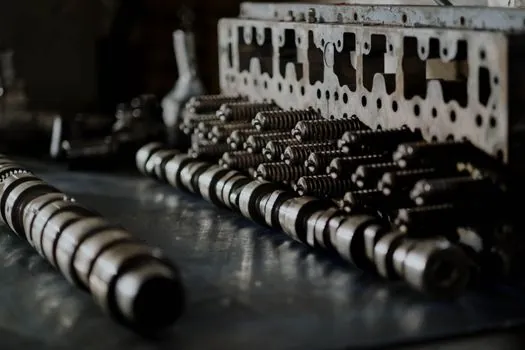
The chisel shank is the true consumable on a working pick: a 0.580 in hex or 0.680 in round shank blank is forged from 18-25 HRC chrome-moly, with carbide-tip versions rated for 10x the wear life on abrasive concrete. Valve blocks, pistons, and bumpers follow on a 500-800 hour rebuild cycle in production service [S5].
For abrasive wear parts on construction and demolition tooling, Epiroc's consumables and wear-parts program documents a clear pattern: maximum output and low lifecycle cost come from using matched OEM wear parts rather than generic blanks [S7]. The same logic applies to pick chisels: a non-OEM shank rarely matches the collet tolerance and chews the retainer.
What to stock: critical, consumable, and 'unobtainium'
A practical pick stocking list splits into three tiers, mirroring the Airstream spares taxonomy of cheap-and-essential, consumables, and hard-to-source [S3]. For an air pick, that translates to: (1) critical, cheap, small: cotter pins, retainer springs, throttle handle screws, 0.580 in retaining balls; (2) consumables: lubricant, filter elements, O-rings, gauge faces, chisel shanks; (3) hard-to-source: matched valve blocks, OEM pistons, and specialty shanks with long lead times [S3].
A useful bench-stock rule for a 10-pick fleet is: 2 complete seal kits, 4 chisel shanks per pick, 1 spare valve block per 3 picks, 1 liter of piston oil per pick per month of single-shift use, and 1 spare inline lubricator per 5 picks. That loadout supports 90% of unscheduled downtime without a parts run [S3].
Selection criteria: OEM vs generic, and the cross-compatibility trap
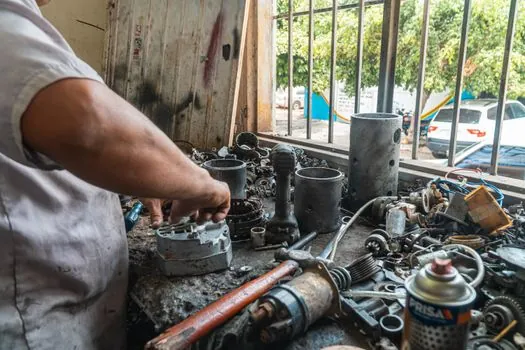
Cross-brand pick parts (Chicago Pneumatic, Atlas Copco, ABAC, Toku, Yoshida) share most consumable dimensions, but chassis and valve geometry differ. Atlas Copco's online shop splits air-compressor service parts into 'Air Compressors', 'Air Treatment', and 'Service and Parts' sub-trees, so buyers can map a pick-side spare to the right compressor-side kit [S5]. ABAC's catalog does the same at the SKU level, with 'Piston compressor parts' and 'Screw Compressor Parts' carrying their own oil and lubricant sublines [S1].
For procurement, the question is not OEM versus generic but matching: pressure switches are interchangeable across ABAC's piston and screw lines, but safety-valve set pressures are model-specific, and fitting thread standards shift between BSP and NPT by region [S1]. Chicago Pneumatic's Parts Online platform is the working example of how to filter by serial number first, then by category, to avoid that cross-compatibility trap [S2].
Failure modes and field limits
The most common pick failure modes are: loss of impact (worn valve or low air pressure), oil in the exhaust (seal failure or wrong lubricant grade), and stuck chisel (shank wear or retainer failure). A pick run above 90 psi or under-lubricated will burn the valve seat in 200-400 hours; one run at the correct 90 psi with 1-2 dpm oil runs 1,000+ hours between valve jobs [S5].
Atlas Copco's parts portal flags oil-free compressors, silicone-free filtration, and HD/TD water-cooled aftercoolers as separate wear profiles, a reminder that a pick used in a cleanroom or a paint line needs a different filter spec than one on a road crew [S5]. Oerlikon Metco's thermal-spray wear-parts list (nozzles, electrodes, powder injectors, barrels, air caps, wire guides, gun bodies) shows the same pattern of small, fast-moving wear items grouped by consumable class [S8].
Standards, sourcing, and what to track

Air-pick consumables sit under pneumatic-tool general standards (ISO 11148-4 for percussive tools) and the compressor-side standards that govern the supply air: ISO 8573-1 air quality classes for filter selection, and ASME B19.3 for shop safety. The exact standard revision dates and any pending 2026 changes should be confirmed against the current ISO catalog before a fleet re-spec [S1][S5].
For a pneumatic cylinder installation shop, the same filter-and-lubricant discipline applies, and picks fit naturally into that maintenance loop. Trackable signals for the next review cycle: ABAC's generic-spare catalog reissue date, Atlas Copco's parts-portal refresh on 8 September 2026 [S5], and Chicago Pneumatic's Parts Online portal updates dated 2 September 2026 [S2].
Component reference pages worth checking: air pick, linear guide, and crossed roller guide.