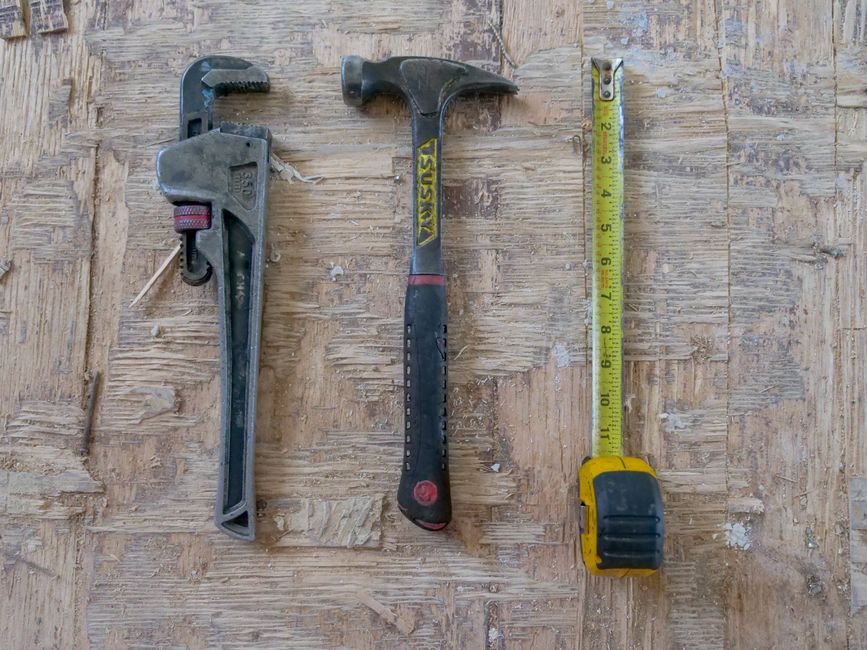
An air pick is a percussive chipping tool tuned for material removal, while an air impact wrench is a torque-storage tool tuned for tightening or breaking fasteners; choosing the wrong one either wastes air, wrecks a thread, or fails the bolt on a 1" drive stud.
Both tools are pneumatically driven, both look "gun-shaped" on the line, and both appear in the same Pneumatic Hand Tools taxonomy on CENS [S5][S6]. Under the housing they are different mechanisms: a reciprocating piston at 1,500–3,500 BPM versus a 1" twin-hammer impact mechanism rated to roughly 1,500–2,500 ft-lb of breakaway torque in the heavy-duty class [S2]. The 2026 sourcing map is dominated by Guangdong and Zhejiang factories (Sumlin Industrial, Zhejiang East Pneumatic) [S1][S4] and Italian professional-series specialists like Fervi [S3].
Mechanism & Output: Percussive BPM vs Stored Torque
An air pick converts compressed air into a linear hammer blow — a piston reciprocates inside the barrel and strikes a chisel shank. Output is measured in blows per minute, with 1,500–3,500 BPM being the common operating window for concrete and weld-slag descaling, plus a per-blow impact energy in joules that scales with bore and stroke. There is no torque in the rotary sense; the tool only does axial chipping work. [S1]
An air impact wrench stores energy in a rotating hammer mechanism and releases it through an anvil. The 1" Heavy Duty Twin Hammer Mechanism class shown on CENS is engineered for heavy-vehicle and mining lug work [S2]. Output is rated as breakaway / fastening torque in ft-lb or N·m, with the 1" drive square sized to M33+ socket retention. For the engineering cut, see the drive, torque, air-budget and duty-cycle gates reference when sizing an impact wrench, and treat the air pick selection as a separate BPM/impact-energy problem.
Specification Comparison: Air Pick vs Air Impact Wrench
The two tools fail the same selection checklist on opposite axes. A spec frame that a process engineer can apply in five minutes: [S2]
Air consumption: air picks typically sit in the 4–8 CFM range at 90 PSI because each blow only strokes a small piston, while 1" heavy-duty air impact wrenches can pull 10–25 CFM under stall because the twin-hammer assembly has to keep reloading mass inertia on every impact [S2][S5]. This is the single biggest source of "I bought the wrong tool" complaints — a 7-HP shop compressor will run a pick all day and choke a 1" wrench inside two minutes.
Output metric: blows per minute (1,500–3,500 BPM) and per-blow energy in joules for the pick; breakaway torque in ft-lb (1,500–2,500 ft-lb in the 1" heavy-duty class) and free speed in RPM for the impact wrench [S2].
Drive interface: hex or round shank chisel retainer (typically 0.580" / 0.401" / 0.680" shank families) for the pick; square drive anvil (1", 3/4", 1/2", 3/8") for the impact wrench, with 1" reserved for the highest torque tier [S2].
Hand-arm vibration: picks generate sustained high-amplitude axial vibration and are the worst offenders in the pneumatic fleet for HAVS exposure; impact wrenches deliver short, intermittent torsional shocks. For a fleet policy this means different daily-trigger-time caps.
Where the Air Pick Wins, Where It Doesn't
Specify the air pick when the work is material removal: concrete spalling, weld slag, river-rock scale on castings, frozen nuts where the fastener is already broken and you are excavating around it, or surface texturing on stone. The reciprocating action does not transmit torque back to the operator's wrist, so on a frozen M36 stud it is the wrong tool — the operator ends up wedging the chisel and bending shanks. [S3]
Specify the 1" twin-hammer air impact wrench when the work is fastener-driven: heavy-truck wheel lugs, mining-tyre locknuts, structural steel erection, M30+ anchor bolts, and rail-road tie-downs. The Fervi AP04 composite-housing professional series illustrates the lighter end of the market with one-hand operating lever and reversible rotation [S3]; the Sumlin and Zhejiang East Pneumatic lines on Alibaba cover the industrial / OEM supply tier with 100-piece minimum orders and supply abilities of tens of thousands per month [S1][S4]. The price-and-sourcing tier mapping for this class of tool is laid out in the air impact wrench price and cost guide.
Duty-Cycle, Air Budget and Safety Boundaries
Compressor pairing is the unglamorous half of the spec. A 1" heavy-duty twin-hammer impact wrench needs an air receiver sized so the pressure drop during a stall does not fall below roughly 80–90 PSI at the tool inlet — otherwise the hammer mechanism re-strokes and the operator gets a soft hit when they need a hard one. Sumlin's published 60,000-piece-per-month capacity is a signal of the OEM scale at which these wrenches are produced in Guangdong [S1].
For the air pick, the safety boundary is hearing and HAVS. Sustained 1,500–3,500 BPM at the operator's hands drives a glove-and-anti-vibration handle policy, plus ear defenders above 85 dBA. The tool is also unforgiving on brittle substrates — concrete will spall on a hidden rebar and throw a chip back at the operator's face-mask seal. Never retrofit a chisel retainer to take a socket; the impact wrench is the only tool in scope for torque-controlled tightening or loosening, and the air pick is the only tool in scope for material removal where torque is not the deliverable.
2026 Sourcing Map and Decision Shortcut

The 2026 sourcing map clusters in three regions: Guangdong mass-market OEM (Sumlin Industrial, minimum 100 pieces, 60,000 pieces-per-month supply ability, L/C / T/T / PayPal terms) [S1]; Zhejiang mid-tier OEM and export (Zhejiang East Pneumatic and neighbours on the same Alibaba industrial cluster) [S4]; and Italian / European professional tier (Fervi AP04) [S3]. CENS product pages cover the 1" Heavy Duty Twin Hammer and standard 1" impact classes in parallel, and a buyer can compare 2-piece / 22.8 kg / 24.8 kg / 1.64 ft³ export-pack SKUs against composite-housing SKUs on the same day [S5][S2][S3].
Decision shortcut: if the deliverable is a tightened or loosened fastener with a known torque class, the air impact wrench is the only correct tool and a 1" twin-hammer is the only sensible step at 1,500+ ft-lb [S2]. If the deliverable is concrete, slag, or scale removal, the air pick is the only correct tool and the air impact wrench will simply spin the chisel retainer and produce nothing useful. For adjacent problems where neither tool fits — material handling automation, for example — the AMR vs stacker crane spec frame and the pallet rack vs AS/RS trade-off sit a step further upstream and are worth a look only when the question is no longer about the tool in the operator's hand.
For component-level specifications, see impact drill.