
Air solenoid valves are 2-way or 3-way flow control units that open or close when an electromagnetic coil is energized, moving a plunger or pivoted armature against a return spring [S3].
The selection gate is duty-first: match port count, actuation mode, pressure range, Cv/orifice, coil voltage and seal material to the air line, not the other way round. Getting any one of those wrong, particularly pressure rating or seal compatibility, produces a valve that either leaks at rest or never shifts under load.
Port count and function: 2/2, 3/2, 5/2, 5/3
2/2-way valves have one inlet and one outlet, normally closed (NC) or normally open (NO), and are the standard on/off block for a single air line or a single-acting cylinder [S3]. 3/2-way valves add a third port (usually an exhaust), which lets the valve dump downstream air to atmosphere when de-energized, the classic pattern for pilot-air control of a larger valve or for a single-acting actuator.
5/2 and 5/3-way valves are specified for double-acting cylinders: 5/2 supplies pressure to one side while exhausting the other, and 5/3 adds a centre position (closed-centre, exhaust-centre, or pressure-centre) for mid-stroke hold. RS's solenoid valve guide treats the way-count as the primary classification, alongside direct vs piloted actuation and NC vs NO [S4]. When in doubt, the Cv vs pressure graph on the manufacturer's datasheet will tell you if a 2/2 has enough flow, not the catalogue summary line.
Direct-acting vs internally piloted vs externally piloted
Direct-acting valves move the plunger and the seat seal together; the electromagnetic force alone overcomes the spring and the fluid pressure [S3]. They handle low flow at high differential pressure, and are the right pick for clean dry air below roughly 1.0 MPa (10 bar) where a piloted valve would be oversized.
Internally piloted valves use a small pilot orifice to build pressure on top of a diaphragm or piston, which then drives the main seat open once the coil is energized. The trade-off is that a minimum inlet pressure (commonly 0.2-0.3 MPa) is required to seat the pilot, and contaminated air will clog the pilot orifice. Externally piloted valves take their pilot signal from an independent supply, which is the pattern used for vacuum service or when the line pressure is too low or too erratic to drive an internal pilot [S1]. For shop-air duty (0.6-0.8 MPa, ISO 8573-1 Class 2-3-1 air), internally piloted 3/2 or 5/2 valves are the workhorse.
Pressure, temperature, and media compatibility

Three limits are non-negotiable: maximum allowable pressure (often stamped on the body), minimum operating pressure for piloted valves, and media/seal compatibility [S3][S4]. Standard NBR (nitrile) seals cover roughly -10 to 80 degC with petroleum and water-based lubricants; FKM (Viton-class) extends to about 150 degC and resists a wider chemical set; EPDM is required for hot water, steam condensate, and some synthetic compressor oils.
For air service, the failure modes are well known: oil-saturated compressor output swells NBR over time, and water-laden air freezes in sub-zero lines, so the seal selection, the dryer spec, and the upstream filtration all have to agree. A valve on a cylinder that cycles at 60 cpm in 1.0 MPa dry air will not survive long on a 1.0 MPa wet line, no matter how good the coil is. The solenoid valve encyclopedia entry covers the same pressure/seal matrix in spec-sheet form.
Coil voltage, duty cycle, and electrical drive
Standard industrial coils run on 24 VDC, 110 VAC, 220 VAC, or 240 VAC at 50/60 Hz; DC coils are quieter, AC coils draw higher inrush current. Continuous-duty coils are the default; latching/bi-stable coils hold position with zero holding power and are picked for battery or solar-powered systems where the coil would otherwise drain the supply. [S2]
For a 12 VDC valve driving 700 mA continuous and roughly 1.2 A inrush, the standard driver pattern is a logic-level MOSFET (IRF540-class) plus a 1N4007 flyback diode across the coil, never a direct GPIO pin [S2]. The same diode rule applies to mains coils: never omit the suppressor, and size the contactor or triac for the inrush, not the seal-in current. Coil insulation class (B, F, H) sets the upper temperature limit on the winding, which matters when the valve is mounted on a hot cylinder or inside an enclosure.
Criteria-based comparison of common options
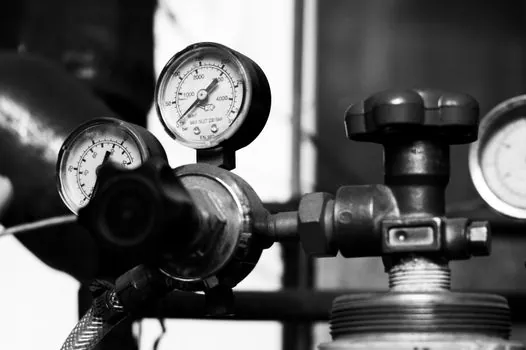
Across the four realistic choices for a shop-air or OEM pneumatic panel, the trade-off matrix is roughly: direct-acting 2/2 NC (lowest cost, low flow, no minimum pressure); direct-acting 3/2 (single-acting cylinder pilot, no minimum pressure); internally piloted 5/2 (double-acting cylinder, needs ~0.2 MPa); internally piloted 5/3 closed-centre (mid-stroke hold, slightly higher cost, needs same minimum pressure). [S2]
A direct-acting 2/2 NC valve typically covers Cv in the 0.05-0.5 range with a 1/8 to 1/4 inch port, while a piloted 5/2 in 1/4 to 1/2 inch porting moves Cv above 1.0 [S4]. Material-wise, brass-bodied valves are the cost default for general plant air; 316 stainless is specified for washdown, food-grade lines, or mildly corrosive exhaust. Aluminium-bodied NAMUR-pattern valves are common on actuator-mounted skids. For very low cost, low-cycle duty (small DIY pneumatics, vending, gas analysers), the unbranded 2-way valves on consumer channels (priced in single-digit USD per piece) cover the basic 12 VDC, 0-0.8 MPa range, but they should not be specified for continuous industrial cycling.
Who should NOT pick a direct-acting valve
Direct-acting 2/2 and 3/2 valves are the wrong pick in three common situations: (1) continuous high-cycle duty above roughly 30-60 cpm, where the solenoid's mechanical work overheats the coil, (2) systems with unfiltered or humid air, where a 0.5 mm pilot orifice will clog long before the seat fails, and (3) double-acting cylinder control, where a 2/2 or 3/2 cannot exhaust the unused side. In all three, the right call is an internally piloted 5/2 or 5/3 valve with a 5 micron pre-filter and a properly sized solenoid coil for the duty cycle. [S2]
Sourcing, standards, and the 2026 procurement signal
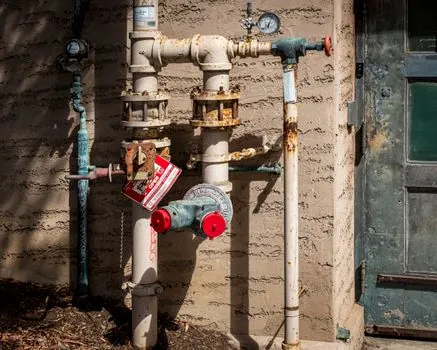
On the sourcing side, federal-level solicitations for industrial solenoid valves are surfacing while the general commercial chatter stays thin, which is a useful pattern to watch for buyers timing a Q3/Q4 bid [S7]. For vacuum-service variants, the same port-and-pressure logic applies, with a separate low-pressure pilot-orifice gate [S1]. Reference specifications to lock down before order: working pressure (max and min), Cv at the operating differential, port size and thread standard (NPT, BSPP, BSPT, G, Rc), coil voltage and frequency, duty cycle (continuous vs intermittent), seal material, and the relevant conformity marks for the installation region.
For an air solenoid valve on a production line, the next node to verify is the upstream air quality (ISO 8573-1 class) and the actuator's cycle rate. If those two are wrong, no valve selection will save the installation; if those two are right, the spec above will shortlist a part on the first pass.
See also our earlier report, Air Pick Selection Gates for Electrical Installation Work.