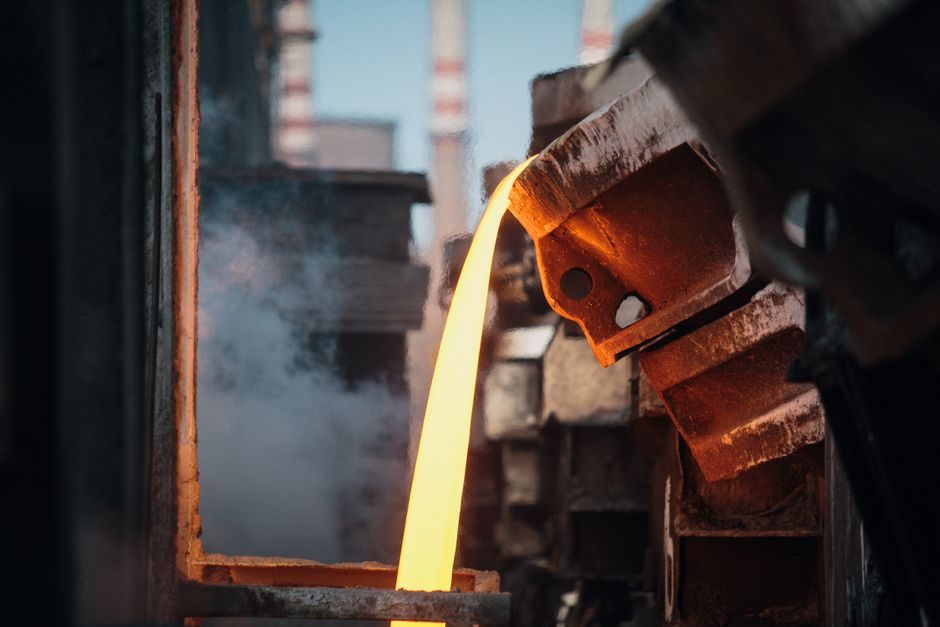
Chinese alloy-steel suppliers listed on Made-in-China, Okorder and HiSupplier posted 1-ton minimum orders for forged bar in the US$800-2,100/t range, with grades cross-listed to AISI, GB, SAE, EN, BS, DIN and JIS [S6][S7].
The supply base is concentrated in five industrial provinces — Tianjin, Hubei, Hunan, Sichuan and Zhejiang (Ningbo) — where mill-direct exporters and audited trading companies handle AISI 4140/ SCM435/ 1.2361/ 1.2379/ 1.2344 mould and engineering grades [S1][S2][S4][S5][S7].
Grade Catalogue and Cross-Standard Equivalents
Alloy steel is defined as carbon steel whose characteristics are determined by the addition of other elements beyond carbon, with the common alloying additions being Cr, Ni, Mo, V, W and Mn at combined levels typically above 1-2 wt% [S3].
Sichuan Liaofu Special Steel lists mould grades 1.2379 (D2), 1.2080, 1.2344 (H13), 1.2343, 1.2606, 1.2363 and 1.2361, covering cold-work, hot-work and plastic-mould tool-steel applications [S5]. Forged alloy bar offerings on Made-in-China cross the same grade families — SCM435 round bar is produced to GB, AISI, ASTM, SAE, EN, BS, DIN and JIS in parallel, indicating the buyer's spec can be written against any one of those standards and the mill will translate [S6]. Compared on four buying criteria, the main options line up as: mill-direct (lowest unit price, 1-2 ton MOQ, longer lead time 30-45 days), audited trading company (mid-tier price, 1 ton MOQ, mixed mill source, 20-30 day lead), and integrated mould-steel mill (premium price, small lot flexibility on tool grades, 15-25 day lead) [S5][S6][S7].
Process Routes and Material Forms on Offer
Okorder's SCM435 round-bar listing specifies a three-stage route — EAF smelt of liquid iron, billet casting, then ESR (electroslag remelting) — a sequence that lowers sulphur and inclusion content versus standard EAF-only output [S6].
Forged alloy steel bar is sold as 1-ton MOQ by Hunan Shunfu Metal Material at US$800-1,500/t, by Huangshi Smooth Industry and Trade at US$1,800-2,100/t, and by Sichuan Liaofu Special Steel at US$1,800-2,000/t on a 2-ton MOQ — a price spread of roughly 2.5x across the same product family that reflects size, heat-treatment state and ESR inclusion [S7]. Hot-rolled low-carbon alloy angle steel is offered separately for structural applications, with the angle geometry distinguishing it from round-bar and pipe stock [S8]. Pipe and tube products are listed with material options extending into brass and bronze at one Yuhuan-based supplier, demonstrating that "alloy steel pipe" listings on Chinese B2B portals sometimes bundle non-ferrous equivalents [S1].
Supplier Geography and Cluster Effects
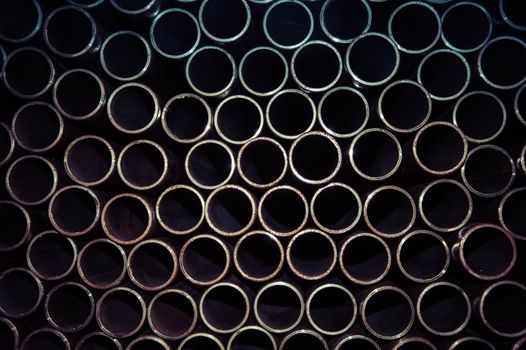
Tianjin is the dominant cluster for alloy-steel pipe exports, with Made-in-China's regional filter showing 1,200+ pipe SKUs in the Tianjin-Tianjin sub-filter alone, the legacy of the port's pipe-making base [S4].
Ningbo (Zhejiang) hosts mould-steel and auto-parts alloy suppliers — grade 1.2361 cold-work tool steel for auto-parts dies appears in the Ningbo supplier index, alongside SCM435 and similar engineering grades [S2]. Hubei (Huangshi) and Hunan concentrate the forged-bar mill capacity, while Sichuan-based suppliers like Liaofu cover the higher-end tool-steel mould grades [S5][S7]. For buyers weighing aluminum alloy versus alloy steel for tooling and structural components, geography matters: aluminium billet typically ships from a different regional cluster (mostly Guangdong, Shandong and Henan) and the freight premium for an inland cross-province shipment can exceed 8-12% of the unit price on small lots.
Selection Criteria Buyers Actually Use
Selection should start from the spec standard — AISI/SAE for North American OEMs, EN/DIN for European, GB for Chinese domestic, JIS for Japanese — then resolve to the closest cross-listed grade before negotiating process route and heat-treatment state [S6].
Three filters separate usable from risky suppliers: (1) audited supplier status on the B2B platform, with Diamond/Gold membership a proxy for export documentation discipline [S7]; (2) explicit process disclosure (EAF-only versus EAF+ESR versus EAF+LF+VD), since ESR can roughly double bar cost but cuts inclusion content by an order of magnitude [S6]; and (3) MOQ flexibility — 1-ton MOQs are now the norm for forged bar, down from 5-10 ton MOQs that were standard before 2024 [S7]. When the application is wear- or chemically-loaded, nickel alloy becomes the comparison set, and the unit-price gap (Ni alloys commonly 4-8x alloy-steel bar) is the deciding factor. For structural frames, channels and angles, carbon steel is the cheaper baseline and alloy angle steel is only justified where higher yield strength is spec'd [S8].
Pricing Bands and What Drives the Spread
Across the 30,000+ alloy-steel SKUs visible on Made-in-China's 467-page alloy-steel-pipe index, the median forged-bar price band sits at US$1,500-2,000/t FOB, with outliers above US$3,000/t for ESR-remelted, ultrasonic-tested, pre-hardened tool-steel grades [S1][S6][S7].
Three cost levers explain almost the entire spread: (1) alloying content — every 0.5 wt% Mo or V adds roughly US$150-250/t at mid-2026 ferro-alloy prices; (2) remelting — ESR adds US$400-700/t to the bar cost, VAR a similar increment; (3) testing and certification — ultrasonic, charpy-impact and inclusion-rating reports add US$50-150/t but are non-negotiable for forging-stock destined into titanium alloy and aerospace supply chains where traceability is required. Buyers sourcing in small lots for MRO and tooling can hold realised cost within 5-8% of the platform-listed band; large annual contracts with mill-direct suppliers typically settle 10-18% below spot list once volume rebates are applied.
Limits, Failure Modes and Sourcing Risks
The hardest-to-verify attribute on a Chinese B2B alloy-steel listing is heat-treatment state — suppliers commonly quote "as-rolled" / "annealed" / "Q&T" without disclosing actual hardness, and a bar bought as "pre-hardened H13" can arrive at 28 HRC rather than the spec'd 50-54 HRC. [S1]
Three failure modes recur in incoming-quality claims: (1) decarburisation on forged round bar exceeding 1% of the radius, usually from air-cooling between forging and quenching; (2) sulphide inclusion rating above ASTM E45 thin-series 2.5, typical of EAF-only material not followed by ladle refining; (3) mixed-grade contamination when lots are drawn from the same mill but different heats, a particular risk on 2-ton MOQs that span a single shift [S6]. Mitigation is straightforward: specify the standard number plus hardness range plus test-report format on the PO, and reserve final payment against an independent SGS or Bureau Veritas inspection at the load port. The tooling economics that drive nylon vs PTFE selection parallel the steel case: cheaper polymer wins on wear and chemical service, but once the temperature envelope or load-bearing role exceeds the polymer's limit, the only real option is to step up into an alloy or tool steel — and pay the 4-10x unit-price premium that comes with the step.
Standards, Testing and Documentation

ASTM A29 governs general alloy-steel bar; AISI/SAE grade designations (4140, 4340, SCM435, 1.2361) are not standards themselves but grade-naming conventions used inside the mill spec, and the buyer's contract should always cite both the AISI grade and the ASTM/EN/GB product standard [S3][S6].
For pipe, ASTM A335 (ferritic alloy) and ASTM A213 cover seamless service, with EN 10216-2 as the European parallel — these product standards are what the mill's MTC (mill test certificate) should reference, and the heat-number traceability chain runs back through the B2B listing's supplier record [S1][S4]. Tool-steel mould grades 1.2379/1.2344 follow DIN EN ISO 4957, which is the product standard the Sichuan Liaofu listing implies even when not printed on the page [S5]. For buyers who need a wider material comparison alongside engineering plastic cost bands, the alloy-steel and engineering-plastic pricing tracks are loosely correlated on raw-material index (Ni, Cr, Mo versus oil/naphtha), so the same hedging logic that applies to engineering resin procurement transfers to the alloy-steel spot market.
The two trackable signals worth watching for the next buying cycle are the Q3 2026 ferro-chrome and ferro-molybdenum reference prices out of Tianjin and Shanghai, and the audit-status refresh of the top 20 alloy-steel suppliers on Made-in-China — both will set the floor on Q4 contract pricing.