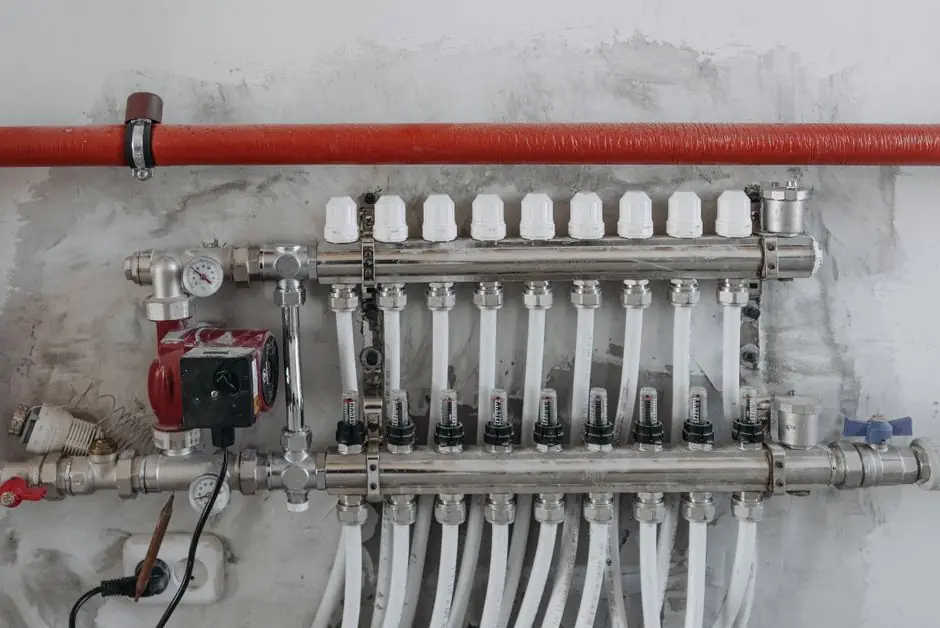
Rack power in AI data centres has crossed 30 kW and now routinely hits 60–100 kW per rack, a density range where direct-to-chip liquid loops are the default thermal path and the manifold-plus-hose assembly carries the full flow [S5].
The supply chain responding is a stacked one: PTFE/EPDM hose and silicone hose stock, pre-formed hose kits that bridge CDU to rack manifold, rack-level Coolant Distribution Manifolds (CDMs), and blind-mate quick disconnects (QDs) at the cold-plate face. The hot signal is the Open Compute Project's ORV3 specification, which is now the de facto mechanical and fluid interface for new AI rack builds, with Parker, Amphenol, Supermicro and Flex Technologies all publicly aligning portfolio parts to it [S1][S2][S4][S5].
What the manifold and hose actually do in the loop
A rack-level liquid manifold is the central distribution hub that splits one CDU feed into N balanced server loops; its primary function is to deliver constant, uniform flow to each server loop, ensuring balanced cooling across all IT equipment [S6]. On the supply side the manifold sits between the coolant distribution unit (CDU) and the cold plate; on the return side it recombines warm coolant back to the CDU, with a simplified path GPU/CPU → cold plate → coolant → liquid cooling hose → manifold → CDU → heat rejection, repeated in reverse [S3]. The manifold-to-server hose kit is therefore a high-flow, vibration-loaded hose that sees the full system pressure and the largest temperature swing of any flexible line in the loop [S2].
Manifold architecture is moving away from home-built brass blocks toward factory-plumbed Coolant Distribution Manifolds (CDMs) with hose kits already terminated, because the data centre market is scaling liquid-cooled rack volumes in line with AI cluster demand, and the supply gap is now in OEM-qualified assemblies rather than commodity fittings [S4][S7].
Material and specification choices that decide supply
Three hose families dominate AI rack procurement. Parker specifies convoluted PTFE and pre-formed flexible hose for facility-to-rack process piping where chemical compatibility and temperature rating matter most, with EPDM and FKM also common in closed-loop propylene-glycol/water (PG25) and dielectric fluid service [S1]. For rack-internal loops, platinum-cured silicone is the de facto choice because it eliminates peroxide-cure byproducts that would otherwise leach into the coolant and foul microchannel cold plates, and a non-conductive silicone hose provides dielectric insurance in the rare event of a leak near a busbar [S2]. Flame-retardant grades to UL 94 V-0 are the practical baseline for in-rack hose [S2].
Quick disconnects at the cold-plate face have converged on flat-face, dry-break, blind-mate designs sized to ORV3 geometry, with the explicit goals of low fluid loss on disconnect, low pressure drop across the mated pair, and misalignment tolerance for tool-less engagement in dense racks [S5]. A dry-break QD is a small component with a very important job: it must seal on disconnect without weeping onto live busbars or cold-plate pins [S3][S5].
Reliability thresholds that drive rejection at incoming QC
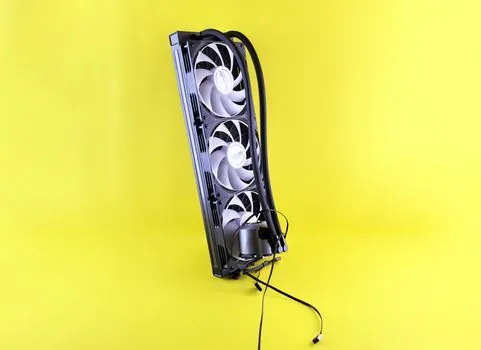
Connector and hose specs are now being written around GPU shutdown behaviour, not around generic plumbing tolerances. A thermal anomaly of as little as 2°C at the silicon die can shut down a tray, so pressure drop across the connector, microchannel cleanliness, and dry-break sealing are now first-class acceptance criteria rather than nice-to-haves [S5]. Manifold design has followed the same logic: a single thermal anomaly of as little as 2 degrees can shut down a tray, and flow restriction at any flexible joint upstream of the cold plate can trigger the same protective shutdown [S5].
Pressure capability has ratcheted up with rack power. ORV3-era QDs are typically rated for 60–100 psi working pressure on the IT side, with the loop sized so that total pressure drop from CDU through manifold, hose, QD and cold plate stays inside the GPU vendor's published ΔP window; designs that were acceptable at 5–20 kW per rack are often no longer sufficient above 60 kW [S5]. Parker flat-sealing valve QDs, with over 60 years of expertise, target leak-free service at this duty, and Amphenol's large-format interconnects extend the same flat-face sealing principle to higher-flow CDU-to-manifold interfaces [S1][S5].
How the main flexible-connector options compare
Specifiers typically pick between four options for the flexible part of a direct-to-chip loop, and the right choice depends on which constraint dominates: cleanliness, temperature, dielectric safety, or serviceability. A simple comparison against the four decision criteria an AI-DC buyer cares about: [S3]
Platinum-cured silicone hose: best in class for coolant purity and dielectric safety, good flexibility for tight rack routing, limited upper temperature (typically below 200°C continuous) but well above any 65°C coolant loop, flame-retardant grades to UL 94 V-0 widely available [S2].
Convoluted PTFE hose: best chemical compatibility and highest continuous temperature rating of the flexible options, smoother inner wall resists biofilm, less flexible than silicone and needs careful bend-radius management in rack plenums [S1].
EPDM hose assemblies: the workhorse for facility water-to-CDU piping, good glycol compatibility, lower cost per metre than PTFE, but not a typical choice for the in-rack dielectric-safety segment [S1].
Pre-formed hose kits with terminated QDs: not a material choice but a supply model, and the one that most OEMs now specify, because Parker, Supermicro and Amphenol all publish factory-built hose kits that arrive pressure-tested and ORV3-aligned, removing on-site termination as a failure mode [S1][S4][S5].
For most AI rack builders, the practical procurement answer is a hybrid: EPDM or PTFE from facility to CDU, platinum-cured silicone inside the rack, and pre-formed QD-terminated kits at the cold-plate face, with the CDU-manifold backbone in stainless or engineered polymer from a specialist such as JetCool or Supermicro [S1][S2][S4][S6].
Standards, OCP alignment, and the ORV3 interface
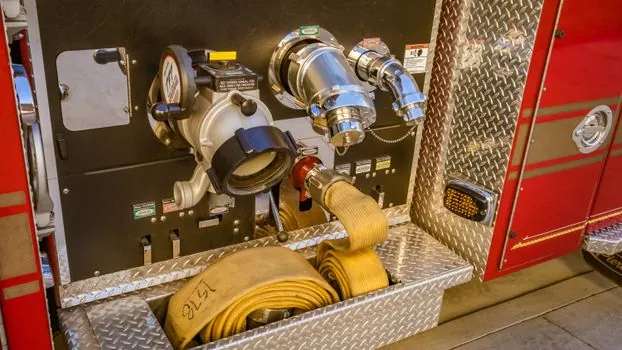
Open Compute Project ORV3 is the gravitational centre of the AI liquid-cooling supply chain, and the OCP maintains specifications and related design materials for Open Rack v3 systems and supporting components that connector, manifold and hose vendors now design to [S1][S5]. Parker's public position is that it is an active participant in the Open Compute Project, instrumental in defining the standards, both now and in the future [S1]. Blind-mate capability with ever-increasing radial and angular misalignment tolerance is the ORV3-aligned QD requirement that most directly affects manifold port geometry and hose-end dimensional control [S5].
Outside the OCP orbit, the standards stack that hits a liquid-cooled hose or manifold is largely inherited from process piping: UL 94 V-0 for in-rack flame performance, ASTM and ASME B31.3 expectations for facility-side pressure piping, and OEM-specific cleanliness protocols for the IT side, typically expressed as ISO 4406 solid-contaminant codes or equivalent particle-count windows for microchannel cold plates [S2][S5]. For context on the silicon demand driving all of this, see the AI inference silicon 2026 build-out, which is the upstream force behind every QD, hose and manifold order.
Limitations and failure modes to spec against
Every flexible component in the loop is a maintenance liability, and the failure modes concentrate at three points. First, the QD: a slow weep on a non-dry-break coupling can short a busbar, which is why dry-break and low-fluid-loss are mandatory language in ORV3-era specs [S5]. Second, the manifold-to-CDU hose, which sees the highest pressure and the largest thermal swing; peroxide-cured silicone can leach byproducts into your coolant, leading to micro-clogging and system degradation over time, so platinum-cured is the safer default [S2]. Third, the cold-plate interface itself: modern GPU architectures rely on cold plates with microchannels measured in microns, so any flow restriction, contamination, misalignment, pressure instability, or unexpected pressure drop across the connector can trigger protective shutdowns [S5].
Serviceability is the fourth constraint, often missed at spec stage. Service events in dense rack environments demand tool-less blind-mate engagement, and a QD that needs torque control is the wrong QD for an AI rack, because the technician cannot reach the fitting with a wrench once the rack is populated [S5]. This is the same constraint that pushes buyers toward pre-terminated hose kits from the OEM rather than field-assembled hose and fitting combinations.
Supply signals to track through the rest of 2026
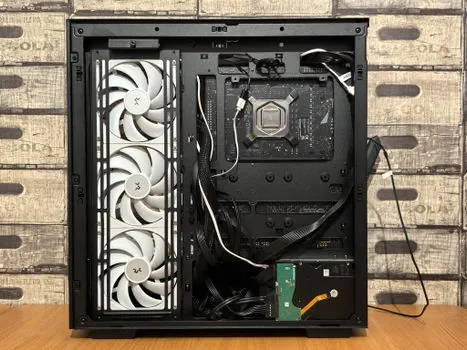
Two trackable signals will define whether the manifold-and-hose supply chain tightens or eases over the next two quarters. The first is OCP ORV3 revision cadence: connector, manifold and hose vendors are publicly aligning portfolios to ORV3, so any major ORV3 geometry revision would force re-tooling across the QD and hose-kit supply base [S1][S5]. The second is the published pre-cured vs platinum-cured silicone mix on offer from major hose OEMs, because the platinum-cured variants are the only ones safe for microchannel cold plates, and supply of medical- and food-grade platinum-cured silicone is shared with other industries that have their own demand cycles [S2]. For buyers planning 2027 AI cluster builds, lock in platinum-cured silicone and ORV3-aligned QDs on the same PO, and treat the manifold-to-CDU hose as long-lead rather than commodity.
For component-level specifications, see serial server, construction machinery and equipment, and lamps and light fittings.