
Aluminum alloy installation hinges on selecting the right temper before specifying fasteners, anchors, or welds: 6061-T6 delivers a typical tensile strength around 290 MPa with T6 heat treatment, while 6063-T5 is the go-to architectural extrusion temper for window, door, and curtain-wall profiles [S1].
This guide covers the install-relevant material properties (temper, weight, corrosion), the four joint families actually used on site (mechanical, adhesive, weld, snap-fit), and the spec gates — torque, gap, thermal-expansion allowance — that determine whether a 6061 frame, a 5083 pipe run, or a 5052 cladding panel passes commissioning [S3].
Why Temper Selection Drives Every Install Decision
Aluminum tempers are the install-relevant variable: H14 designates strain-hardened half-hard plate (no heat treatment), and is commonly specified for general sheet-metal brackets and cladding where formability matters more than peak strength [S1]. H32, T5, and T6 are the three labels an installer will see on a 6061/6063/5052/5083 delivery note, and they govern fastener torque windows, weld procedure selection, and whether a section can be field-bent without cracking [S1].
For pure structural framing, 6061-T6 is the default. For architectural extrusions that must anodize cleanly and hold tight tolerances for aluminum window and door hardware, 6063-T5 is the standard pick because it machines and anodizes better than 6061, even though its tensile ceiling is lower. When the install environment is coastal, chemical, or compressed-air, switch to 5xxx series (5052, 5083) — they are non-heat-treatable but carry higher magnesium for marine-grade corrosion resistance, and they are the tempers found in factory-pressurized aluminum piping systems [S3].
Weight, Corrosion and the Three Real Advantages On Site
Aluminum alloy piping weighs roughly one-third of an equivalent carbon-steel schedule, which is the headline installation advantage for high-rise risers, retrofit drops, and any linear guide or machine-frame retrofit where dead load is a constraint [S3]. That mass reduction cuts crane time, allows longer single-span lifts, and lowers the foundation reaction on existing slabs — the exact reason compressed-air and water distribution networks are being re-piped in aluminum in mid-rise plants.
Corrosion behaviour is the second advantage: aluminum forms a self-healing oxide film, so the pipe "does not rust" in the field sense (no red oxide flake), and the alloy maintains a smoother inner wall over service life compared to galvanized steel [S3]. Friction loss along an aluminum pipeline is stated at roughly one-tenth that of a same-diameter galvanized steel line because the smoother bore does not roughen with corrosion product [S3]. The third advantage is constructability: because the CosBog-style aluminum piping system eliminates on-site welding, the installer only needs a calibrated torque wrench, a grooving tool, and the manufacturer's quick-coupling jig to lay a DN65–DN200 run [S3].
The Four Joint Families Used In Aluminum Installation
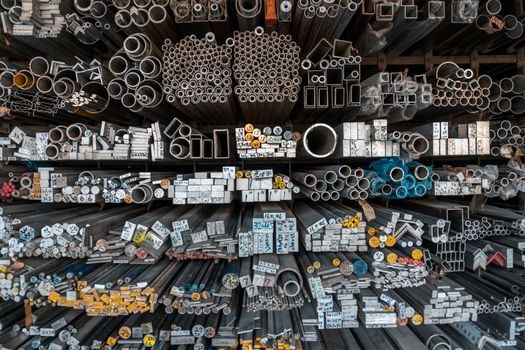
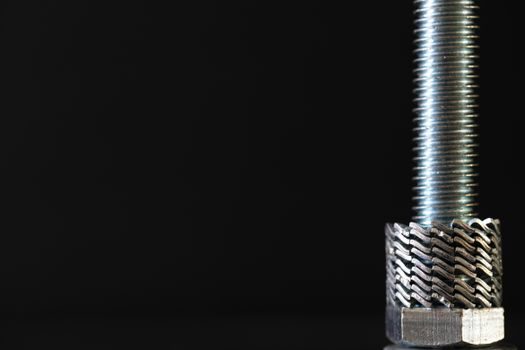
Mechanical (bolted/screwed) joints are the most common for aluminum alloy frames. The rule: use stainless-steel or aluminum fasteners with isolation washers to avoid galvanic couple corrosion against dissimilar metals, and torque to the alloy-specific value (over-torque on 6061-T6 strips threads faster than on mild steel because the shear modulus is lower). [S1]
Adhesive bonds (structural acrylic or epoxy) are widely used for aluminum veneer panel facade cladding — the substrate is light (density ≈ 2.7 g/cm³, one-third of steel), so a full-back adhesive bed does not overload the wall bracket, and the bond tolerates differential thermal movement better than rigid mechanical clips. Welding (TIG/MIG, 4043 or 5356 filler) is permitted on 6xxx series with proper pre-clean and post-weld heat treatment, but is generally avoided on site for piping because the no-weld mechanical system shortens construction period and removes the need for hot-work permits [S3]. Snap-fit and hook-fit joints dominate modular aluminum ladder assembly and partition-frame installation, where the alloy's extrusion tolerance lets a tongue-and-groove profile click together without fasteners. Threaded joints (aluminum outer-wire adapters, flanges, hoops) cover the DN65–DN200 range in compressed-air and water networks [S3].
Step-by-Step Install Workflow: Receiving Through Torque-Up
Step 1 — Receive and inspect. Verify temper stamp (e.g. 6061-T6, 6063-T5) on the delivery note against the drawing; mixed tempers in the same lot is the most common install-day failure source. Check for white carbonate corrosion on 5xxx marine grades, and reject any bar with deep scratches through the anodized layer on architectural 6063 extrusions. [S2]
Step 2 — Stage and protect. Aluminum extrusions should be stored on timber dunnage off the ground to avoid wet-mud stain, and separated from copper, brass, and carbon steel to prevent galvanic staining. Step 3 — Cut and drill. Use coolant when drilling deep holes; aluminum's high thermal conductivity pulls heat away from the cut but also conducts it into the workpiece, so without coolant drill bits seize and the hole walls gall. Step 4 — Fit and align. For 6063-T5 window/door frames, allow a 6–10 mm perimeter expansion gap to absorb the ≈ 23 × 10⁻⁶ /°C linear expansion (about twice that of steel) — this is the single most-skipped detail and the one that causes frame buckle in summer. Step 5 — Torque and verify. Use a calibrated wrench, tighten to the OEM-stated value, then mark the fastener with a torque stripe. For an aluminum door hinge on a 6063 frame, the installer must back the hinge with a stainless or nylon washer so the hinge pin does not wear the softer alloy boss over time [S4]. Step 6 — Commission. Pressure-test piping at 1.5× working pressure for 30 min with no pressure drop, and confirm that all flanges, hoops (DN65–DN200), and outer-wire adapters are re-torqued after the first heat cycle [S3].
Material-by-Temper Comparison For Common Install Scenarios

Choosing the right alloy for the install scenario is a four-criteria decision: strength, corrosion, weldability, and finish. 6061-T6 scores high on strength (≈ 290 MPa tensile, T6 temper) and good weldability with 4043/5356 filler, but its anodized finish is utilitarian rather than architectural-grade. 6063-T5 is the weaker of the two but the cleaner-finishing extrusion alloy — that is why it owns the aluminum window and door market. 5052-H32 is the formable sheet/plate choice (H32 = strain-hardened + stabilized) for brackets, enclosures, and marine panels where weldability and saltwater corrosion resistance are required. 5083 is the strongest non-heat-treatable marine plate, used in ship and chemical-tank builds where post-weld strength retention matters. [S3]
For a curtain-wall or decorative facade, the substrate is almost always 6063-T5 because it extrudes into complex profiles and takes bright anodizing. For a load-bearing machine frame or gantry, 6061-T6 is correct. For any piping carrying compressed air, water, or low-pressure chemicals, factory-extruded 6061 or 6063 with mechanical grooved coupling eliminates field welding entirely and shortens construction period significantly [S3]. For ladder or scaffold aluminum ladder components, 6061-T6 in tube form balances strength-to-weight so a 6 m ladder can be handled by one installer. Die-cast aluminum handles and pulls (aluminum拉手) are produced by melting ingot and injection into a die, then tapping, drilling, and polishing — these are install-fasteners, not structural members, and they ship ready to screw into the host [S6].
Failure Modes and What Inspectors Actually Reject
Four failure modes dominate the aluminum installation reject list. (1) Galvanic corrosion at steel-aluminum contact points — the inspector will look for isolation gaskets, nylon washers, or stainless separation wherever aluminum meets steel, copper, or brass. (2) Over-torqued fasteners — the soft alloy strips its thread before the steel bolt yields, so a stripped 6061-T6 thread is a re-machining job, not a tightening job. (3) Insufficient expansion gap on long runs of architectural extrusion — the 6063-T5 frame buckles or the glass lite cracks when the gap is below the recommended allowance for the 23 × 10⁻⁶ /°C coefficient. (4) Mixed-temper or mixed-alloy deliveries — a 6063 part welded into a 6061-T6 frame with the wrong filler fails the post-weld dye-penetrant test. [S4]
For the heavy-equipment side, the same gate-thinking used in die casting machine installation applies to any aluminum-framed machine base: tonnage, foundation flatness, and utility specs must be checked against the alloy's load and thermal envelope before the first anchor bolt is torqued. For plant compressed-air and water retrofits, the move to aluminum piping is now driven by the no-weld mechanical-coupling construction method, which removes hot-work permits and drops the install crew size by roughly half compared to a welded steel schedule [S3].
Standards, Specifications, and Sourcing Reference
Architectural aluminum extrusions in the Made-in-China.com catalog for building-material applications are offered with CCC, ROHS, and ISO 9001 certification, with FOB pricing for curtain-wall-grade material in the US$ 0.2–6 per piece range at 100-piece MOQ and 5-year product warranty available from the listed suppliers [S2]. The compressed-air aluminum piping range from Dalian Caseberg covers DN65–DN200 elbows, flanges, hoops, and outer-wire adapters, with the manufacturer noting national invention and utility-model patents on the no-weld energy-saving system [S3]. Marine and industrial aluminum plate, sheet, and bar for U.S. distribution is handled by specialty distributors such as ADI Metal, which supplies certified material for marine, government, and industrial use [S5].
For procurement: confirm the temper stamp on every extrusion, verify the certificate of conformity against the alloy spec (6061, 6063, 5052, 5083), and require the manufacturer to publish the torque table, the expansion-gap allowance, and the recommended fastener material for each joint type. Two trackable signals to watch: (a) more Chinese building-material suppliers are listing CCC + ISO 9001 dual certification for curtain-wall aluminum, making audit-grade sourcing easier [S2]; (b) mechanical-coupling aluminum piping in the DN65–DN200 range is now an off-the-shelf category with a multi-year installed base, and the next spec-revision cycle is likely to formalize the 1/10 friction-loss advantage over galvanized steel into a published comparison figure [S3].