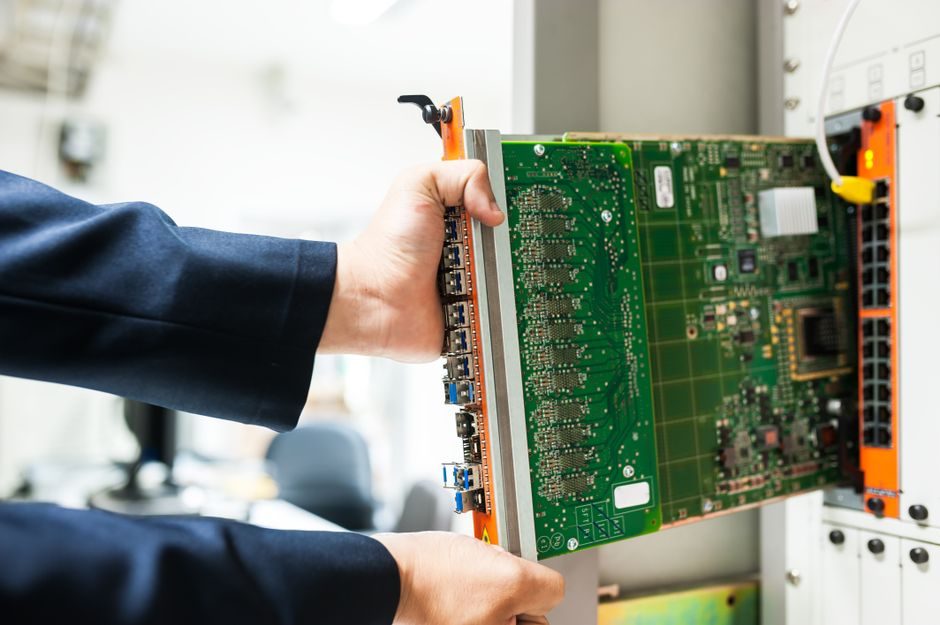
A correct die casting machine install starts with three numbers: locking force in tonnes, platen size in millimetres, and shot weight in kilograms, because each one drives the foundation pad, the cooling-water flow, and the hydraulic or servo power pack sizing downstream.
Modern cold-chamber horizontal machines such as the YIZUMI LEAP Series cover a 380T to 5000T locking-force band, with an Ultra-large variant reaching 6000T–9000T for new-energy vehicle megacastings [S2]. Hot-chamber units, by contrast, are normally quoted below 1000T and are paired with zinc, copper, magnesium and lead alloys that do not aggressively attack the gooseneck, plunger and pot [S1]. The cycle-time window is wide: under one second for small zinc parts, up to two-to-three minutes for multi-kilogram aluminum castings [S1].
Hot Chamber vs Cold Chamber: Alloy, Cycle and Site Implications
Hot-chamber die casting keeps the injection cylinder, gooseneck and nozzle submerged in the molten-metal bath, so cycle times collapse to under one second for parts below roughly 100 g, but the design is restricted to alloys that do not dissolve iron-rich components [S1]. The dominant suppliers cited for new and used hot-chamber multi-slide platforms are Techmire, Dynacast, Triad Speedcaster, Lama Automation and Fishercast, with traditional machine lines from Frech, Idra, Italpresse, Weingarten, Triulzi, NTP, Prince Machinery (Buhler Prince), HPM, National, Toshiba, KDK and LK Machinery [S1].
Cold-chamber die casting separates the furnace from the injection unit, so molten metal is ladled into a shot sleeve before each cycle, which raises cycle time but opens the process to high-melting-point alloys like aluminum and brass [S1]. On the YIZUMI HII-S Series, cold-chamber locking force spans 1000T to 9000T, with reduced pressure build-up and high-speed acceleration specified at the hydraulic end [S2]. For background on how a die casting machine is mechanically classified, the encyclopedia entry on cold-chamber platforms breaks down the same hot/cold split for aluminum structural parts.
Pre-Install Specification: Locking Force, Platen, Shot Sleeve
The first design gate is the projected casting area in cm² multiplied by the specific injection pressure (typically 30–80 MPa for cold-chamber aluminum), then a 1.2–1.5 safety margin to land on locking force [S1]. On the YIZUMI LEAP platform, locking force is delivered through a fully re-engineered toggle system aimed at higher platen rigidity and extended service life [S2]. The shot sleeve and plunger diameters are then matched to the part's projected weight plus biscuit, with a 30–50% volumetric buffer.
Platen dimensions and tie-bar clearance must accept the die footprint plus robotic or shuttle extraction paths, and YIZUMI's Performance Focused Machine Design explicitly routes energy lines and moving parts away from the operator side to keep open access for maintenance [S2]. For shops evaluating tonnage step-ups, the aluminum die casting machine reference covers how platen size scales with single-piece structural castings. Shot weight in cold-chamber aluminum cells commonly lands between 5 kg and 50 kg per cycle for chassis and battery-tray applications, which feeds directly into furnace capacity and ladle-cycle planning [S2].
Foundation, Utilities and Energy Footprint
Concrete pad design is driven by machine mass plus dynamic load from clamp tonnage: a 2000T cold-chamber cell typically demands a 300–500 mm reinforced pad with isolated inertia block, while 6000T+ megacasting units move into 600–1000 mm pads with anchor depths tied to local geotechnical data [S1][S2]. Cooling-water flow scales with platen area and shot weight; as a rule of thumb, plan 2–4 L/min per kW of hydraulic heat dissipation, plus a separate circuit for the die spray and cooling channels.
Energy use is a measurable gate, not a marketing line: YIZUMI's patented servo-pump Rapid Pump Feeding Technology is rated at 40–70% energy savings versus fixed-output hydraulic packs, with a secondary 5%+ gain from the energy-compensation algorithm extending primary pump service life [S2]. On a standard LEAP servo-hydraulic build, the same document cites up to 40% energy consumption reduction versus traditional hydraulics, and 10% faster closing and opening times versus the prior toggle generation [S2]. For shops weighing retrofit versus new cell, the vacuum die casting machine reference covers how vacuum-spec adds to pump and seal utilities, not just to the die.
Controls, Closed-Loop Control and Process Repeatability
The control cabinet is no longer an interlock panel; on the YIZUMI ORCA platform it bundles a fully digital HMI, a documented alarm and trouble-shooting system, and a CastMaster "built-in experts'" function that guides operators on shot profile, die temperature and cooling [S2]. The LEAP injection unit uses a real-time closed-loop control system that detects process deviation and adjusts injection parameters on the shot, with end-of-fill speed breaking to cut flash and extend die life [S2].
Programmable die-height, automatic locking-force setup and precise die-position stops are listed as standard on LEAP toggle drives, reducing changeover time between dies [S2]. For magnesium thixomolding — a separate but related process line — YIZUMI's MG Series dates to 2009 as China's first Thixomolding machine, with a 2018 large-injection 2.5 kg model matching the maximum injection volume of any competitor globally [S2]. Process engineers comparing a magnesium die casting machine to a conventional hot-chamber zinc cell should weigh the different shot-weight ceilings and shot profile controls here.
Layout, Cell Integration and Safety Specs

A modern die casting cell is laid out in three zones: the machine footprint, the die-change and spray zone, and the trim/QC/automation handover. The YIZUMI Performance Focused Machine Design keeps energy lines and moving parts behind the operator barrier while leaving the front open for maintenance and visual inspection [S2]. A typical 1600T–2500T cell needs roughly 8 m × 6 m of clean floor with 4–5 m ceiling clearance for the platen lift and sprue-puller stroke.
For high-mix, lower-volume shops, the gravity die casting machine entry outlines a permanent-mold alternative that runs at much lower locking force, but with a different cycle profile. Where the application is small zinc hardware — locks, connectors, fittings — a zinc die casting machine is almost always hot-chamber and can be sited at smaller platen sizes.
Sourcing Tiers, Used Equipment and Aftermarket
New machine sourcing in 2026 routes mainly through manufacturer-direct channels (YIZUMI's LEAP, HII-S, MG and LEAP Ultra-large lines [S2]) and through Alibaba-tracked vendor pools, where a single "Hot Chamber Die Casting Machine Suppliers" search returned 1246 suppliers, dominated by China-mainland manufacturers that also build plastic injection molding machines and auxiliary equipment [S3]. Made-in-China listings similarly surface fully automated 1250T cold-chamber high-pressure die casting cells as a stocked SKU category, not a custom build [S4].
Used and pre-owned hot-chamber and cold-chamber high-pressure die casting machines remain an active secondary market, with brokers and resellers cataloguing Frech, Idra, Italpresse, Weingarten, Triulzi, NTP, Buhler Prince, HPM, National, Toshiba, KDK and LK Machinery as common line items [S1]. YIZUMI's own product guidance frames long-term value as a function of shot consistency, repeatable process control and automation-cell integration — not headline tonnage alone [S5]. When auditing a used cell, a process engineer should weigh platen rigidity, shot profile repeatability and HMI generation against the purchase delta, exactly the spec-first buy logic used in adjacent capital-equipment categories.
Commissioning Checklist: What to Verify Before First Shot
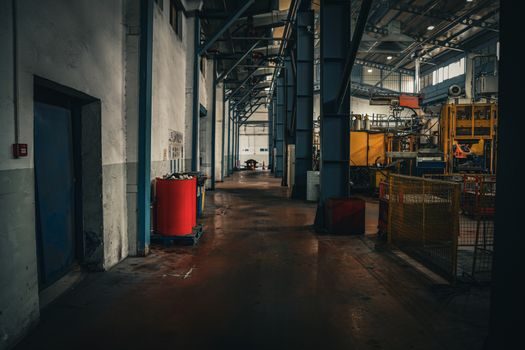
A practical commissioning gate, in order: (1) foundation curing certificate and anchor torque log; (2) hydraulic oil cleanliness to NAS 6 or better; (3) cooling-water flow and ΔT verification at each platen and die-spray circuit; (4) servo-pump pressure and flow ramp test under no-load; (5) toggle or direct-clamp lock-force calibration against a load cell or pressure-bag; (6) ORCA or equivalent HMI alarm simulation; (7) closed-loop injection profile test on a cold-chamber die with a known shot weight, accepting ±1.5% shot-weight deviation as a typical baseline [S2]; (8) vacuum-decay test if vacuum-spec is fitted; (9) robotic or shuttle handshake test at full platen-open stroke.
The first production shots should be run with a DOE matrix on injection velocity, intensification pressure and die temperature, with the closed-loop controller logging deviation to confirm the LEAP-class real-time control is doing what the datasheet claims [S2][S5]. For facilities pairing a new die casting cell with adjacent capital equipment, the robotic integration and closed-loop QA logic used in carbon-fiber cells translates directly to die-cast megacasting lines.
Two trackable signals to monitor through 2026: whether YIZUMI and competing OEMs extend the LEAP Ultra-large band beyond 9000T for gigacasting-class parts, and whether the 40–70% servo-pump energy savings figure becomes a contractual acceptance clause rather than a marketing line in new-cell POs [S2].