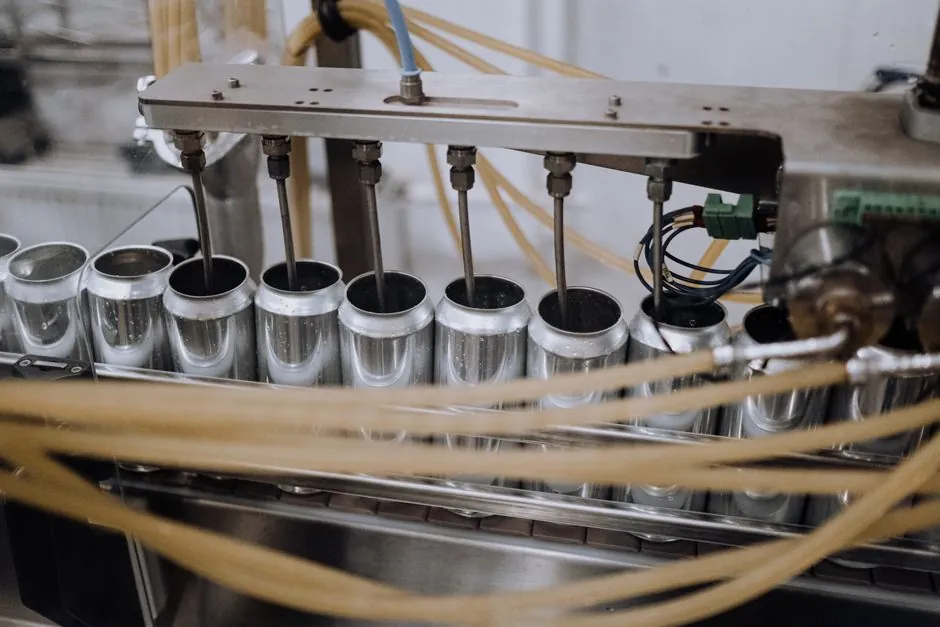
Global aluminum cans market value is projected at USD 65.8 Bn in 2026, growing to USD 98.3 Bn by 2036 at a 4.1% CAGR, with 2-piece cans capturing 61.4% of product type and 201–450 ml formats holding 39.6% of capacity use [S2].
Beverage companies anchor 70.1% of end-user demand in 2026, making can sheet access and recycled-content certification the two supply levers that determine who holds the contract [S2]. The structural pull from beverage packaging, EV lightweighting, and solar frames converges on the same primary aluminum pool, reshaping can-sheet sourcing strategy, as covered in Aluminium Demand 2026: Solar Frames, EVs, and Packaging Pull the Structural Curve.
Recycled-content benchmarks: Novelis 90% vs global industry 50%
Novelis committed in 2013 to convert all beverage can body sheet to a minimum 90% recycled content, certified by SCS Global Services under the Evercan™ program, while the global industry average sat at 50% recycled content at the time of the announcement [S1][S6].
The 90% sheet is paired with a different can-end alloy, so a finished 12-oz standard can from Evercan™ sheet carries a minimum 70% recycled content across the full can [S1]. For a process engineer specifying can stock, this means body sheet (typically 3004/3104/5182 alloys) and end stock (5182) must be sourced on different recycled-content curves, and the weighted average is what reaches the brand sustainability report, not the body sheet number alone.
U.S. recycling rate stalls at 43%, far below can-maker 85% targets
The U.S. aluminum beverage can recycling rate was around 42% in 2020, 2021, and 2022, rising only to 43% in 2023 [S7].
Ball Corporation's circularity vision targets 85% average global recycled content in aluminum used for beverage cans, a goal that is supply-constrained by collection infrastructure, not by sheet-mill capability [S8]. Constellium markets can body stock, can end stock, and can tab stock with a "low CO₂ footprint" positioning, reflecting the same closed-loop logic [S5]. The gap between 43% U.S. collection and 85% target recycled content is roughly 40 percentage points; that gap has to be closed either by raising U.S. can collection, or by importing scrap/secondary ingot from higher-collection regions (Europe routinely runs 70%+ for aluminum cans per the International Aluminium Institute) [S9].
Energy and emissions math: 95% less energy vs primary aluminum

Novelis launched evercan™, a beverage can body sheet with a minimum of 90 percent recycled aluminum that the company markets as a low-carbon footprint packaging option [S1].
A practical specification consequence: recycled-content can sheet requires tighter scrap sorting and controlled alloy chemistry, particularly iron and silicon tramp limits, because 3004/3104 can-body alloys tolerate far less variability than primary-ingot-fed stock. The capital bill to support that discipline is non-trivial; Novelis announced close to USD 500 million of recycling-capacity investment over the two years preceding the 2013 Evercan™ launch, targeting 2.1 million metric tons of annual recycling capacity by 2015 [S1].
Supply contracts: long-term Novelis–Ball sheet agreements lock volume
Novelis recycles more than 82 billion used beverage cans per year into new aluminum sheet and has entered long-term supply agreements with Ball Corporation can-making plants [S3].
Those long-dated contracts matter in 2026 because the aluminum can market is forecast to add USD 32.5 Bn of incremental opportunity between 2026 and 2036, and China (5.3% CAGR) and India (4.9% CAGR) are the fastest-growing country markets through 2036 [S2]. FMI's analyst note flags that "can makers need stable aluminum sheet access as beverage companies prefer suppliers with assured volume delivery", which is the structural reason Novelis–Ball type multi-year offtake contracts are proliferating rather than spot purchases [S2][S3].
Material-source split in 2026: virgin still 54.3% of can sheet feedstock
Virgin aluminum is estimated to hold a 54.3% material-source share in 2026, because can-sheet producers need tighter alloy control and reliable forming quality than high-recycled-content feeds typically deliver [S2].
That 54.3% / 45.7% split sits in tension with the brand-side 85% target. The resolution is not a single spec; it is a layered sourcing strategy: premium body sheet (Evercan™-class, 90% recycled) for brand owners willing to pay the green premium, conventional can-end stock (5182) running at industry-average recycled content, and primary ingot reserved for tight-tolerance applications like DWI (drawn-and-ironed) can body where iron control is non-negotiable. Sheet buyers should track the recycled-content calculation methodology, not just the headline percentage, because ISO 14021 and SCS Global Services type certifications count pre-consumer and post-consumer scrap differently. The die-casting and rolling-alloy pricing context for adjacent aluminum grades is detailed in A380 vs A356 aluminum casting alloy pricing in 2026: drivers, divergence, and sourcing.
Decision criteria: recycled content vs alloy control vs cost vs lead time
For a specifier: if the brand mandates 70%+ finished-can recycled content, Evercan™-class body sheet plus end stock is the only route, accept a 10–20% sheet cost premium, and lock a multi-year contract. If the priority is DWI line yield and tight earing control, run higher-virgin 3004/3104 body stock and accept lower recycled content. If collection-infrastructure investment is on the table, partner with a sheet supplier that has scrap-sorting capability (Novelis recycles 82 Bn cans/year) rather than buying secondary ingot on spot [S3].
Limitations and failure modes of high-recycled-content can sheet
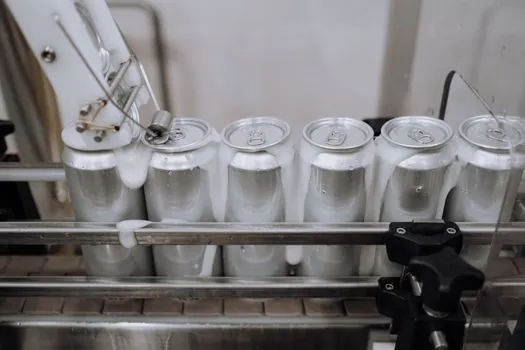
Three failure modes matter: (1) Tramp-element creep, iron and silicon accumulate in closed-loop scrap, narrowing the operating window for 3004/3104; (2) Coating qualification, high-recycled sheet can have surface-chemistry differences that slow or block epoxy/BPA-free coating line approval, adding 6–12 months to a new SKU launch; (3) Collection-rate volatility, the 43% U.S. recycling rate is barely above 2020 levels, so any downward blip in collection directly tightens recycled-content supply [S7].
The International Aluminium Institute fact sheet puts the global average for material recycled into new products above 70% for aluminum cans, roughly double glass (34%) and plastic (40%), but that figure is a global average and masks the U.S. underperformance [S9]. The Aluminum Association's "Can Advantage" framing cites 3X to 20X more recycled content versus competing substrates, a ratio that depends on the comparator baseline [S4]. A specifier should not treat "aluminum can = sustainable" as a given, because the recycled-content number on a finished can is a function of the body sheet, end stock, and tab stock recycled percentages, weighted by mass, not the headline number on the body stock supplier's data sheet.
Trackable signals for the next quarter: U.S. 2024 and 2025 can recycling rate updates from the Can Manufacturers Institute (2023 was 43%); Novelis or Constellium announcements of additional recycling capacity expansions following the 2013-era USD 500 M / 2.1 Mt model; any new long-term sheet offtake contracts aligning with the 4.1% global CAGR through 2036 [S2][S7].
For component-level specifications, see construction machinery and equipment, lamps and light fittings, and lighting equipment and electric lamps.