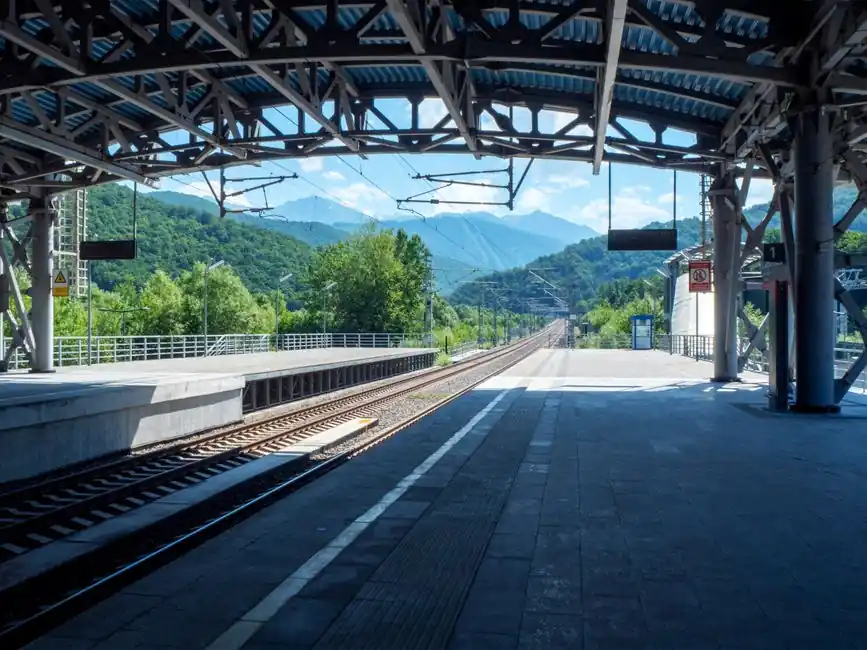
Rail car body and bogie castings in 2026 are quoted on cold-chamber aluminum die casting machines in the 800-3500 ton clamping-force band, with cycle times between 90 and 240 seconds per shot and A356/A357 silicon-rich alloys as the dominant melt [S1][S2][S4].
The selection list most procurement teams see runs across Buhler, Frech, Ube, Italpresse, LK Machinery, Yizumi, Toshiba, Toyo, Idra, THT, Weingarten, Colosio, Agrati and HPM, with used machines typically transacted at 35-60 percent of new list price [S4].
Rail-specific load profile and why cold-chamber dominates
Rail transit body shells, seat brackets, and HVAC housings are routinely cast on cold-chamber cells because molten aluminum above roughly 650 C attacks the plunger and shot sleeve of hot-chamber units, a constraint that pushes procurement toward Frech, Ube, Buhler, and Italpresse in the 800-3500 ton range [S4]. Typical shot weights land between 4 kg and 28 kg, and wall targets sit at 2.5-3.5 mm for body panels and 1.5-2.5 mm for bracketry, with vacuum-assist cells reserved for nodes where porosity below 1 percent is required for fatigue-loaded bogie brackets [S4][S2].
Production runs below roughly 5,000 pieces per year on a single part usually cannot carry a dedicated cell, which is why most Tier-1 rail suppliers run mixed-model cells on a shared machine rather than a dedicated die casting machine platform; the same logic is also visible in aluminum die casting machine selection for telecom enclosures, where thin-wall node geometry drives the same machine-class decision.
Alloy, weld-prep, and the EN 15085 / IATF 16949 gate
EN 15085-2 governs welding of rail vehicles and components and is the standard most often named in RFQs that reference castings, because cast nodes in rail bodies must be weld-prep compatible and traceable to a defined filler-alloy family. IATF 16949:2016 is the dominant automotive-derived quality gate that European and Indian Tier-1s also require for rail transit castings, and suppliers holding both certifications are typically shortlisted first [S9][S1].
A356.2, A357, and AlSi7Mg variants cover the bulk of structural castings, with AlSi10Mg(a) reserved for thin-wall ductile nodes and AlSi12Cu for gearbox housings where machinability and thermal conductivity matter; melt preparation is dominated by rotary degassing plus ceramic-foat filtration in the launder, with target hydrogen below 0.15 ml/100 g to keep porosity under 1 percent on radiographic inspection [S2][S8].
Tonnage, platen, and tie-bar math for rail nodes
The commonly cited sizing rule on cold-chamber aluminum cells is roughly 5-7 tons of clamping force per square inch of projected area, with a 1.2-1.4x safety factor for rail nodes where draft and core pulls increase lateral load. A 1600 ton cell typically accepts a 1.4-1.8 m2 rail seat bracket cluster, while a 2500-3500 ton cell is the floor for full side-beam castings near 2.5 m2 [S4][S8].
Platen sizes of 1400x1400 mm up to 2200x2200 mm map onto those node sizes, and tie-bar clearance above 1100 mm is the practical lower bound for any rail casting taller than 600 mm. Cells below 800 ton tend to lock procurement out of any rail body node that exceeds roughly 0.8 m2, which is why most new rail-cell orders sit in the 1600-2500 ton band, not the 400-800 ton band [S4].
Process options: HPDC, vacuum HPDC, squeeze, and gravity
High-pressure die casting remains the default for rail enclosure and bracket geometry because cycle time and surface finish dominate the cost equation, but vacuum die casting cells are increasingly specified for bogie and suspension nodes where fatigue and weld-prep porosity limits apply. Gravity die casting keeps a role for thicker wall sections in interior aluminum trim, but it loses on cycle time above roughly 3000 pieces per year for any given node [S1][S2][S7].
The trade table below lines the four options up against the criteria that drive a rail RFQ:
Process / Tonnage band / Wall target (mm) / Porosity limit / Cycle time (s) / Best fit in rail scope: HPDC 800-3500 t / 1.5-3.5 / 1-3 percent / 90-180 / Body panels, brackets, HVAC housings; Vacuum HPDC 1000-3500 t / 1.5-3.0 / below 1 percent / 120-240 / Bogie brackets, fatigue-loaded nodes; Squeeze casting 600-2500 t / 3.0-8.0 / below 0.5 percent / 180-360 / Suspension arms, knuckles; Gravity 50-500 t / 4.0-12.0 / 2-4 percent / 240-600 / Interior trim, low-volume nodes [S1][S2][S4][S7].
Vendor landscape and used-machine economics
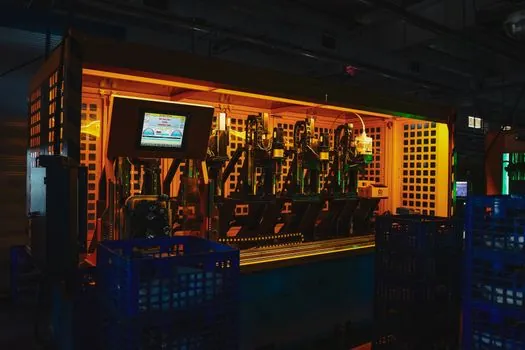
The active OEM list for cold-chamber aluminum cells in the rail segment runs through Buhler, Frech, Italpresse, Idra, Ube, Toshiba, Toyo, LK, Yizumi, Colosio, Weingarten, Agrati, HPM, and THT, with Yizumi and LK holding the largest share of new cells sold into the Indian and Southeast Asian rail supply base [S4][S1]. Used machines from this list typically transact at 35-60 percent of new list price, with 2010-2018 vintage Frech and Buhler cold-chamber cells in the 1250-2500 ton band the most liquid category in 2025-2026 secondary markets [S4].
Where a rail buyer is also reviewing similar thin-wall aluminum nodes for non-rail industries, the same machine class shows up in the gravity die casting machine selection map for hardware, confirming that the tonnage and alloy gates are largely transferrable across transit, telecom, and lighting enclosures.
Selection criteria that actually separate bidders
Beyond tonnage, four criteria dominate the technical scorecards: shot-weight window against part mass, platen and tie-bar clearances against part envelope, vacuum package availability for porosity-critical nodes, and CNC-machining partner integration for post-cast finishing. Certification status to EN 15085-2 and IATF 16949:2016 is a hard gate at most transit authorities, and ISO 9001:2015 alone is usually insufficient for bogie or weld-prep structural nodes [S9][S1].
Buyers should also track two more signals in 2026: servo-hydraulic and all-electric machine platforms from Ube, Toshiba, and Yizumi are now quoted on energy savings of 30-50 percent versus legacy hydraulic cells, and integrated process monitoring (shot curve, die temperature, vacuum level) is becoming a default RFQ requirement rather than an upgrade option [S4][S8].
Where aluminum HPDC is the wrong pick
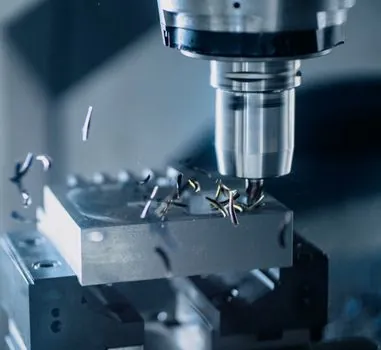
Aluminum HPDC is a poor match for any rail node above roughly 30 kg per shot where porosity and ductility drive design acceptance, because that mass range typically shifts the spec to low-pressure or gravity die casting with sand or permanent-mold backup, and not to a higher-tonnage cold-chamber cell. It is also a poor pick for very low-volume rail heritage projects below 200-500 pieces per year, where tooling cost amortization cannot be carried and hand-laid sand casting is the economic answer [S1][S2][S7].
Two trackable signals to watch into Q4 2026: how quickly the Yizumi and LK Machinery 1600-2500 ton used-cell inventory in Asia absorbs against rail-cell RFQs, and whether European transit tenders continue to require EN 15085-2 weld-prep certification in the ITT or push it to the supplier-disclosure stage.