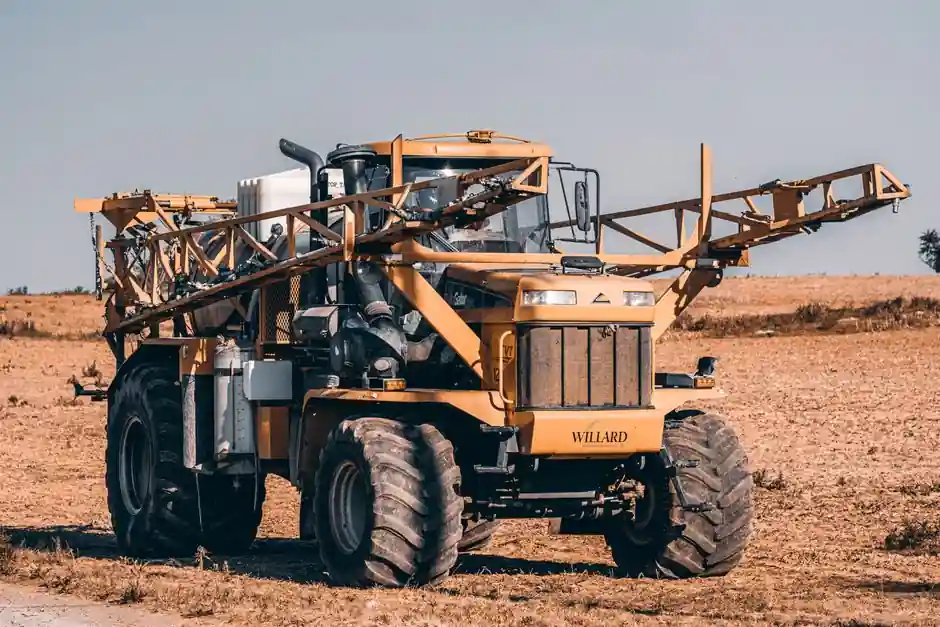
Agricultural OEMs converting from iron and steel weldments to aluminum castings should spec horizontal cold chamber die casting machines in the 500-1,200 ton clamp range, paired with A380, A360, or B390 alloys, to produce gear housings, pump housings, fan blades, and equipment covers at medium-to-high volume [S1][S3].
Aluminum castings weigh about one-third as much as steel or iron, resist corrosion in moisture, chemical, and debris exposure, and let manufacturers consolidate multi-piece weldments into single cast parts, reducing assembly steps and field weight on tractors, harvesters, and combines [S3].
Why Cold Chamber, Not Hot Chamber, for Ag
Aluminum alloys attack the plungers and goosenecks of hot chamber machines, which is why aluminum die casting runs on horizontal cold chamber presses where molten metal is ladled into an unheated shot sleeve and forced into the die by a separate plunger [S5][S7]. Cold chamber aluminum die casting machines cover clamping tonnages from 150 T up to 2,000 T, with the 500-1,200 T band handling the bulk of agricultural component work [S1][S5].
Vertical die casting machines and horizontal hot chamber machines are reserved for low-melting-point alloys such as zinc, lead, and tin; they are not used for aluminum and should be ruled out for any ag component conversion [S5]. The practical ceiling for hot chamber aluminum is the metallurgical attack on the injection hardware, not the machine tonnage.
Alloy Selection: A380, A360, and B390 Compared
A380 is the default workhorse alloy for general aluminum die casting in agricultural equipment, offering a balanced combination of castability, mechanical strength, and pressure tightness, and is the most widely specified alloy for gear housings, pump bodies, and covers [S1]. A360 offers higher corrosion resistance and better elongation than A380, which is the deciding factor when components sit in fertilizer splash zones or in direct soil contact [S1].
B390 is a hypereutectic Al-Si alloy specified for wear surfaces such as fan blade tips, rotor bodies, and gearbox slides, where its high silicon content (around 16-18% Si) gives abrasive wear resistance that A380 cannot match [S1]. For purely structural covers and guards where weight is the primary driver, A380 is the lower-cost choice; for sliding or rotary wear parts, the B390 premium is recovered in service life.
Tonnage, Shot Weight, and Machine Sizing
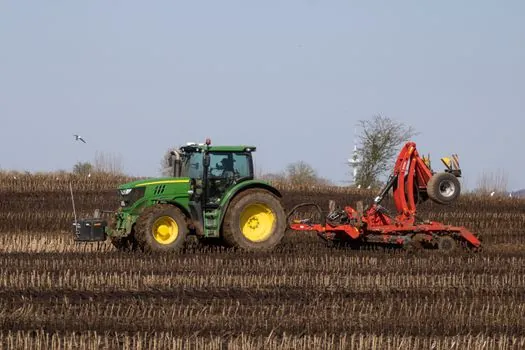
Agricultural housings and covers typically project in the 1-15 kg cast weight band, which maps to cold chamber machines in the 500-1,200 T clamp range that suppliers describe as their core agricultural capacity [S1]. Press builders offer cold chamber machines from 150 T to 2,000 T, with the 500-1,200 T mid-band carrying the largest installed population and the broadest die space envelope for ag-scale parts [S5].
Machine sizing should start from the projected part area, the required injection pressure (typically 30-90 MPa for cold chamber aluminum), and the projected cycle time, not from tonnage alone, because under-clamped dies flash and over-clamped dies inflate capital cost with no quality gain [S5]. For an automated cell with ladling, spraying, and pick-up, the cold chamber machine is the central element, but the upstream furnace, metal ladling device, and downstream sprayer and parts extractor must be sized to match the machine cycle, not the other way around [S5].
Process Options: Manual vs Automatic Cells
Manual cells pair a horizontal cold chamber machine with a separate aluminum melting furnace, an operator-controlled ladle, and a spray unit, and are the low-capex route for short runs, prototyping, and alloy trials [S5]. This configuration suits farm-equipment foundries producing replacement parts in lots under a few thousand per year.
Automatic cells add a metal ladling machine, a parts pick-up robot, and a dedicated spraying machine on a fixed cycle, and are the configuration for medium-to-high volume runs where process capability indices (Cpk) must be held tight on multi-cavity dies [S1][S5]. Melting furnace heating can be electric or gas, with gas dominant where the foundry already has a gas supply and electric preferred for tight alloy temperature control and lower NOx at the cell [S5].
Standards, Certification, and Supply Base
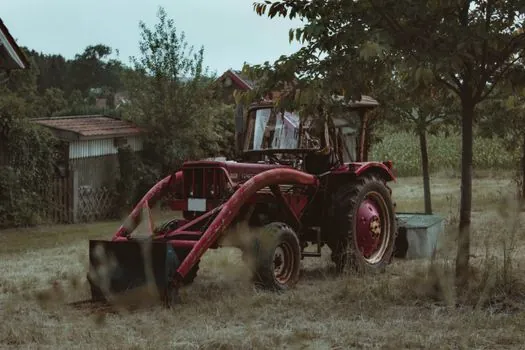
ISO 9001:2015 quality system certification is the baseline expectation at tier-one agricultural die casters, and is the explicit certification cited by both U.S. and Chinese suppliers serving the agricultural OEM market [S1][S4]. Foundries with built-to-print capability should also hold cross-functional inspection routines covering alloy chemistry, dimensional tolerance, and pressure tightness for housings that hold gear oil or hydraulic fluid [S4].
Global supply for aluminum die casting machinery is concentrated among five OEMs (Bühler, Toshiba, Dynacast, Oskar, and Idra Group), with high-pressure cold chamber machines representing roughly 70% of the installed aluminum die casting machine base worldwide [S5]. Domestic Chinese machine builders fill the lower-tonnage and mid-tonnage capacity with horizontal cold chamber units in the 150-1,300 T range, often at a fraction of European or Japanese capital cost [S5].
Conversion Economics and Part Candidates
Conversion from iron or steel weldments to aluminum castings is a realistic path when the candidate part does not need the raw strength of ferrous metal, and typically covers gear casings and housings, pump housings, fan blades and rotors, and equipment covers and guards [S3]. The part's steel or iron design must be re-engineered for aluminum wall thickness and ribbing, then validated by prototype before committing to production tooling, because aluminum's section modulus and modulus of elasticity are both lower than steel's [S3].
Sand casting and permanent mold casting are the dominant processes for these agricultural components, with CNC machining reserved for mating faces and precision features, and die casting layered on top for the higher-volume housings and covers where cycle-time economics justify the die cost [S3][S4]. For an OEM with mixed-volume demand across tractor, combine, and harvester lines, holding both a sand/permanent mold line and a cold chamber die casting line, sourced from a single supplier, removes interface losses between the two processes.
What This Means for Sourcing
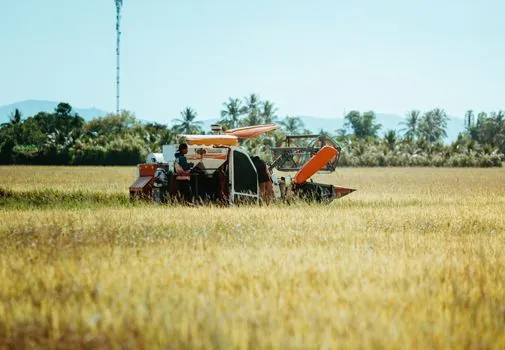
Ag OEMs specifying aluminum die casting should anchor their RFQ on machine type (horizontal cold chamber), tonnage band (500-1,200 T for mid-to-high volume ag housings), alloy (A380 default, A360 for corrosion-critical, B390 for wear surfaces), and cell level (manual for low volume, automatic for high volume), and require ISO 9001:2015 certification with documented Cpk data for the targeted part [S1][S3][S4].
The next node to track is the 2026 demand signal from agricultural equipment output, which feeds back into tonnage mix decisions for any new machine order, and the 2026 supply chain status of the five major machine OEMs, which sets delivery lead time for the 500-1,200 T cold chamber class that dominates agricultural die casting [S2][S5]. For inspection specification on the cast parts, ag buyers can benchmark against the measurement approach used in adjacent vision measuring machine selection for shop-floor dimensional control and against optical comparator selection for 2D feature checks when setting incoming inspection criteria. The process logic for converting gravity-cast and low-pressure cast parts at a related enclosure shop is mapped separately in the gravity die casting selection for telecom enclosures writeup.
Component reference pages worth checking: aluminum die casting machine, die casting machine, and gravity die casting machine.