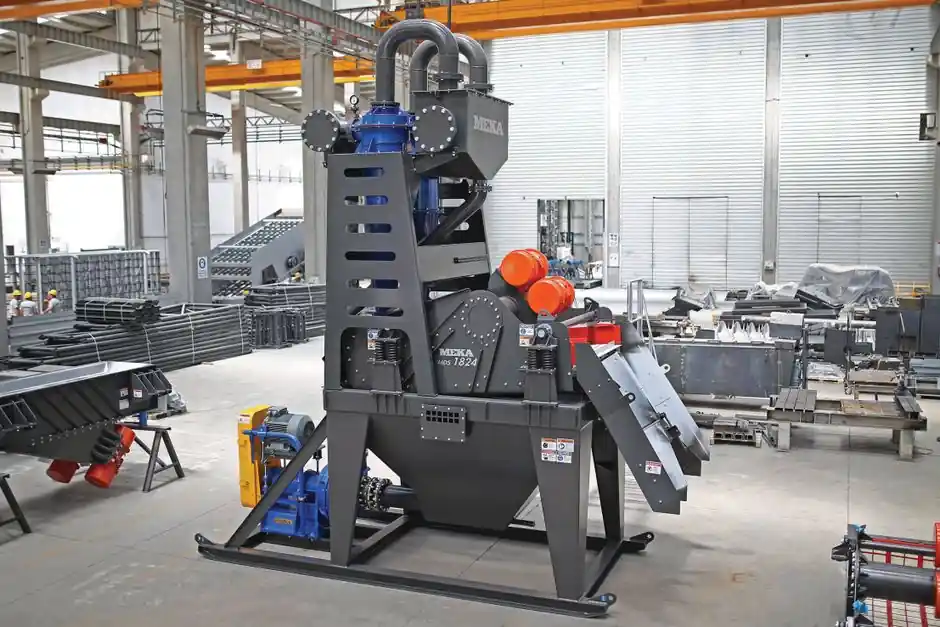
Total cost of ownership for a sand blasting machine is dominated by operating cost, not the equipment sticker: compressed-air energy, abrasive media consumption, nozzle and liner replacement, dust-collection filtration, and operator labor together routinely run 3-5x the purchase price over a 10-year service life [S2][S5].
The market context matters for capex planning. The global sand blasting equipment market was valued at $4.8 billion in 2025 and is projected to reach $7.3 billion by 2033 at a 5.9% CAGR, with portable units at 52.3% share and Asia Pacific at 38.2% revenue share [S3]. A separate sizing puts the narrower "sand blasting machine" segment at $626.3 million in 2025, growing to $931.7 million by 2035 [S6]. A complete TCO model for an industrial blast cabinet must account for every one of those lifetime line items, with the largest savings levers almost always sitting in compressed-air efficiency and media/machine matching rather than in the initial equipment quote [S2][S4].
Five TCO Line Items and How Each One Moves the Bill
Compressed-air energy is the single largest controllable operating cost on a pressure-blast system: in one audited cabinet running twelve 3/16" ceramic nozzles at 60 psig, the calculated design flow was 360 scfm while the metered flow reached 910 scfm, a 2.5x overrun driven by nozzle wear, leaks, and unregulated pressure [S5]. At $0.06/kWh on a lubricant-cooled rotary-screw compressor, that gap alone can mean a $1,500/year per-nozzle swing in electrical cost once nozzles are worn past their useful bore size [S5]. Nozzle material selection is therefore a TCO decision, not a spec footnote, and it depends on abrasive hardness, blast frequency, job size, and site conditions [S5].
Abrasive media ranks second on the variable-cost list. Media is partly recycled in most cabinet systems, so the lbs/hr figure alone understates the cost, but harder abrasives such as aluminum oxide and silicon carbide accelerate wear on nozzles, valves, hoses, and reclaim components and shorten maintenance intervals [S1][S2]. Softer media such as plastic pellets and glass beads lower wear but require tighter pressure control to avoid damaging substrates, and recycled-media quality degrades if dust collection is undersized [S1][S2]. Aligning media hardness to the cabinet's wear-package spec is the most reliable single lever for reducing lifetime spend [S2][S4].
Equipment Type vs. Operating Profile: Matching the Machine to the Job
The "right" sand blasting machine is a function of substrate, throughput, part size, and target surface profile, not a single best model [S1][S2]. For low-volume, prototype, or detail work, a small blast cabinet fits; for industrial-scale throughput, larger cabinets, continuous-feed systems, or pressure blast pots are the appropriate scale, and undersizing a system to a job will accelerate wear, slow cycle time, and shorten component life [S2]. For corrosion control, descaling, weld cleaning, and coating prep on metal, concrete, or composite parts, the relevant equipment taxonomy runs from industrial blast machines and abrasive blast cabinets through wet blasters, dry-ice blasters, wheel-blast units, and shot-peening machines [S1]. Buyers should also evaluate cabinet size, reclaim design, blast-gun configuration, and airflow against the finish spec, because mismatched airflow and reclaim typically manifest as media waste and inconsistent profile before they show up on a maintenance ticket [S1][S2].
A side-by-side comparison of the three dominant options for a generic surface-prep buyer looks like this:
- Portable pressure blast pot: lowest capex, highest mobility, best for field work and shipyards; operating cost is air-utility heavy and nozzle-wear sensitive; sized for intermittent rather than continuous duty [S1][S3].
- Suction blast cabinet: moderate capex, good for small parts and short production runs; media consumption per part is higher than pressure systems because suction is less media-efficient [S1][S2].
- Wheel-blast / airless system: highest capex, lowest per-part abrasive and energy cost at high volume; only economic when annual throughput justifies the dedicated enclosure and media-handling infrastructure [S1][S3].
Where the Cost Hides: Dust Collection, Compliance, and Labor
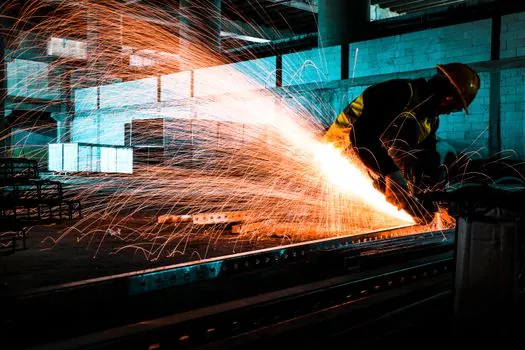
Dust collection is a TCO line item in its own right, not an accessory: an undersized collector shortens nozzle and valve life, clouds operator visibility, and circulates fines back into reclaim, which degrades media quality and finished-part surface profile [S1][S2]. In regulated regions, OSHA-compliant containment and emissions controls add both capex and ongoing filter-replacement cost, so facilities should size dust collection to peak instantaneous media flow rather than average loading [S1].
Labor and downtime are the third controllable bucket. Field audits of industrial cabinets routinely find that operators cannot identify their nozzle type or bore size, and have no logged change-out interval, so nozzles run to failure rather than to a wear threshold, which inflates air cost long before the nozzle actually breaks [S5]. A preventive change-out schedule keyed to hours of service and to measured cfm drift, paired with leak audits on the 4" supply line, typically pays back inside the first year on any multi-cabinet plant [S5]. A dustless or vapor-abrasive mobile setup carries an estimated $50,000-100,000 all-in startup cost for an entrepreneur, with media, fuel, and maintenance dominating the ongoing mix, which makes per-hour cost tracking the only honest way to compare it against a fixed cabinet [S8].
Total-Cost Comparison: What a 10-Year Picture Looks Like
A 10-year ownership model for a mid-size industrial blast cabinet is typically built from five blocks: capex (depreciated), abrasive media (consumption minus reclaim yield), compressed-air energy (kWh x electricity rate x duty hours), wear parts and consumables (nozzles, hoses, valves, cabinet liners, gloves, lighting), and labor plus compliance (operator hours, dust-collector filters, OSHA/NESHAP conformance) [S2][S4][S5]. On a well-run system the air-utility line is usually the largest single bucket, ahead of media and ahead of wear parts, which is why a 2.5x cfm overrun from worn nozzles can outweigh the entire maintenance budget [S5]. Process engineers who treat the nozzle log, leak survey, and pressure regulator with the same discipline as a utilities meter routinely report 15-20% efficiency gains versus legacy setpoints, a range consistent with the modernization gains cited in current market analysis [S3].
For readers scoping adjacent plant equipment, the same spec-first selection logic that drives pneumatic-actuator and process-instrumentation decisions applies directly to blast-cabinet airflow, dust-collector sizing, and media-handling skids; see this pneumatic-actuator selection map for the parallel control-component thinking, and this pneumatic-actuator types guide for the underlying mechanism logic. For a different class of plant where surface prep feeds into coating and inspection, the vision measuring machine selection guide covers the downstream QA half of the workflow. Buyers comparing blast machine materials and durability should also weigh steel, aluminum oxide, and silicon carbide liner options against the production profile, not just the catalog price, which is the comparison of sand blasting machine materials and durability question answered in the sourcing record [S4].
Selection Criteria: Who TCO Analysis Is For, and Where It Misleads
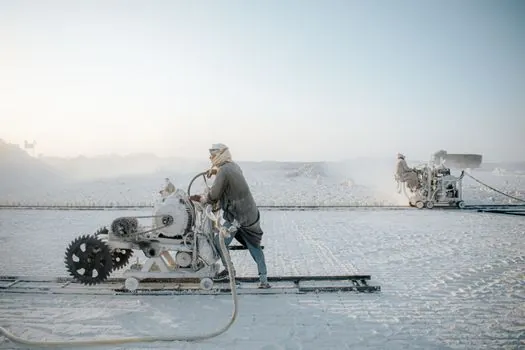
TCO modeling is for any plant running more than roughly 1,000-2,000 blast hours per year, any multi-cabinet facility, or any operation under regulated dust or silica exposure limits, because at those duty cycles the operating-cost variables dominate the purchase decision and the wrong nozzle or media spec will quietly bleed the budget [S2][S5]. It is less useful for a hobby or one-off restoration shop buying a single small cabinet, where purchase price and floor space are the binding constraints and the operating-cost lines are too small to repay the modeling effort [S1][S7]. A common failure mode is to model only the first three years and ignore the year-7 to year-10 wear-part surge (cabinet liner, gloves, lighting, view windows, dust-collector cartridges), which is precisely the bucket that decides whether the cheaper machine was actually cheaper [S2][S4]. Another is to assume media is the cost driver, when on most compressed-air systems the air utility is the larger line and is the one that responds most to nozzle discipline [S5].
Standards, Sourcing, and Trackable Signals
Buyers specifying a sand blasting machine should anchor the TCO model to verifiable spec inputs: nozzle bore and material, operating pressure (typically 60-100 psig at the cabinet for pressure-blast work), measured cfm at the supply line rather than nameplate, abrasive type and Mohs hardness, reclaim yield, dust-collector rated cfm and filter area, and OSHA silica and NESHAP emissions compliance for the site jurisdiction [S1][S2][S5]. The IQS Directory editorial reference covers construction materials, component wear, and the application matrix from corrosion control through shot peening, and is the cleanest cross-vendor catalog of types and sizes for RFQ scoping [S1]. The Kramer Industries buying guide translates those spec inputs into the operating-cost framework that a maintenance or procurement team can sign off on [S2].
Trackable signals to watch over the next two quarters: published 2026 unit-economics benchmarks for wheel-blast versus pressure-blast in automotive restoration shops, any revision to OSHA silica standard enforcement guidance affecting abrasive selection, and the next round of vendor releases around variable-speed controls and precision nozzle design, which the market analysts credit with 15-20% efficiency gains over legacy systems [S3]. For an encyclopedic reference on the equipment family itself, the shot blasting machine and sand blasting machine entries cover the type taxonomy, while the sand cooler, sand mixer, and resin sand line pages cover the upstream and downstream foundry equipment that often shares the same plant floor and the same compressed-air and dust-handling infrastructure.