
For a motor housing casting program, the practical clamp tonnage band sits between 180 and 800 tons, with the 250-950 ton range covering most EV traction motor, industrial servo, and small appliance housing geometries [S1][S5].
Selection is driven by projected shot area, alloy flow length, wall thickness target, and the porosity acceptance level set by the housing's sealing duty (ingress protection, coolant pressure, or oil-mist retention) [S3][S5].
Match Clamp Tonnage to Projected Area and Housing Geometry
A cold-chamber die casting machine is the standard choice for aluminum alloys because molten aluminum attacks the shot sleeve at hot-chamber dwell temperatures, so the metal is ladled into a separate chamber and then injected at high velocity [S4]. The clamp tonnage must overcome the separating force generated by injected metal on the cavity walls; a common working rule is roughly 80-100 tons per 100 square inches of projected area, which lines up with the 180-800 ton machine band used for motor housings from small appliance frames up to EV stator enclosures [S1].
Typical reference builds: Le Sueur's 12-machine aluminum cell runs 250-1600 ton clamps including 750, 950, 600, and 1600 ton units, and the 250-950 ton sub-band is where most motor housing programs land once you exclude very large industrial stator frames [S5]. If the housing footprint pushes past roughly 600 square inches of projected area, you are usually in the 600 ton+ class; below that, 250-400 ton machines handle the bulk of mid-size motor shells [S1][S5].
Cold-Chamber HPDC vs Other Routes: When Die Casting Wins
High-pressure die casting (HPDC) is the first choice for high-volume aluminum motor housings with complex geometry, thin walls, and demanding thermal or sealing requirements, because the process holds tighter tolerances than sand, gravity, or low-pressure casting and produces thinner wall sections at a lower per-part cost [S6][S5]. Cold-chamber HPDC injects molten aluminum into a hardened steel die at high pressure, holds the pressure during solidification to feed shrinkage, and ejects a near-net-shape part in seconds [S2][S4].
Alternative motor housing routes, including aluminum extrusion, CNC machined billet, iron sand casting, and zinc die casting, each have a defined fit zone: extrusion gives consistent round or prismatic profiles at low tooling cost but cannot form irregular housings; zinc die casting suits small humid-environment casings due to seawater corrosion resistance; iron or sand casting fits large industrial housings where weight is acceptable [S1]. For thin-wall, high-volume, thermally loaded housings (EV traction motors, integrated e-drive enclosures), cold-chamber HPDC is the dominant process route [S3][S6].
Alloy Selection for Thermal and Structural Performance
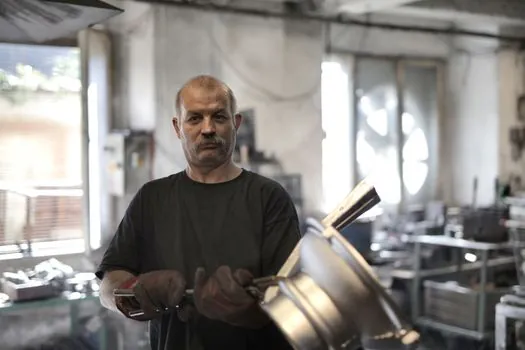
For motor housings where the casting doubles as a heat sink, the two alloys that consistently appear in EV and industrial motor programs are A380 and AlSi10Mg, both chosen for thermal conductivity, castability, and post-machining stability around bearing seats [S3]. A380 is the general-purpose workhorse with a good balance of strength, corrosion resistance, and die filling; AlSi10Mg is the higher-purity European-grade option, widely used in structural EV parts where ductility and weldability matter alongside thermal conductivity [S3].
If the housing is a small appliance or fan motor frame where strength is secondary to cost and heat dissipation, lower-cost aluminum extrusion or A360-family alloys are common; if the housing is a large industrial stator frame where mass and stiffness dominate, cast iron or cast steel is the traditional material and the machine choice shifts away from die casting entirely [S1]. Practical alloy-versus-process comparison for motor housings: A380/AlSi10Mg in HPDC for high-volume thermal housings; A360 in HPDC for moderate-duty frames; aluminum extrusion for round prismatic shapes; cast iron in sand casting for large industrial frames; zinc die casting for small humid-environment casings [S1][S3].
Porosity Control: Vacuum Assist and Squeeze Pin Technology
Motor housings that seal against water, dust, or coolant require pressure-tight castings, and porosity is the dominant defect mode in HPDC aluminum because trapped air and shrinkage porosity form leak paths and exposed voids on machined bearing seats [S5]. Two process features are widely used to control this: vacuum assist on the die cavity, which evacuates air before injection and reduces gas porosity from residual die lubricant; and squeeze pin technology, which deploys pins into the semi-solid casting under high local pressure to displace material and close shrinkage porosity in heavy mass areas [S5].
For EV motor housings with integrated liquid-cooling channels, vacuum assist is described by one North American die caster as an absolute necessity, because any residual gas porosity in a coolant jacket wall becomes a leak path once the channel is machined open [S5]. The practical specification language to put on a motor housing drawing is "vacuum-assisted cold-chamber HPDC, pressure-tight to the rated coolant pressure, with squeeze pins or equivalent local intensification on heavy boss areas" [S5]. For deeper process data on porosity thresholds and process analytics, see Die Casting Porosity Reduction: Process Data Analytics and Control Thresholds.
Secondary Operations and CNC Machining Capacity
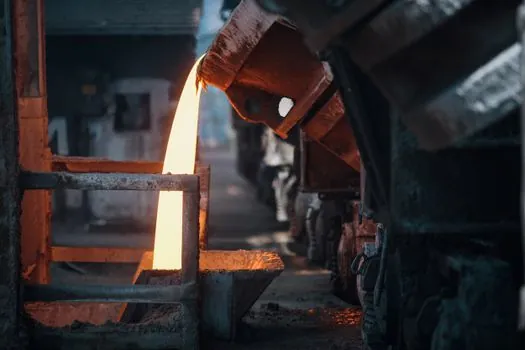
A motor housing is rarely a finished part straight out of the die: bearing seats, pilot diameters, mounting faces, and bolt patterns need CNC machining, and the die caster or tier-1 supplier must offer either in-house CNC or a tightly controlled external cell to hit the alignment tolerances the motor depends on [S1]. A common service package for custom aluminum motor housings bundles die casting mold making, die casting production, CNC machining, and surface treatment (anodizing, powder coating, or shot blasting) in a single supply contract [S1].
Quality systems that matter at the machine-selection stage: ISO 9001:2015 registration is the baseline at volume-oriented aluminum die casters, and the cell should support Visi-Trak process monitoring, MAGMA casting simulation, digital radiography, and in-house metallurgical labs for first-article and ongoing PPAP-level work [S5]. For alloy-level melt and die temperature control on the A356 / AlSi10Mg family, the operating window (melt temperature, die temperature, shot profile) is process-specific and covered separately in A356 Melt and Die Temperature Control in Aluminum Die Casting.
Machine Class Comparison for Motor Housing Sourcing
A simple sourcing matrix lines up the machine class against the housing type: 180-400 ton cold-chamber HPDC for small appliance motor housings, fan motor frames, and small servo housings (typical projected area under ~400 sq in); 400-800 ton for mid-size EV traction motor housings, integrated e-drive inverter housings, and industrial servo housings (projected area roughly 400-800 sq in); 800-1600 ton for large industrial stator frames and commercial vehicle drive housings where the footprint or shot weight demands the larger platen and shot cylinder [S1][S5].
Two qualifiers sharpen the call: first, the 250-950 ton band is where most motor housing volume is actually run, even at suppliers whose cell extends to 1600 tons, so specifying a band rather than a single tonnage gives the supplier room to schedule [S5]. Second, machine class alone does not guarantee a pressure-tight housing, the combination of cold-chamber HPDC, vacuum assist, and squeeze pin (or equivalent local intensification) is what delivers the leak-free performance that EV coolant jackets and sealed industrial housings require [S5][S6].
Two trackable signals to watch on next sourcing reviews: confirmed cold-chamber HPDC with vacuum assist as a written line item on the casting spec (not a verbal process claim), and ISO 9001:2015 plus digital radiography capability as a documented quality gate for first-article and ongoing production parts [S5].
Component reference pages worth checking: aluminum die casting machine, die casting machine, and gravity die casting machine.