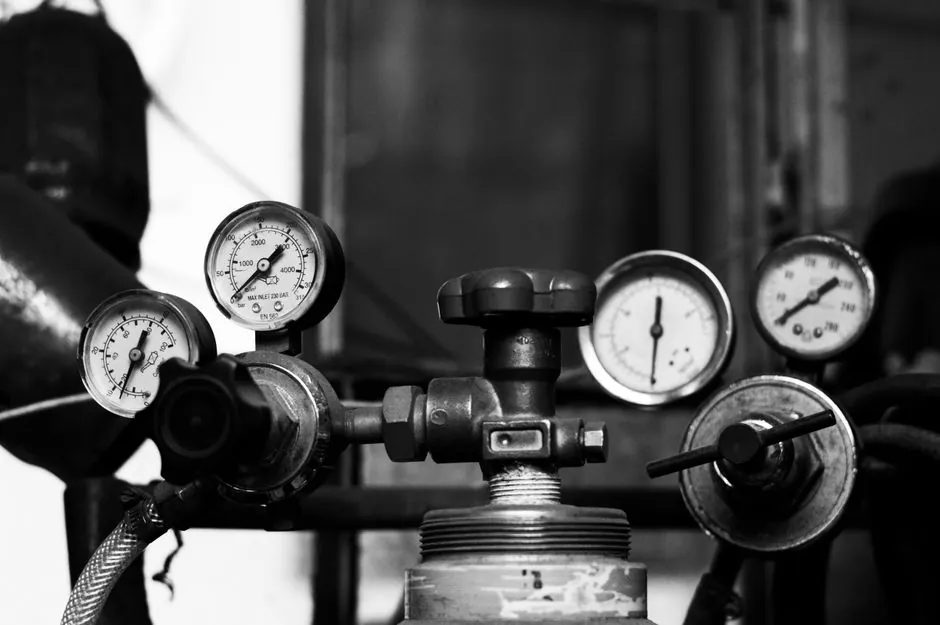
Pump and valve bodies are pressure-tight castings, so an aluminum die casting machine for this category should be sized as a cold-chamber HPDC cell in the 800-1600 ton clamp range with vacuum assist and post-injection squeeze-pin porosity control [S4][S6].
Aluminum alloys 360, 380, 390, and 413 dominate pump and valve body production, with 380 being the most common general-purpose grade and 390 selected where higher silicon content improves wear resistance in valve trim areas [S4]. The cell's clamp tonnage must exceed the projected casting area multiplied by the specific injection pressure (commonly 30-100 MPa for cold-chamber HPDC), and the shot weight capacity must hold roughly 30-40% of the rated metal charge to avoid air entrainment [S1][S6].
Why Pump and Valve Bodies Are a Distinct Sub-Category
Pump and valve castings differ from decorative or structural automotive parts because they must hold pressure: typical body ratings run 10-40 bar for water-service valves and 16-100 bar for industrial process pumps, so shrinkage porosity and gas porosity both become leak paths [S4].
That requirement eliminates the cosmetic-grade HPDC cells that are acceptable for brackets and housings. Le Sueur Inc., a US pressure-tight casting specialist, operates 12 die casting machines from 250 to 1600 ton clamp capacity, and reserves the higher-tonnage Buhler Carat and Prince cold-chamber machines (950-1600 ton) for components where leak-tightness is the primary acceptance criterion [S4]. For comparison, the related guide on aluminum die casting machine selection for automotive parts follows a tonnage-vs-shot-weight logic but tolerates higher porosity in non-pressurised structural sections.
Sizing the Machine: Tonnage, Shot Weight, and Projected Area
Clamp tonnage is calculated from projected area, not part mass: a typical rule is required clamping force (kN) = projected area (cm²) × specific injection pressure (MPa) × safety factor 1.1-1.3, with cold-chamber machines for aluminum usually operated at 40-80 MPa intensification [S1][S6].
For a valve body of roughly 400 cm² projected area at 60 MPa intensification and 1.2 safety factor, the calculated clamp demand is about 2,880 kN, which maps to a machine in the 800-1000 ton class. Shot weight must cover the casting plus biscuit, runners, and overflows: a 4 kg valve body typically needs a machine with at least 6-8 kg aluminum shot capacity. The reference cold chamber die casting machine selection for electronics housings guide applies similar math but at much smaller projected area, so the machine class drops to 200-400 ton for thin-wall connector shells.
Process Options That Matter for Pressure-Tight Castings

Vacuum assist reduces cavity air pressure to roughly 50-200 mbar absolute before metal injection, displacing gas that would otherwise form porosity in the solidified body; it is described as an absolute necessity for pressure-tight aluminum die castings [S4].
Squeeze-pin technology deploys hydraulic pins into the semi-solid casting during solidification, locally re-pressurising the metal to close shrinkage porosity in heavy mass or isolated boss regions. Squeeze pin displacement raises local cavity pressure significantly and is the second key technique for achieving leak-free pump and valve castings [S4]. The combination of vacuum assist (addresses gas porosity) and squeeze pins (addresses shrinkage porosity) is what separates a pressure-tight cell from a standard decorative HPDC machine, and both should be verified on the machine's specification sheet rather than assumed from the OEM brochure.
Alloy and Machine-Material Compatibility
Aluminum alloy 380 (Al-Si8.5-Cu3.5, near-eutectic) flows well at 640-680°C die-casting temperature and tolerates the slow shot-to-fast shot transition without cold shuts, making it the default pump/valve body alloy; 390 (Al-Si17-Cu4) is harder but more brittle and is reserved for wear surfaces [S4].
Alloy 360 offers better corrosion resistance in mildly aggressive water service but machines less cleanly. 413 is selected where maximum fluidity is required for thin-wall valve passages. The cold-chamber shot sleeve is typically nitrided or chromed tool steel rated for 660-720°C melt contact, and shot sleeve life at 380-alloy operating temperature is commonly 50,000-100,000 cycles before re-boring. Buyers should confirm the machine's intensification ratio (plunger area ratio), which on a cold-chamber HPDC is normally 1:10 to 1:20, because a higher intensification ratio lets a smaller machine deliver the same cavity pressure.
Selection Criteria Comparison: Cold Chamber HPDC vs Alternatives

For pump and valve bodies, the realistic process options are cold-chamber HPDC, gravity die casting, and low-pressure die casting; they differ on porosity control, cycle time, tooling cost, and alloy range as follows [S1][S2][S3][S6]:
Cold-chamber HPDC: lowest porosity when paired with vacuum + squeeze pin, cycle time 60-180 seconds, highest tooling cost (typically USD 50,000-300,000 for a pump body die), alloy range 360/380/390/413, best for high-volume production above 5,000 parts/year. Gravity die casting: higher porosity acceptable only for non-pressurised bodies, longer cycle 4-10 minutes, much lower tooling cost, gravity-fed and operator-skill-dependent. Low-pressure die casting: lower gas porosity than gravity, slower cycle than HPDC, used for medium volumes; the related gravity die casting machine selection for energy equipment reference uses similar gravity-fed logic but for non-pressurised housings. The decision typically falls to HPDC for production volumes above 5,000-10,000 parts/year, with gravity retained for prototype or low-volume runs.
Quality Systems and Verifiable Process Capability
Buyers should require ISO 9001:2015 quality system registration as a baseline, and ask the foundry for documented pressure-tight test results (hydrostatic test or helium leak test) on representative castings from the same machine [S4][S5].
In-house process monitoring such as Visi-Trak shot-end monitoring, MAGMA casting simulation, and digital radiography are the standard evidence that a supplier can control porosity in production, not just inspect it out after machining [S4]. Sourcing partners should also be able to provide material certification per casting lot, including chemical composition and tensile data for the specific alloy, and should have a metallurgical laboratory on site for failure analysis. The die casting machine types, tonnage and choice encyclopedia page covers the broader machine taxonomy, while the deeper-dive reference on vacuum die casting machine explains the vacuum assist envelope in more detail.
Who This Cell Is For, and Who It Is Not For
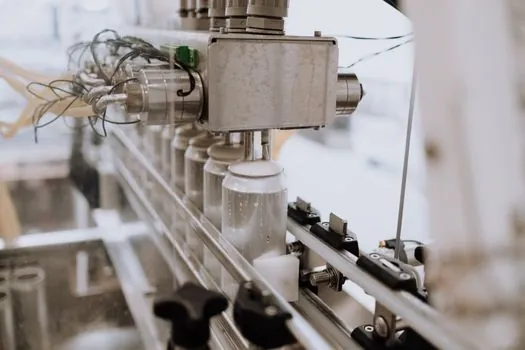
An 800-1600 ton cold-chamber HPDC cell with vacuum assist and squeeze pin is the right answer for foundries producing pressure-tight valve bodies, pump housings, and compressor covers in lots above roughly 5,000 parts per year where leak rate is the rejection criterion [S4][S6].
It is the wrong answer for prototype runs below 500 parts (use gravity or sand casting), for parts above roughly 25 kg shot weight where a 1600 ton machine becomes marginal, and for any application where a cosmetic Class-A surface finish matters more than internal integrity. Hydraulic valve and clamp performance directly determine injection stability and flash behaviour on these large machines, so a buyer should also audit the hydraulic system architecture (proportional valves, accumulator size, cooling) rather than only the mechanical tonnage rating [S1].
The next decision node after machine selection is die tryout and first-article pressure testing: schedule a T0 sample, radiograph it, hydrostatically test it to 1.5x the rated working pressure, and freeze the process window (vacuum level, intensification pressure, squeeze pin timing) before releasing the part to serial production. Track cycle time, scrap rate, and leak-test pass rate as the three signals that confirm the cell is performing to spec.