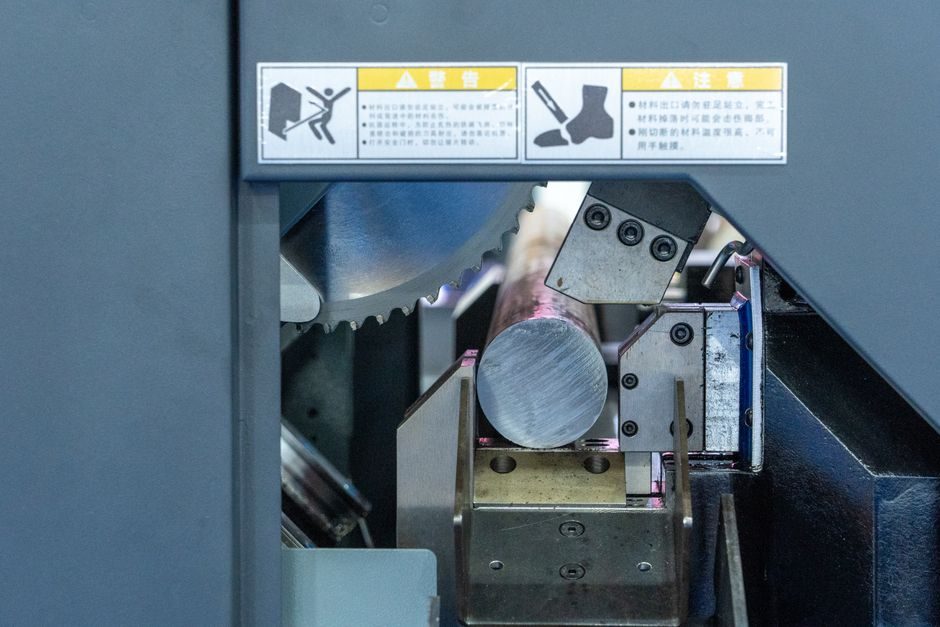
Specifying a cold chamber die casting machine is a locking-force and shot-weight problem first, an automation problem second: Bühler's Ecoline S series covers 3,400–8,400 kN of clamping force and is positioned for aluminum and magnesium workpieces [S1].
At the upper end, Chinese OEM Longhua markets the LH-HPDC 1600T class machine for large structural castings, and the same group is the formulator of Chinese group standard T/CASME 1608-2024 for AI-equipped cold chamber die casting machines [S3]. Buyers running mixed-alloy cells (Al + Mg) should plan peripheral integration around the cold-chamber geometry from day one, since the shot sleeve, gooseneck, and ladle path differ from a hot chamber die casting machine and dictate cell layout [S2][S3].
Locking Force, Projected Area and the 70–80% Fill Rule
Locking force is sized from projected area, not part weight: a part with 500 cm² projected area at 80 MPa cavity pressure demands ~4,000 kN of clamp, and a 1,200 cm² structural part climbs past 9,600 kN — exactly the range Bühler's Ecoline S opens with at the low end (3,400 kN) and other suppliers push beyond with 1,600 t (≈14,700 kN) class machines [S1][S3].
Die-height stroke, tie-bar clearance, and platen dimensions are then cross-checked against the largest die envelope the cell will ever run, not just the current part.
Shot Weight, Injection Pressure and Accumulator Sizing
Shot weight is set by cold-chamber shot sleeve volume (typically 40–70% filled for Al, lower for Mg to limit oxide entrapment) and specific casting pressure in the 40–80 MPa range at intensification; a larger accumulator gives fast ramp-up and small pressure drop, which is critical for thin-wall automotive structural parts [S2].
Injection speed is governed by a high-precision electric proportional valve, with non-contact stroke detection closing the loop on the real-time control system — Lanson specifies a Siemens PLC platform and reports its real-time controller as "leading technology in China" for injection profile control [S2]. For magnesium, the same architecture applies but with tighter oxide-control discipline and a servo ladle / sealed dosing path, as supplied by Longhua's Mg-alloy melting and servo ladle sub-lines [S3].
Alloy Selection: Aluminum, Magnesium and Copper Cells

Cold-chamber geometry is mandatory for alloys that attack the immersion nozzle — aluminum above ~1% Mg content, all magnesium alloys, and copper/brass are universally run on cold-chamber machines, while zinc and low-Mg zinc-aluminum stay on hot-chamber [S1][S2][S3].
Comparison of the three common cold-chamber alloys on selection-relevant criteria:
• Aluminum (e.g. ADC12, A380): density ~2.7 g/cm³, melt ~660 °C, tolerant of cold-chamber cycle times, dominates automotive structural and aluminum die casting machine cells; 3,400–14,700 kN covers the bulk of the part envelope [S1][S3].
• Magnesium (AZ91D, AM60B): density ~1.8 g/cm³, melt ~650 °C, requires SF6/Ar cover gas or vacuum-assist, and is the main use case for vacuum die casting machine derivatives; locking force selection tracks the same projected-area logic as Al [S1].
• Copper/brass: density ~8.8 g/cm³, melt ~930–1,080 °C, drives higher specific shot pressure and forces H13-class die steels with intensified cooling; typical cell count is small and locking force moderate [S2].
For light-alloy cells above 800 t clamp, an aluminum die casting machine line is frequently paired with servo sprayers, servo extractors and conveyor downstream to keep cycle time governed by the press, not the peripherals [S3].
Cell Layout, Peripherals and Throughput Math
Cycle time on a 1,600 t cold-chamber press typically runs 90–180 s depending on wall thickness and cooling, so a single machine is rarely the bottleneck — the bottleneck is the ladle, sprayer, extractor and trim press around it [S3].
Standard peripheral packages seen across 2026 builds include automatic ladle dosing (CENS lists Taiwan-built SS-15 / SS-35 / SS-65 / SS-80 sprayer-ladder combinations for cold-chamber cells), servo sprayer with rotary-type head, servo extractor, and a downstream trim press plus deburring cell sized for the casting weight class [S3][S6]. Aluminum-alloy and Mg-alloy melting furnaces sit on separate foundations to keep Mg melt contamination out of the Al pot, with air-cooled chillers, cooling towers and mold-temperature controllers in the temperature-control loop [S3].
Standards, Controls and After-Sales Reality
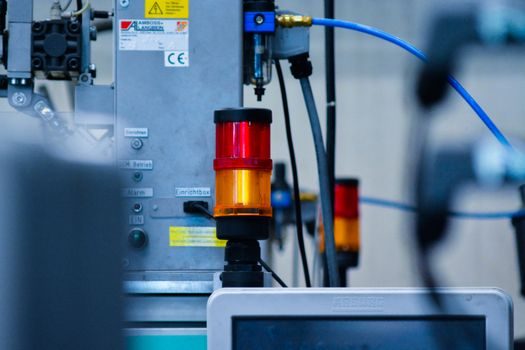
OEMs cite "designed and manufactured according to international standards" without naming a single EN/ISO clause, so the buyer's job is to map the spec to the load case [S2]. At the controls layer, Siemens PLC platforms dominate the 2026 Chinese OEM offering, while Bühler's Ecoline S is positioned as a premium European reference [S1][S2].
Longhua's 2024 publication of T/CASME 1608-2024 — a Chinese group standard for AI-equipped cold chamber die casting machines — is the first codified national-level reference tying machine control to AI-based process monitoring, though the standard's binding scope is limited to the Chinese market [S3]. Quoted lead times out of Anhui / Zhejiang suppliers run inside 15 working days off-season and around one month in peak season under FOB/CIF/LC/T/T Incoterms, with OEM/ODM and sample builds offered. For magnesium cells, magnesium die casting machine safety demands cover-gas management and a sealed vacuum die casting machine option for high-integrity structural parts [S3].
Common Failure Modes and Sourcing Watch-Outs
The three failure patterns seen most often on 2026-spec cold-chamber cells are: (1) under-sized locking force, with flash on long-tonnage structural parts; (2) under-sized accumulator, with thin-wall fill shortfall on parts requiring >4 m/s injection velocity; and (3) poorly integrated peripherals, with sprayer and extractor cycle exceeding press cycle [S2][S3].
Used or rebuilt presses from Chinese B2B marketplaces list large copper die-casting machines in the catalog without published locking-force data — that gap is a red flag, since shot weight, platen size and tie-bar clearance are all required to validate a rebuilt press for a new part [S4]. Sourcing a press from a gravity die casting machine background is a separate question: gravity cells run lower injection velocities entirely and are not drop-in substitutes, even when platen dimensions match.
Closing: two signals worth tracking through the rest of 2026 are (a) revisions to T/CASME 1608-2024 as Chinese AI-equipped cold chamber standards mature beyond the 2024 baseline, and (b) any Ecoline S successor from Bühler that extends locking force above 8,400 kN for larger automotive structural castings [S1][S3]. Cross-reference the injection-molded part selection logic when plastics and die-castings share a part number, since resin and Al tolerance windows diverge by an order of magnitude.