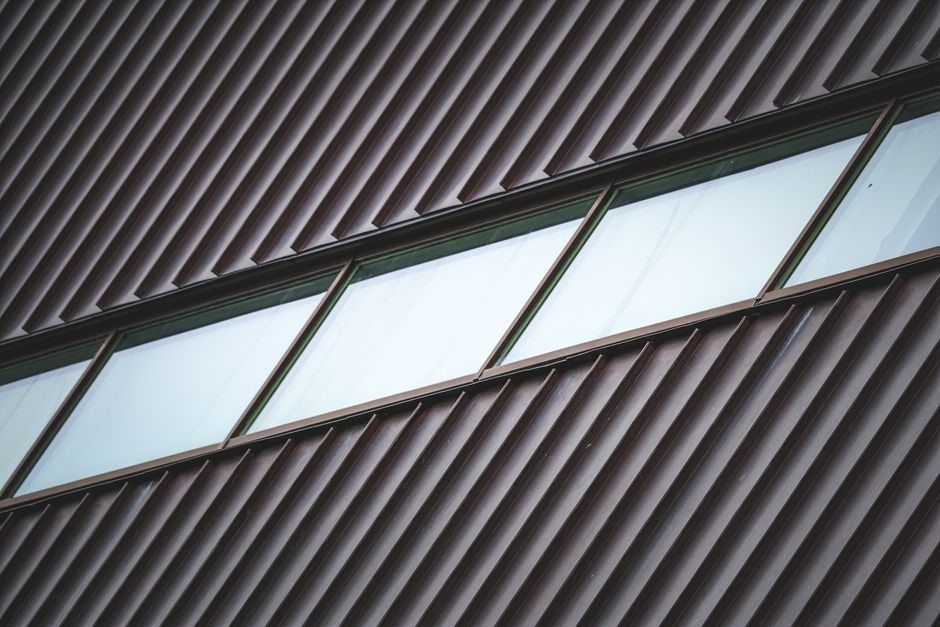
6063-T5 and 6061-T6 aluminum extrusion profiles sourced through Made-in-China, ECVV and Shanghai Metal cluster in a tight US$2,300–3,600/ton FOB band for mill-finish industrial, window and door sections, with one Guangdong supplier quoting a wider US$1,500–3,000/ton window-profile range on a 1-ton minimum [S1][S10].
Per-piece 80/20-style T-slot framing and corner brackets price between US$1.98 and US$3.30 at 10-piece MOQ, and 6063/6061 solar-panel profiles weigh 0.552–0.701 kg/m at lengths up to 13 m in T5/T6 temper [S2][S3]. Monthly supply on the platform runs to 5,000 tons from audited mainland suppliers, with 20-ton MOQs common on the lower-quoted building-extrusion lines [S1][S7].
Price bands by profile family, July 2026
Mill-finish 6063/6061 industrial and architectural extrusion posts at US$2,300–2,800/ton from Shandong's Linyi Shengao, anchored by a 20-ton MOQ, while Guangdong Yonglijian widens the window-and-door band to US$1,500–3,000/ton at 1-ton MOQ for spot buyers [S1][S7][S10].
Aluminum window frame extrusion from the same platform cluster sits at US$2.70–3.30/m, truck-body 6061 sections and wheel-arch profiles sit at US$2,800–3,600/ton, and LED heat-sink profiles with machined surfaces priced US$2.99–3.09/piece at low MOQ [S5]. Building-extrusion profiles are commonly quoted in the US$1,500–3,000 per ton range [S1], and small-piece industrial items such as heat sinks and window-frame extrusions are sold in the low single-digit US dollar range per piece or per meter (e.g., US$2.99–3.09 per piece, US$2.7–3.3 per meter) [S5].
Alloy, temper and weight as cost drivers
Solar-panel and industrial extrusion runs on 6000-series alloys — 6060, 6061, 6063, 6082, 6005, 6463, 7003 — in T5 and T6 temper, with Shanghai Metal quoting section weights of 0.552–0.701 kg/m for module frames and a maximum cut length of 13 m [S3].
For 80/20 framing and corner brackets, Suzhou Hengxinyu supplies 6000-series T-slot at US$1.98–3.98 per piece at a 10-piece MOQ, and Linyi Shengao's L-corner / angle profile carries an over-10 µm anodizing layer on a 20-ton MOQ at US$2,300–2,800/ton [S2][S7]. Surface treatment — anodize, powder coat, electrophoresis, wood-grain transfer — adds roughly 8–15% to the base extrusion cost depending on film thickness and color.
MOQ tiers, lead time and supplier capacity
MOQ scales inversely with process complexity: standard mill-finish window/door profile accepts a 1-ton MOQ, anodized corner profiles require 20 tons, and 80/20 T-slot framing is orderable from a single 10-piece carton [S1][S2][S7]. Guangdong Yonglijian publishes a 5,000-ton/month capacity across its YLJ product line and accepts L/C, D/A, D/P, T/T, Western Union and MoneyGram, which matters for first-time buyers negotiating smaller pilot runs [S1].
Jiangyin-based Smartecho runs ISO 9001 and ISO 14001 certified lines at 80,000 tons/year of LED heat-sink and industrial profile from a Shanghai-port shipping base [S4]. Alumag Aluminum Tech (Taicang), established April 2002, lists extrusion alongside die-casting, forging, CNC machining and bicycle-part production — useful for buyers who want one supplier to handle the full fabricated assembly rather than just the raw profile [S8].
Decision matrix: which profile grade to specify
For structural framing, 6063-T5 is the default pick: lower quench stress, easier anodizing, lower cost per ton. For load-bearing chassis, jigs and truck bodies, 6061-T6 delivers roughly 1.5× the yield strength at a small price premium [S3][S5]. Heat-sink and LED housing specify 6063-T5 with CNC-machined fin geometry — the Smartecho and Shanghai Metal ranges both fit this duty [S3][S4].
On cost per linear meter, decorative 6063 sits at US$2.70–3.30/m for window frame sections, and the 80/20-style T-slot bracket sits at US$1.98–3.30/piece [S2][S5]. Solar module frames at 0.552–0.701 kg/m convert to roughly US$1.30–2.10/m at current alloy cost, which makes aluminum the default structural pick against steel for sub-1.5 kg/m assemblies. The cross-roller and linear-guide bearing markets use 6061-T6 plate the same way — see the alloy selection reference for temper and grade comparison.
Fabrication, finishing and downstream cost adders
Standard downstream services bundled with extrusion supply include cutting, milling, punching, stamping, drilling, CNC machining, assembly and export packing, with Shanghai Metal offering a one-stop chain from mould through delivery [S3]. Anodizing to a 10 µm-plus film (Type II) and powder-coat add a measurable per-ton premium versus mill finish, and are the two most common finishes on Linyi Shengao's L-corner and window profiles [S7][S10].
For higher-end architectural extrusion, electrophoresis (clear E-coat over anodize) and PVDF fluorocarbon paint extend outdoor UV life to 20+ years, though they push cost past the standard powder-coat adder. Buyers specifying finish must confirm film thickness in micrometres and AAMA 2603/2604/2605 compliance where U.S. architectural projects apply — outside the research scope, so require the test report per lot. For framed assemblies using these profiles, aluminum window and door selection covers threshold, glazing bead and thermal-break logic that the extrusion supplier typically does not.
Trade terms, ports and risk flags
Most Chinese extrusion exporters ship FOB Shanghai or FOB Guangdong, with payment in USD via T/T (30/70), L/C at sight, or the full payment mix Guangdong Yonglijian publishes [S1]. On 20-ton MOQ lines, expect 25–35 day mill lead time plus 7–14 days surface-treatment queue; on 1-ton MOQ window/door orders, the same factory will sometimes dispatch from finished-goods stock in 10–15 days [S1][S7].
Watch-outs at this price level: confirm the alloy temper with a spectrometer test report per heat lot, verify anodize film thickness in µm not "class", and lock the dimensional tolerance class (typically GB/T 5237 or EN 12020-2 for architectural, EN 755-9 for industrial) on the PO. For comparison with related fabrication processes, the magnesium die-casting sourcing map covers a similar supplier-density pattern in the Yangtze River Delta, and the aluminum extrusion selection guide covers tolerance classes and alloy picking in more depth.
Sourcing map and verified next signals
Three clusters dominate the 2026 supply: Guangdong (Yonglijian, Foshan-area window/door lines), Jiangsu (Suzhou Hengxinyu for T-slot, Jiangyin Smartecho for heat-sink, Taicang Alumag for fabricated assemblies), and Shandong (Linyi Shengao for anodized corner and architectural sections) [S1][S2][S4][S7][S8]. For fabricated enclosures, a separate enclosure-price index on Made-in-China lists 28,029 active SKUs across power-distribution, garage-door and shower-room categories [S9].
Trackable signals into Q3 2026: Shanghai Metal's published solar-extrusion weight band (0.552–0.701 kg/m) and 13 m length ceiling for module frames, Linyi Shengao's 20-ton MOQ floor for anodized corner stock, and the ECVV platform's 1-ton MOQ window-profile line from Yonglijian — each is a verifiable datapoint a buyer can re-quote against on the next sourcing cycle. For structural framing where 80/20-style T-slot is overkill, linear guide and crossed roller guide bearing selection often piggy-backs on the same 6063-T5 profile supply chain.