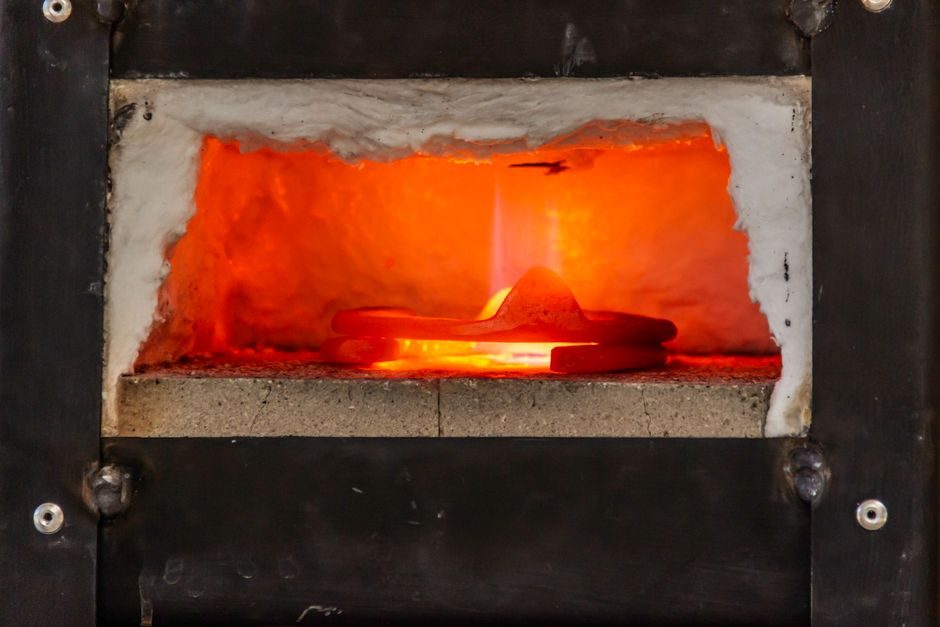
Industrial additive manufacturing (AM) part cost decomposes into five hard buckets: raw material, machine depreciation + energy, labor for build prep and post-processing, consumables (powder refresh, gases, supports, build plate), and quality/inspection overhead. A 2026 spec-first read of the cost stack shows that raw material and post-processing together account for roughly half of the per-part dollar, while the machine itself has become a smaller share as utilization improves [S8][S9].
For buyers comparing additive manufacturing material options against CNC or injection molding, the relevant question is no longer "can AM make it?" but "where does AM win on total cost per functional part?" The answer, in nearly every audited shop-floor dataset, is low-volume, high-mix, geometry-complex parts where conventional tooling cost dominates — not high-volume commodity parts [S8].
Cost Driver Hierarchy: Material, Time, Labor, Cert
Across metal powder-bed fusion (PBF-LB/M, PBF-EB/M) and polymer vat photopolymerization, raw material consistently ranks as the single largest line item, with metal powder (17-4PH, Ti-6Al-4V, Scalmalloy, Inconel 718/625) priced an order of magnitude above the equivalent wrought billet per kilogram; AMRC research published 11 May 2026 explicitly targeted multi-laser aluminium PBF as a cost-and-throughput lever, demonstrating that build-rate improvements cut machine-time cost per part faster than they cut material cost [S9]. Polymer resin for SLA/DLP is cheaper per kilogram than metal powder, but waste rates and post-cure labor flip the labor share back upward for low-volume runs.
Machine depreciation is the second line on the spreadsheet but typically the first line engineers attack. Industrial metal PBF systems depreciate over 7-year cycles with high annual utilization assumptions; the depreciation per build hour drops sharply once a machine is running two or three shifts. In 2026 commercial practice, an idle machine is the most expensive line item in a service bureau's P&L [S8]. Energy is a sub-driver inside machine time: each metal PBF build consumes significant kWh for lasers, recirculating gas (argon/nitrogen for titanium and aluminium), and chamber conditioning; multi-laser configurations amortize this fixed overhead across more kilograms per build [S9].
Material Pricing Bands and Powder Refresh Logic
Metal powder pricing in 2026 follows a clear alloy hierarchy: aluminium (AlSi10Mg, 6061-RAM2) sits in the lower band, stainless 316L/17-4PH in the mid band, titanium Ti-6Al-4V at a 5-10x premium to stainless, and nickel superalloys (Inconel 718, Haynes 282) at the top. Cost-cutting in spec'd parts almost always means downgrading alloy, not downgrading machine — a switch from Ti-6Al-4V to 17-4PH often halves the material line without changing the build envelope, post-process, or machine qualification [S2].
Powder refresh ratio is the hidden multiplier: most PBF systems reuse unsintered powder from a finished build, blended back with virgin powder at a supplier-specified ratio (commonly 30-70% refresh depending on alloy, particle morphology, and oxygen pick-up). A shop that neglects powder refresh tracking will see its effective material cost drift upward over time; conversely, shops running tight powder-handling protocols (sieving, oxygen monitoring, traceability per ASTM/ISO powder-lifecycle practice) can hold the refresh ratio low and stabilize the per-part material figure across long campaigns [S2].
Build Volume Utilization: The Geometry-Driven Variable
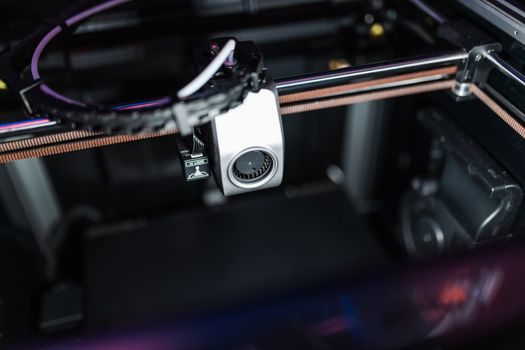
Build volume utilization — the percentage of the machine's print envelope filled with saleable part volume — is the single most leveraged cost variable a buyer can move without changing the machine. AMRC's 11 May 2026 multi-laser aluminium work directly targets this lever: more lasers per build, combined with topology-optimized nesting, pushes the parts-per-build count upward and the per-part cost downward [S9].
Conversely, parts that consume a large build volume in a single piece (turbine blades, structural aerospace brackets) will run with low utilization, which inflates the machine-time share of cost. For these parts, AM is chosen on lead time and geometric freedom, not on unit cost. Spec-first buyers should always ask for the as-printed bounding box and the % envelope fill before comparing an AM quote to a CNC or forging quote [S8].
Post-Process and Labor: The Hidden Half of the Bill
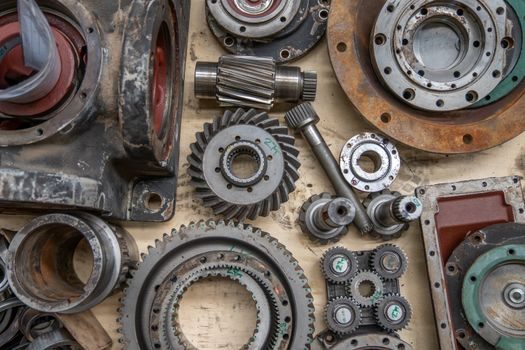
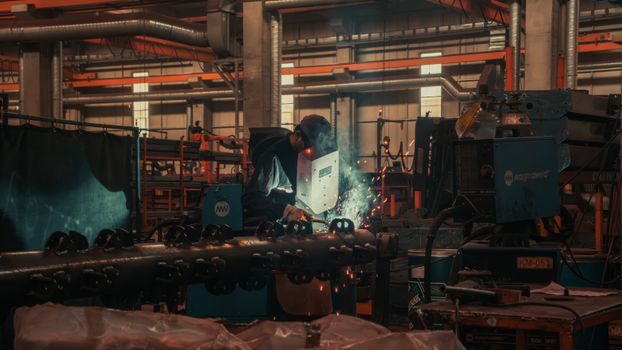
Post-processing — depowdering, support removal, stress relief, HIP (hot isostatic pressing) for critical metal parts, surface machining, bead-blast or polish, and inspection — typically equals or exceeds the build-cost line for metal AM. For critical-service aerospace and medical parts, HIP plus non-destructive examination is not optional; these steps add fixed cost and lead time that no machine-side optimization can remove [S2].
For related quality discipline and process-window control, the AM quality standards reference covers melt-pool monitoring, NDE, and process documentation in spec-first format. When buyers want to compress the labor share, the lever is design for AM (DfAM): orienting parts to minimize supports, designing for as-printed surface finish, and specifying tolerances that match as-built capability rather than machining-finished capability. A 2026 service bureau quoting in DfAM-aware mode will return a lower part cost than the same bureau quoting a part that was designed for CNC and then "AM-converted" at the end [S3][S8].
Software, Slicing, and the Build-Prep Cost Line
Software for build preparation is a small line on a per-part basis but a hard gating cost on the engineering hour side. AM software stacks in 2026 (commercial platforms catalogued at SourceForge and OEM additive suites bundled with the printer) include CAD import, support generation, slicing for layer-by-layer toolpaths, build-volume simulation, and custom report generation for manufacturing records [S3]. Engineering hours spent on manual support placement or repeated slicing trials are a real labor cost; modern additive manufacturing extensions in mainstream CAD packages now automate most of this, but the FFF / FDM polymer community continues to surface feature requests for finer manual support control, indicating the gap has not fully closed [S6][S10].
The capex vs opex trade here is clear: a bureau licensing a top-tier AM software stack plus a multi-laser metal PBF machine will price differently from a job shop running a single mid-range polymer system.
Total Cost of Ownership: Not the Printer Sticker
Total cost of ownership (TCO) for AM is not the printer purchase price, and is not even the per-part build cost. It is build cost + post-process + rework + scrap + qualification + facility (inert gas supply, HVAC for fine powder, operator training, EHS controls) amortized across the actual number of saleable parts. For a metal PBF line running 3-shift utilization with stable powder handling, the facility and labor overhead per part falls; for a 1-shift R&D line, the same overhead inflates the TCO and turns what looked like a competitive unit cost into an uncompetitive landed cost [S8].
For OEM-vs-ODM decisions on whether to buy a printer or contract a bureau, the spec-first selection map at 3D Printing OEM vs ODM and the AM capacity planning reference both quantify the utilization threshold above which in-house capex beats outsourced service. In 2026 the consensus threshold sits well above what most first-time buyers forecast in their business case — and the gap is almost entirely facility and labor overhead, not machine depreciation [S8].
Selection Rule: When AM Cost Beats Conventional
Use this four-criterion filter when comparing AM unit cost against CNC, casting, or injection molding: (1) part volume in the build envelope above ~30% utilization, (2) alloy available in qualified powder form, (3) geometry that exploits AM's layerwise freedom (lattices, internal channels, topology-optimized organic shapes), and (4) production volume low enough that conventional tooling amortization does not overtake AM machine time. If all four hold, AM typically wins on per-part cost; if any fail, conventional usually wins on cost and AM should be chosen on lead time, weight, or consolidated-bill-of-materials grounds instead [S8][S9].
Trackable signals for the next buying cycle: (a) the multi-laser aluminium PBF cost-per-kilogram curve as more machines ship in 2026-2027 [S9], (b) powder refresh ratio benchmarks becoming a quoted line on bureau RFQs, and (c) post-process labor share as a spec line item on commercial quotes, which would force the industry to standardize the labor-cost block the way the machining industry long ago standardized setup time.
Spec-level background on the components involved: pressure transmitter, and flow meter.