
Aluminum extrusions are hot- or cold-pushed profiles made from alloys whose designations start with 1, 2, 3, 5, 6 or 7, with wall thickness above 0.5 mm, a maximum linear weight of 22 kg/m and a cross-section that must fit inside a 254 mm circle per the Canadian SIMA product definition [S3].
Across the 2026 supply base — from Chinese exporters on okorder [S4] to North American producers such as Unique Extrusions, Extrum and Extrudex [S1][S6] — the same alloy/temper grammar drives every quotation: 6063-T5 for architectural and light-structural profiles, 6061-T6 for structural and machinery frames, 2000/7000-series for higher-strength duty, and 6005/6463 for specialty architectural trim [S3].
Alloy and Temper Selection Map
The Aluminum Association 1xxx–7xxx numbering governs which alloy family an extruder is allowed to quote against, and 6000-series (Al-Mg-Si) dominates the extrusion market because Mg₂Si precipitation hardening can be triggered by a separate aging furnace rather than in-press [S3]. 6063 is the workhorse for architectural and decorative sections; 6061 carries higher strength for aluminum alloy structural and load-bearing frames; 6005 is used where weldability and slightly higher strength than 6063 are needed; 6463 is reserved for bright-finish decorative profiles [S1][S3].
Temper is specified separately from alloy and is the second decision axis: T4 (solution heat-treated, naturally aged), T5 (cooled from extrusion press and artificially aged) and T6 (solution heat-treated then artificially aged for peak strength) are the three tempers most commonly referenced in extrusion RFQs, and the SIMA exclusions explicitly call out 6063-T5 picture-frame mouldings and 6063-T6 powder-coated window/railing extrusions as separate categories [S3]. At Unique Extrusions the published envelope covers 2000-, 5000-, 6000- and 7000-series alloys with closed-loop extrusion speed control and circle sizes from miniature up to 20 inches [S1].
Profile Geometry: Solid, Semi-Hollow and Hollow
Three geometric families cover almost every catalog line: solid (no internal void, e.g. flat bar, square bar, simple angles), semi-hollow (a single void with the opening width larger than the wall thickness and not fully enclosed) and hollow (a fully enclosed void, e.g. rectangular tube, round tube) [S3]. The 254 mm circumscribing-circle rule in the SIMA definition [S3] is effectively a press-billet-size cap: any profile whose tightest enclosing circle exceeds 254 mm falls outside that regulatory envelope and into the large-profile class.
Xinx ALUM in China operates 15 extrusion lines from 600-ton up to 2,600-ton presses, with maximum circumscribed circle below 350 mm and a 6000-series focus [S2], while Okorder's bulk 6063-T5 industrial profile is offered as mill-finish in arbitrary length for machine, building and industry fields [S4]. For hollow structural framing, an aluminum window door extrusion commonly uses 6063-T5 with a wall thickness 1.0–2.0 mm and a 4-cavity thermal-break pocket; the SIMA exclusions even list 6063-T5 3.66 m head-rail and bottom-rail profiles powder-coated to AAMA 2603 for honeycomb cellular window shades as a separate dutiable class [S3].
Process Families: Direct vs Indirect and Press Limits

Direct (forward) extrusion pushes a heated billet through a stationary die; indirect (backward) extrusion runs the die through a stationary billet and gets lower friction, finer grain and higher speed on tough alloys [S1][S2]. The press tonnage window quoted by Chinese fabricators spans 600–2,600 tons, with 350 mm circle size and 6000-series as the baseline [S2]; Unique Extrusions adds closed-loop extrusion speed control, multiple direct presses, and a 20-inch (≈508 mm) circle ceiling as its US-side capability claim [S1].
When the press tonnage/circle pair is wrong, the defect shows up as die deflection, surface tearing or un-filled corners — a process engineer is generally looking at billet temperature (typically 400–500 °C for 6063), ram speed, and the die-bearing length for the thinnest wall. Extrum and Extrudex both emphasise precision, high-complexity dies and a North-American supply base as the differentiator over the Chinese OEM channel [S6]; Apextrusion lists 50,000-ton annual capacity and a 200 kg MOQ at the bottom of the order book [S5].
Surface Finishes and the AAMA 2603 Boundary
Mill finish (as-extruded), mechanical (brushed, polished, vibratory-deburred), anodized (standard, two-step, bright-dip, hard-coat) and powder-coated are the four finish classes cited across vendors [S1][S2][S3]. Unique Extrusions lists a 30-foot line maximum, RoHS-compliant coatings, infrared and convection curing ovens, and four anodizing variants including hard-coat [S1]; Xinx ALUM matches with mill, anodized and powder-coated as its standard menu [S2].
AAMA 2603 ("Voluntary Specification, Performance Requirements and Test Procedures for Pigmented Organic Coatings on Aluminum Extrusions and Panels") is the explicit certification boundary in the SIMA exclusions for 6063 and 6005 powder-coated railings, cellular window-shade rails and 20–33 ft window-frame extrusions [S3]. For higher weathering duty, AAMA 2604 and 2605 sit above 2603 in the same AAMA family, but those numbers are NOT cited in the research material and should be confirmed against the current AAMA bulletin before being written into a project spec.
Industrial Application Clusters
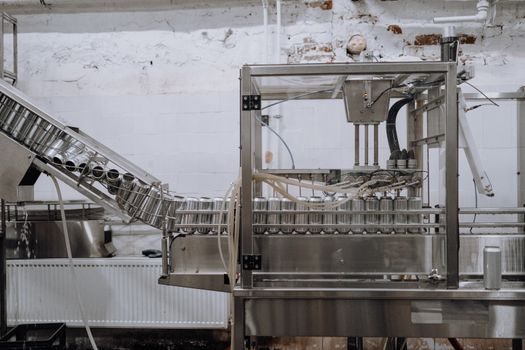
Five application clusters cover the majority of quoted tonnage: (1) architectural — window, door, curtain-wall and railing profiles, dominated by 6063-T5/T6; (2) transportation — truck/trailer cross-members, EV battery trays and rail interiors, dominated by 6005/6061/7003; (3) machinery and automation — gantry, conveyor and linear-motion frames, where 6063-T5 with ±1.5 mm straightness per 6 m is a documented SIMA exclusion class [S3]; (4) heat-sink and electronics — finned profiles and micro-channel tubes, where the SIMA exclusions list 5-blade turbulators and 300-17 / 300-32 / 450-26 / 450-49 micro-channel tubes as carved-out subclasses [S3]; (5) consumer and OEM — ladders, aluminum ladder sections, aluminum veneer panel sub-frames, and decorative trims, where 6463 bright-finish is the typical pick.
The decision matrix an engineer should run is straightforward: alloy → temper → profile geometry → finish → certification. For a structural gantry in a North American plant, 6061-T6 hollow with anodized finish and AAMA 2604 (or higher) powder-coat is the conservative call; for an architectural hand-rail in Canada, 6063-T6 with AAMA 2603 powder-coat is the explicit SIMA-exclusion class [S3]; for a heat-sink, 6063 thin-wall multi-void hollow at sub-700 g weight is the duty that the SIMA text carves out under tariff item 8473.30.90 [S3]. Cost-down Chinese supply on okorder and Apextrusion targets 6063-T5 mill-finish industrial profiles at MOQ 200 kg [S4][S5].
Equipment Side: Press, Billet Heater and Die-Nitriding
Behind every extruded profile sits a gas aluminum melting furnace for billet casting/soaking, a direct or indirect press in the 600–2,600-ton class [S2], a die-nitriding station, a separate aging oven for T5/T6 tempers, and a saw/stretcher line. The closed-loop speed-control loop at Unique Extrusions [S1] is the same architecture Chinese suppliers describe as "extrusion line" without naming the control brand.
Downstream of the press, fabrication cells cover sawing, CNC machining (3-axis through 5-axis), punching, notching, bending, welding (MIG/TIG), and assembly, which is what Xinx ALUM bundles into its "one-stop" position [S2]. For high-volume structural parts the aluminum die casting machine alternative becomes a real comparison point: die casting wins on repeatability and complex 3D geometry above ~10 mm wall, extrusion wins on long linear profiles, open cross-sections and structural stiffness-to-weight.
Trade and Sourcing Reality in 2026
The 2026 sourcing landscape has three live channels: Chinese OEM factories on okorder and Apextrusion (200 kg MOQ, 50,000-ton annual capacity, 6063-T5 mill-finish as the default SKU) [S4][S5]; mid-tier Chinese fabricators like Xinx ALUM offering extrusion + fabrication + finishing under one roof since 1992 [S2]; and North American producers (Unique Extrusions, Extrum, Extrudex) emphasising precision, complex dies, ISO 9001:2015 and shorter logistics cycles [S1][S6]. For buyers of perforated metal, wire mesh and similar linear building products, the same supplier network overlaps — see the perforated metal sheet selection guide and the wire mesh panel selection guide for the adjacent categories.
For cost engineers comparing extrusion against alternative processes, the aluminum die casting price and cost guide 2026 lays out the die-casting benchmark on the same aluminum-alloy feedstock. Two trackable signals to watch: (1) whether the 254 mm circle / 22 kg m⁻¹ / 0.5 mm wall SIMA envelope is revised in the next CBSA SIMA review, and (2) how fast 6000-series billet surcharges re-price in Q3 2026 as freight and energy settle.