
For 2026 industrial sourcing, wire mesh panel specification is decided by four independent parameters: wire diameter, opening aperture, corrosion-protection coating, and edge/frame configuration — with 50x50 mm aperture paired with 2.0–4.0 mm hot-dip galvanized wire dominating wholesale SKU pages on Made-in-China.com [S5].
Buyers who lock all four parameters before RFQ reduce rework on cut-to-size panels, fence rolls and roll-cage shelves; mismatched gauge-versus-opening is the most common cause of panel sag under 500 kg load ratings seen on 4-panel roll containers such as the Arcawa SRC0708-P [S1].
Wire Diameter and Opening Aperture: The First Decision Pair
Aperture and wire diameter are coupled mechanically — a finer opening with the same wire gauge stiffens the panel but reduces open area, while a heavier wire with a coarse opening increases impact resistance for industrial fencing. The Arcawa SRC0708-P roll container specifies 50x50 mm mesh panels, a geometry widely stocked for shelving and fencing crossover SKUs [S1].
For security-grade perimeter fence, the 358 anti-climb profile uses 8-gauge wire (≈4.06 mm) with 3 × 0.5 in (76.2 × 12.7 mm) openings — an aperture so narrow that fingers and standard hand cutters cannot penetrate, per manufacturer specification [S2]. This pairing is the de-facto benchmark for high-security sites such as prisons and utility substations, and it has been in continuous production for 30 years by Anping Enzar Metal Products [S2].
For shelving, machine guarding and material handling, the heavier-end 4.0 mm wire with 50x50 mm openings balances rolling-stock strength against open area for visibility, with 2.0 mm and 3.0 mm diameters offered as the lighter cost-down options on the same factory lines [S5]. Engineers should treat aperture × wire-diameter as a single coupled variable, not two independent ones.
Coating Systems: Hot-Dip Galvanizing vs PVC vs Bare Welded
Hot-dip galvanizing after welding is the default coating for outdoor welded mesh panels because the zinc layer protects the weld intersection, which is the most common corrosion-initiation point. The 2026 wholesale category for Hot Dipped Welded Wire Mesh Panel on Made-in-China.com lists construction-grade panels as its primary use case, with the coating specified as a key procurement criterion [S4].
PVC-coated welded mesh adds a polymer jacket over the galvanized or black wire core, trading cost for colour flexibility (green RAL 6005, black RAL 9005 are common) and improved handling safety. The trade-off is reduced heat tolerance — PVC coatings soften above ~70 °C and are unsuitable for proximity to welding sparks or ovens. Bare welded mesh (no coating) is the lowest-cost option and is normally used indoors or as a substrate for post-galvanizing or powder-coating by the buyer.
For a four-side framed panel (angle iron or flat bar frame), hot-dip galvanizing is preferred over PVC because the weld zone at the frame-to-mesh interface is more vulnerable to undercut corrosion; PVC can mask the early stages of weld failure. When the same mesh is supplied as a roll rather than a rigid framed panel, the galvanizing decision is less critical because there is no welded frame interface to protect.
Frame and Edge Configuration: Framed Panel vs Mesh Roll vs Roll-Cage Insert

Welded wire mesh panels are supplied in three structural formats: rigid framed panels (angle-iron or square-tube perimeter), flat mesh sheets cut to size, and roll-stock for site-fabricated fencing. Anping Enzar's three-tier catalogue maps framed panels to residential, industrial, and commercial use cases — Paladin / palisade for residential, 358 and expanded metal for industrial security, and double-wire / 3D V-beam panels for commercial sites [S2].
Inside material-handling equipment, the same 50x50 mm mesh is used as a shelf and sidewall insert on roll containers, where the panel must withstand 500 kg distributed load and stack forces from nested units — the SRC0708-P is rated 500 kg (1,102 lb) at 1,800 mm height with 725×810 mm outside footprint [S1]. When the same panel is repurposed as a conveyor surface, the gauge and frame selection cross-references with mesh-belt conveyor design rules — for belt selection fundamentals see the mesh belt conveyor specification primer.
For 358 anti-climb security fence, the panel is almost always supplied as a rigid framed panel with pressed V-beams for additional rigidity, never as roll stock — the narrow aperture loses its anti-cut integrity if the wire can flex. For site-fencing, double-wire panels (two horizontal wires per aperture row) stiffen the panel against impact without a heavy frame, and are the typical commercial perimeter choice [S2].
Standards Compliance and Material Traceability
Reputable welded mesh producers publish compliance with ASTM standards for wire tensile strength, weld shear strength, and zinc coating mass; the Anping Enzar specification explicitly states "totally complied with ASTM standards" for the full product range [S2]. Zinc-coating mass on hot-dip galvanized welded mesh is typically classified by ASTM A641/A641M (zinc-coated carbon steel wire), with Class 1 (≈70 g/m²), Class 3 (≈255 g/m²), and Class 4 (≈420 g/m²) being the common commercial grades — heavier classes extend outdoor service life before red rust appears.
These three values plus the wire diameter and aperture form a complete spec sheet that survives RFQ-to-FAT comparison [S2].
When the mesh is destined for structural or load-bearing use (rack decking, machine guards, mezzanine flooring), the additional design pull-through and deflection data should be requested — most wire-mesh producers will not publish this by default because it is application-specific. For conveyor-surface applications, deflection under load is the limiting factor; for shelving, sag under sustained static load is the limiting factor.
Selection by Application: Fence, Shelf, Guard, Conveyor

For high-security perimeter fence, the 358 anti-climb profile (≈4.06 mm / 8-gauge wire, 76.2 × 12.7 mm openings, hot-dip galvanized, framed panel) is the established specification used for prisons, utilities, and data-centre compounds [S2]. For commercial perimeter, double-wire panels (e.g. 6 mm + 4 mm double horizontal, 50 × 200 mm aperture) deliver a similar security level at lower cost and better aesthetics [S2].
For roll-container shelves and side panels — material handling and warehouse logistics — 50x50 mm mesh with 3.0–4.0 mm wire is the standard configuration, hot-dip galvanized for outdoor fleet service or bright-wire (electro-galvanized) for indoor use. The Arcawa SRC0708-P at 50x50 mm mesh and 500 kg load rating is a representative spec point in this category [S1].
For machine guards and equipment enclosures, the same 50x50 mm mesh panel is typically supplied with a 25×25 mm mesh on access doors to prevent finger reach into moving parts — this is a layered approach where the perimeter wall and the access door use different apertures. For conveyor and process-line applications, the mesh panel functions as a structural element and the relevant design constraints are described in the wire-rod material properties reference and the steel mesh specification encyclopedia.
Cost, Lead Time and Sourcing Tier in 2026
Wholesale pricing in 2026 scales with three variables: wire diameter (heavy gauges cost more per kg), coating system (PVC > hot-dip galvanized > electro-galvanized > bare), and panel format (cut-to-size framed panel > flat sheet > roll stock). Made-in-China.com lists 2.0/3.0/4.0 mm hot-dip galvanized 50x50 mm panels as the highest-volume stocked SKUs in the factory-direct category, with multiple verified manufacturers competing on the same nominal specification [S5].
Lead time for stock-gauge hot-dip galvanized panels from Chinese factories is typically 15–25 days for a 20 ft container quantity, with PVC-coated variants adding 7–10 days for colour matching. Custom-cut framed panels add another 10–15 days because the frame welding and post-galvanizing steps cannot be parallelised with the mesh welding. For projects with compressed schedules, sourcing roll stock and framing on-site can save 7–14 days at the cost of field labour and consistency.
For buyers consolidating welded mesh sourcing with other sheet-metal fabrications, the corrugated metal panel selection guide covers the parallel logic for roof and wall cladding. Buyers specifying mesh for forming lines or roll-forming in-feed should also review the roll-formed profile selection guide for the upstream gauge-tolerance logic. For projects where the mesh panel is part of a finished assembly, the wire mesh panel price reference for 2026 lines up material, weave and sourcing tier cost against the spec logic above.
Common Failure Modes and What to Reject at Goods-In
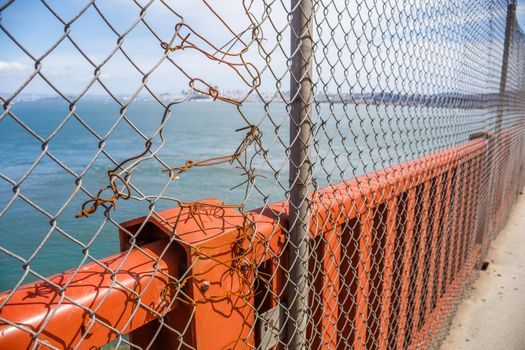
The most frequent goods-in rejection reason on welded mesh panels is weld inconsistency — visible cold welds at the intersection will fail under cyclic load. The second is insufficient zinc-coating mass, which shows up as white rust (zinc oxide) within 30 days of outdoor storage and red rust (steel substrate) within 12 months. The third is opening size drift, where the nominal 50x50 mm mesh is actually 55x55 mm or larger due to worn tooling on the welder — this directly reduces panel stiffness and load rating. [S1]
Buyers should specify an opening tolerance (commonly ±2 mm on a 50x50 mm nominal aperture) and a weld-integrity sampling rate (commonly 1% of panels destructively tested) on the purchase order. For roll-container and shelving applications, a 500 kg static-load test on a sample panel is the most direct way to validate the wire + weld + coating system together — the same rating Arcawa publishes for the SRC0708-P [S1].
Trackable signals for the next sourcing cycle: (1) tighter ASTM A641 Class 4 (≈420 g/m²) zinc-coating requirements spreading from infrastructure-grade fence into mid-tier commercial panels; (2) growth in 3D V-beam welded panels for residential and commercial perimeter driven by European architectural demand [S2]; (3) ongoing factory-direct consolidation on the 50x50 mm × 2.0/3.0/4.0 mm hot-dip galvanized SKU across multiple Chinese suppliers on the same nominal spec [S5].