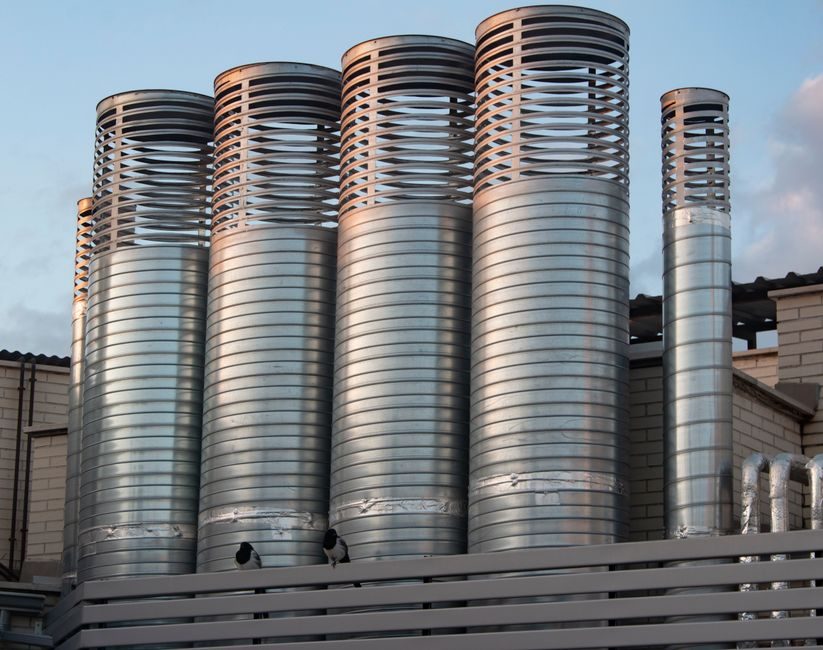
Aluminum smelters, extruders, and aluminum die casting machine cells are now the most active buyers of Industry 4.0 hardware on the metals-processing side, with Industrial IoT spend in manufacturing expanding at a double-digit CAGR in IndustryARC's 2026 outlook [S1].
The same report places the wider Industry 4.0 market on a trajectory of double-digit annual growth through 2030, with the IIoT/CPS layer and the digital-twin layer doing most of the heavy lifting in metals, automotive, and electronics plants [S1]. For an aluminum line, the practical stack is sensors on gas aluminum melting furnace hoods and launders, edge gateways on the casthouse, and an MES/MOM layer above the cell controllers.
Stack definition: which I4.0 layers actually touch an aluminum line
The Industry 4.0 stack in aluminum manufacturing is conventionally split into four layers—sensor/actuator, cyber-physical system (CPS), digital twin, and enterprise integration—and each maps to a different piece of equipment on a casthouse or extrusion floor [S2]. The CPS layer, defined as the tight integration of computation, networking, and physical processes, is the layer that turns a legacy PLC into an Industry 4.0 node [S2].
For aluminum billet heating, the CPS layer is built around thermocouple arrays, IR pyrometers, and combustion-gas analyzers on gas aluminum melting furnace hoods; the digital-twin layer mirrors furnace thermal mass, alloy-specific solidus/liquidus ranges, and burner modulation. Springer notes that the second wave of I4.0 research in 2021 had already shifted from the "what is it" phase to the "where is the value" phase, and aluminum casthouses were the case study used to ground that claim [S2].
Selection criteria: what to specify, in what order
Three selection criteria decide whether an Industry 4.0 retrofit pays back on an aluminum line: sensor density per ton of molten metal, latency from sensor to MES, and the percentage of the line under closed-loop control rather than just monitoring [S2]. Springer frames this as a shift from "connected" to "autonomously controlled" assets, with autonomy—not connectivity—being the criterion that separates pilot demos from deployed systems [S2].
In practice that means a buyer of aluminum die casting machine upgrades in 2026 should write a spec that calls out OPC UA over TSN on the cell network, ISA-95-compliant naming for tags, and an explicit closed-loop scope on at least the shot-weight, die-lubrication, and shot-end parameters. A buyer who only specifies "IoT-enabled" or "cloud-connected" is buying a dashboard, not a closed-loop cell.
Who benefits vs. who should wait
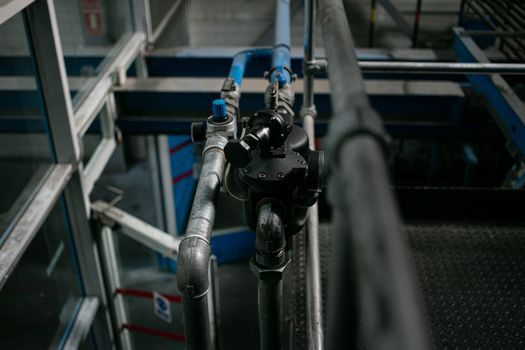
Industry 4.0 in aluminum delivers measurable value for high-mix extruders running 200+ part numbers per shift, large integrated casthouses holding 500+ t of melt, and aluminum veneer panel lines with cosmetic-grade surface specs where every coil is a separate quality record. Springer flags high product variety and tight tolerance as the two conditions that justify the capex [S2].
It is a poor fit for job-shop extruders running one alloy to one profile on a single press, and for low-volume aluminum ladder fabricators with hand-loaded CNC cells—the tonnage is too low and the product variance is too small to amortize the IIoT capex [S1]. IndustryARC's segmentation puts discrete manufacturers with sub-50 t/day melt as the segment where the payback period extends past the typical 36-month capex window [S1].
Options compared: three I4.0 architectures on an aluminum line
Architectures line up against four decision criteria—capex per line, cybersecurity footprint, time to closed-loop, and fit with brownfield casthouses. A retrofit IIoT gateway layer on top of existing PLCs is the lowest capex and the fastest install, but it leaves the cybersecurity perimeter on the legacy PLC firmware and the closed-loop scope limited to advisory setpoints. [S2]
A full CPS rebuild with edge controllers, OPC UA over TSN, and a digital twin raises capex materially but compresses the closed-loop scope to die-level parameters and gives the cybersecurity team a single network to audit. The third option—a greenfield line built around a vendor-integrated MES/MOM stack—maximizes the autonomy ceiling but requires a new line, which is the rarest capital event in the aluminum sector [S2]. ENISA's 2018 guidance, still cited in 2021 I4.0 reviews, treats cybersecurity as a prerequisite for closed-loop CPS, not an add-on, and that framing has not changed in the 2024–2026 update cycle [S2].
Standards, sourcing, and the cybersecurity gate

The standards that an aluminum I4.0 spec actually cites are ISA-95 for the MES/MOM integration model, IEC 62443 for industrial cybersecurity zones and conduits, and OPC UA over TSN for the cell-level backbone—none of these are aluminum-specific, but they are the three that vendors and EPCs converge on in 2026 [S2]. ISO 9001 and IATF 16949 remain the quality system layer above the I4.0 stack for aluminum window door and aluminum veneer panel producers supplying automotive and architectural customers.
On sourcing, the practical 2026 picture is a split between European and North American stack vendors that ship the MES/MOM layer plus the digital twin, and Chinese hardware vendors that ship the sensor, edge, and CPS layers at roughly half the per-point capex [S1]. The capex gap is widening in favor of Chinese hardware because IIoT unit volumes are scaling on the hardware side faster than the MES software market is consolidating. Buyers who need IEC 62443 zone-conduit documentation in the bid pack are still best served by the European/North American stack vendors [S2].
Limitations, failure modes, and what 2026 buyers consistently get wrong
The recurring failure mode in 2024–2026 aluminum I4.0 projects is under-specifying the OT/IT integration layer: sensors and edge boxes are installed, the dashboard lights up, and the closed-loop scope is never reached because the MES data model was never agreed [S2]. The second is treating cybersecurity as an IT problem, which leaves the legacy PLCs and burner controllers exposed on the same flat network as the new IIoT gateways.
A third limitation is data ownership across joint ventures: a multinational smelter and a downstream aluminum ladder fabricator cannot share a digital twin without an explicit data-sovereignty contract, and that contract is rarely in scope at the capex-approval gate. Springer documents the organizational-and-managerial challenges as the primary blocker for I4.0 diffusion in manufacturing, ahead of any technology gap [S2].
2026 signals worth tracking

Two trackable signals for the next two quarters: the publication of the 2026 update to ENISA's Industry 4.0 cybersecurity baseline, and the next round of capex disclosures from the major integrated aluminum producers (China Hongqiao, RUSAL, Norsk Hydro, Alcoa) on IIoT and digital-twin spend [S2]. A third is whether ISA-95/IEC 62443-aligned MES vendors move from per-seat licensing to per-ton licensing, which would be the first pricing-model change in a decade and would directly affect aluminum manufacturing quality standards and the capex math for brownfield retrofits. The next structural check is the 2026 update of the steel production line design reference specs, where the I4.0 sensor density per ton of liquid metal is expected to be published as a benchmark that aluminum lines will then be measured against.