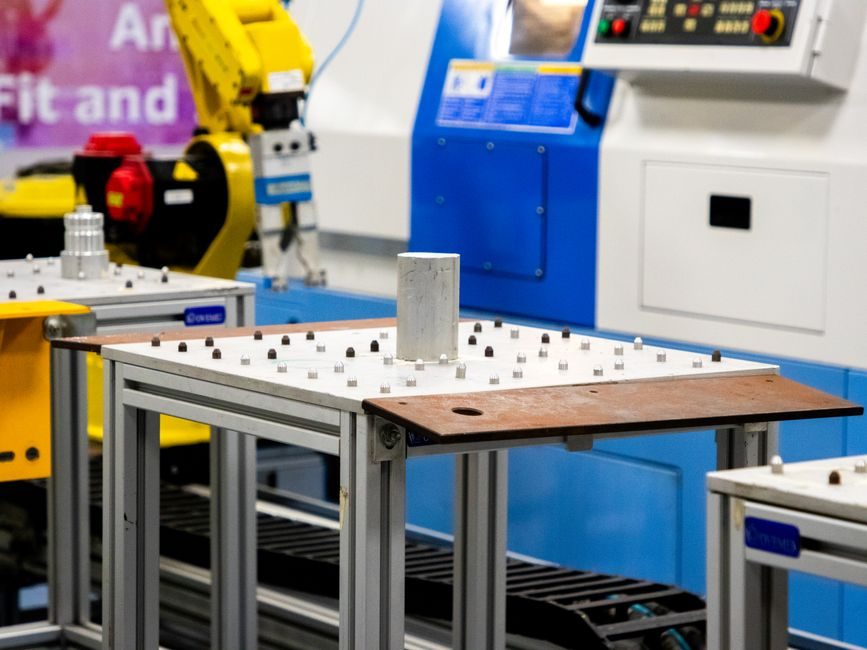
Designing a steel production line in mid-2026 means balancing three numbers up front: annual tonnage, finished-coil grade (JIS G3302 SGHC, SGC340, DX51D+Z), and the energy/forming route that links them. Open-market reference points published in the last six months show roll-forming lines for light-gauge structural members priced from US$12,500 per set [S2], galvanizing-mill output bands running as high as 10,000 metric tons per month per supplier [S5][S7], and induction-furnace packages offered at roughly US$100,000 per set with 100 sets/year capacity [S3].
Scope here covers the four equipment families a project engineer actually specifies: structural roll forming, resin sand casting line auxiliary melting, galvanizing strip supply, and induction heating for downstream forging. The article is grounded in public supplier and trading-platform listings dated 2026-06-10 through 2026-07-17.
Light Structural Roll Forming Lines: Throughput, Width, and Price Bands
Cold-formed steel framing — C purlins, Z purlins, sandwich-panel shells for prefab houses — is the most accessible entry point: a Xinbo automated C-purlin roll forming line is listed at US$12,500/set with a 1-set MOQ, suitable for light-gauge house and warehouse construction [S2]. Sandwich-panel machines for rock-wool fireproof cores and cold-room panels share the same line topology, so a single molding line platform often feeds both building-shell and cold-chain OEM customers.
Width and thickness windows are the real constraint: galvanized strip feedstock commonly runs 600-700 mm wide at 2.0-2.5 mm thick, with inside diameters of 508 mm or 610 mm to fit standard uncoilers [S5][S7]. A line designed for the DX51D+Z 700×2.0 mm specification will accept SGC340 600×2.5 mm with a re-gauging pass, but the 50 mm difference in coil ID means uncoil/recock mandrels must be dual-spec. Buyers should treat the listed "Min Order 50 m.t." as a hard floor — single-line runs below that are not commercially viable [S5][S7].
Galvanized Strip Supply: Grade Map and Order Floors
The 2026 supplier map for galvanized feedstock clusters around three grades: JIS G3302 SGHC at 3.7 mm × 620 mm with Z14 zinc coating and chromated-un-oiled surface [S4]; SGC340 at 2.5 mm × 600 mm [S5]; and DX51D+Z at 2.0 mm × 700 mm [S7]. Coil weight is held at roughly 4 MT for the heavy-gauge SGHC stock [S4], while the 2.0-2.5 mm grades run lighter coils suitable for high-speed roll forming.
Spangle is "regular" across all three grades, but surface treatment differs — SGHC ships chromated and unoiled, whereas DX51D+Z and SGC340 are typically sold with a light oil film that the line must degrease before forming [S4][S5][S7]. The 10,000 m.t./month supply capability published by SGC340 and DX51D+Z vendors [S5][S7] means a mid-sized roll-forming line consuming ~1,000 t/month can be fed by a single source; project engineers should still qualify a second supplier to avoid single-point line stoppages. Reference on broader steel manufacturing cost breakdown 2026: raw material, energy, and route drivers sits alongside this feedstock spec map.
Induction Melting and Heating Equipment: Capacity Anchors
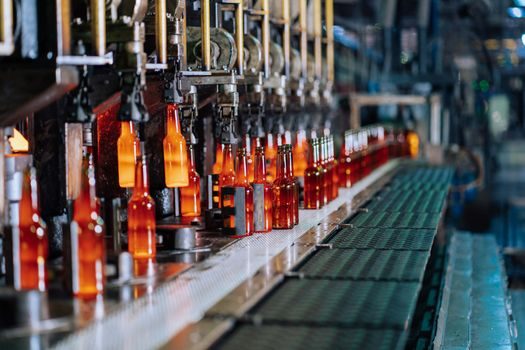
For projects that need a captive melt shop — typically steel-ball hot-rolling lines, forging billets, or specialty foundries — induction is the default 2026 choice. Forever Furnace lists a base induction-heating package at US$100,000/set with 1-set MOQ and 100-set/year build capacity, plus integrated forging-heating, hardening-tempering, and steel-ball hot-rolling line variants under one product family [S3].
Integration with downstream forming is the engineering decision, not the kW rating: an automatic molding line fed by induction-melted billets needs a ladle-transfer interface with a tundish heater and a level-2 PLC; a forging-heating line needs only a roller-hearth exit and quench conveyor. Project teams specifying both should map the line frequency (typically 1-10 kHz for steel-bar forging, medium-frequency for steel-ball hot rolling) against the upstream power-supply harmonic limits before locking the equipment order. Additional context on downstream control and sensor stacks is covered in steel plant instrumentation stack: sensors, cable, and safety PLC specs.
Large Steel Structure Packages: Scope, Price, and What is Actually Included
Made-in-China product listings in 2026-07 for paper-machinery, brick-making, and die-casting categories show "steel production plant" packages clustered at US$1,000-1,300/set for structures described as smart production halls, exhibition halls, and airport buildings [S1][S6][S8]. A separate "large steel structures for production environments" listing sits far lower at US$20-40/set, but that band refers to ancillary components, not a complete building [S1][S6][S8].
Engineers should treat the US$1,000-1,300 band as the structural-shell price for a small, single-bay prefabricated building — not a full integrated mill. A genuine v-process line for foundry use, by contrast, requires vacuum flask tooling, sand reclaim, and a coated-foam pattern station, none of which appear in the steel-structure listings [S6][S8]. For sandwich-panel and rock-wool cold-room walls to mate with a structural shell, see PU sandwich panel selection: core, facing, and line spec map.
Material Handling and Sortation: Where Coil Becomes Part
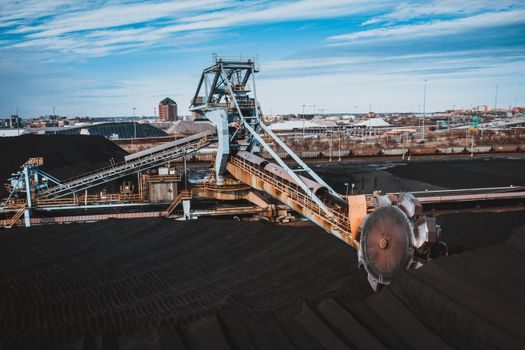
Once strip is uncoiled, leveled, and roll-formed, downstream handling determines the line's true OEE. A conveyor sorting line sized for 1.5× line throughput is the typical design rule, so a 600 mm-wide line running at 30 m/min needs a sortation conveyor rated near 45 m/min to absorb recocks and reject ejection. The "Steel Structure Building" listings on Made-in-China explicitly bundle column-and-beam kits suitable for housing a sortation gallery above the roll former [S1].
Project teams should also pin a line frequency furnace decision: 50 Hz mains-fed units are cheaper and adequate for non-precious alloys, while 150-300 Hz medium-frequency units give finer melt control but require harmonic filtering and a larger transformer footprint. The choice ripples back into the structural-steel foundation, which is why a galvanizing coil spec, a roll-forming speed, and a furnace frequency must be locked together before the building is ordered.
Selection Criteria: Matching Tonnage, Grade, and Energy to the Line
Use three binary filters to pick a line architecture: (1) annual tonnage — under 5,000 t/year favors roll forming from bought galvanized coil [S5][S7], 5,000-30,000 t/year needs a captive galvanizing partner, above 30,000 t/year justifies an integrated mill; (2) finished grade — SGHC, SGC340, and DX51D+Z all share regular spangle and 508/610 mm ID, so a single uncoiler can serve multiple grade runs with a tooling change [S4][S5][S7]; (3) energy route — electric induction at ~US$100,000/set for 100-set/year capacity [S3] versus gas-fired furnaces that need emissions permits not visible in the trading-platform data.
Forthcoming signals worth tracking: second-half 2026 supplier updates on coil-ID standardization, new JIS G3302 amendments for higher coating masses (Z18/Z22/Z27 classes), and induction-furnace kW-per-ton benchmarks that the trading platforms do not currently publish. Specifying engineers should request the underlying mill test certificates (JIS G3302, EN 10346, ASTM A653) and the line's harmonic-mitigation data sheet before issuing a PO.