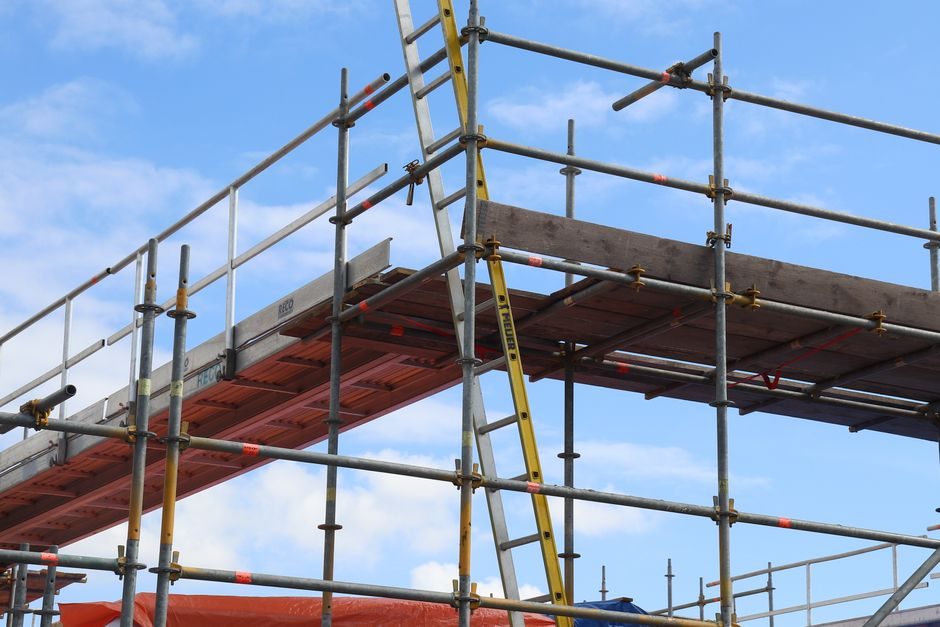
Aluminum ladders in 2026 ship across a working-height band of roughly 2 m to 10.5 m, with single-piece step ladders topping out near 4.5 m and three-section combination units reaching 9.91 m closed length / 10.5 m working height when leaned [S2][S4].
Before any installer steps on the first rung, the four installation variables that drive safety are: ladder class (step, telescopic, sliding/multifunction, fixed-with-cage), rated load (commonly 150 kg on current export-grade stock), lean angle (75° nominal for leaning access), and footing — flat, level, and capable of resisting the slip vector at the base [S4][S5].
Aluminum Ladder Classes and Where Each One Installs
Aluminum ladders split into four installable classes: domestic step ladders (folding, 9-step and 12-step, 150 kg max load), telescopic single-rail ladders (F090169 series reaches 4.5 m max working height, 2 m min, aluminum throughout), sliding three-section combination ladders (6047 series, 3.1 m min / 9.91 m max length, 75° lean, 280 mm rung spacing, 30 mm rung section, 355–490 mm section widths), and fixed vertical ladders with safety cage (L'Echelle Européenne A0014324, for permanent structural attachment) [S1][S2][S4][S5].
Step ladders (CAGSAN EVR, flanged-rung, 10 cm wide treads, double-sided) install on any flat floor and need no wall contact; the locking spreader and belt must be fully extended and locked before foot loading [S3]. Telescopic units install in collapsed carry mode, then extend rung-by-rung with each locking latch audibly engaged. Sliding combination ladders require a wall bear-and-brace position at 75°, with both stabilizer feet down and the wall-rail top contact protected by the OEM-fitted wheel or rubber buffer to avoid marring the substrate [S4]. Fixed cage ladders install via base bracket and hoop-cage at the prescribed spacing on the host structure; the cage is mandatory above 2 m fall height in most EU/UK specs and must start 2.2–3.0 m above the landing per the governing standard [S1].
Pre-Install Site Checks: Floor, Wall, Overhead, Electrical
Site acceptance starts with the four-direction check: floor level (≤ 5° slope, otherwise use leg levellers), wall bearing (sound, no glass, no downspout in the contact zone), overhead clearance (min 2 m headroom at the working platform), and electrical (overhead lines > 1 kV require a non-conductive ladder — bare aluminum is conductive and is the wrong material for that work) [S4].
For a 75° lean on the 6047 series, the horizontal-to-vertical base offset is roughly 1:4 — for a 4 m wall contact height, the feet sit about 1 m out from the wall [S4]. The 125 mm curved stabilizer lifts the stiles off the deck, so any surface debris larger than 25 mm in the swing path will rock the ladder; sweep the footprint before deployment. For telescopic models, the section overlap at each extended length must follow the printed stop-mark on the stile — extending past the mark reduces overlap, drops the safe working load, and is the single most common field failure cause on telescopic aluminum ladders.
Step-by-Step Installation: From Carry-Position to First Climb

Step 1 — Inspect: check stiles for dents > 5 mm depth, rung rivets/play > 2 mm, feet pads for wear through to the substrate, locking spreader for full spring return, hinge bolts for tightness to OEM torque, and any rope/pulley on sliding sections for fraying. Reject the ladder if any single check fails; aluminum fatigue cracks propagate invisibly and a stile split at the first rivet hole is a write-off, not a repair [S3][S4].
Step 2 — Position: open a step ladder until the spreader locks with a positive click; confirm both feet and the spreader form a stable triangle on the floor. For a leaning ladder, mark the 75° contact point on the wall first (use a piece of tape), then walk the base out to the calculated offset and drop the stabilizer. Set the top wheel or rubber buffer against the wall — the buffer should compress 3–5 mm under hand pressure; if it does not, the ladder is too far from the wall and the angle is too shallow [S4].
Step 3 — Climb test: with the ladder empty, apply a 75 kg foot load to the second-from-top rung and watch the rung for deflection. On a 6047-class 30 mm × 30 mm square rung, mid-span deflection under 75 kg should not exceed 8–10 mm; anything more indicates a damaged rung or a stile-to-rung bond failure. For telescopic units, bounce-test each extended section by hand — any rattle or vertical play between sections means the internal catch is not seated [S2][S4].
Step 4 — Tie-off: at working heights above 3 m or whenever the working platform has a lateral reach > 1 m, tie the stile top to the structure with a sling that does not preload the rung welds. Do not use the safety cage as a tie-off anchor unless the cage is rated for fall arrest by the OEM [S1].
Selection Map: Step vs Telescopic vs Sliding vs Cage
Pick by install duty: indoor flat-floor reach ≤ 3 m → domestic folding step ladder (150 kg, 9–12 steps, 3.8 m telescopic, Reyi Ningbo-port stock with 30-day lead time, 10,000 pcs/month capacity) [S5]. Variable-height indoor/outdoor reach 2–4.5 m, one-person transport critical → telescopic single-rail (F090169, 2–4.5 m working height, 14'09" max, €810–€1,300) [S2]. Multi-task jobs requiring both leaning access and free-standing A-frame use → three-section sliding combination (6047, 10.5 m max working height leaned, 7.5 m free-standing, 75° lean, 280 mm rung pitch) [S4]. Permanent rooftop or mezzanine access where the user carries tools and needs hands-free climbing → fixed aluminum with safety cage (A0014324), bracket-bolted to structure, cage hoops at the OEM-spaced interval [S1].
Material trade-off: aluminum (6061-T6 / 6005-T6 typical for these ladders) cuts weight to roughly 30–40% of an equivalent steel ladder, which is why the F090169 telescopic is one-person carry-able at full 4.5 m extension, but trades that weight saving for lower spark-resistance vs brass/caged FRP and for electrical conductivity that rules it out for utility line work above 1 kV [S2]. For broader aluminum alloy grade selection on structural ladder stiles, the 6000-series temper is the industry default because it balances extrusion formability, weldability around the rung-to-stile boss, and post-anodized corrosion resistance.
Acceptance Criteria and When NOT to Install
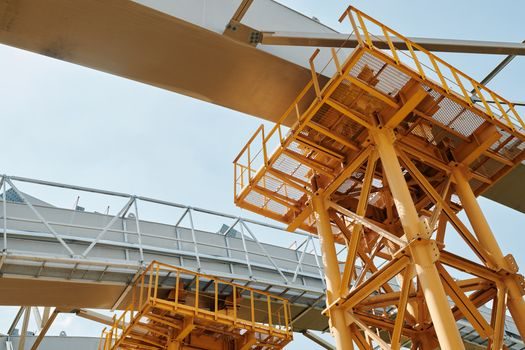
Acceptance before first use: feet pads fully contact floor with no rock, spreader positively locked and taut, all rung rivets flush with no > 2 mm side-play, stiles free of dents/cracks, locking catches on telescopic sections all audibly engaged, label legible showing rated load (150 kg on the export-grade units surveyed) and Class designation, top tie-off in place if working height > 3 m [S3][S4][S5].
Do NOT install and do NOT attempt to repair: any stile with a visible crack or any dent deeper than 5 mm on the stile flat; any rung that rocks, creaks, or shows a black oxidized line at the weld (suggests micro-fracture in the HAZ); any safety-cage hoop with a fractured weld at the stile intersection; any telescopic section where the overlap stop-mark is worn off — without the mark you cannot verify minimum overlap, and the ladder must be retired [S1][S3]. Aluminum welds on ladders are not field-repairable to original strength; the OEM process (TIG + post-weld aging for 6061-T6) cannot be replicated with a portable MIG. Replace, do not repair.
Anchor: for a fixed vertical aluminum ladder with safety cage, the bracket spacing typically falls in the 1.5–2.0 m range with the cage starting 2.2–3.0 m above the lower landing — confirm the exact figure against the OEM installation drawing shipped with A0014324, since the cage offset, hoop diameter, and bracket bolt class (M12 / M16 stainless A2-70 typical) are model-specific and not field-decided [S1].
Standards Governing Aluminum Ladder Install
European EN 131-1 / EN 131-2 (portable aluminum ladders), EN 14122-4 (fixed vertical ladders with cage on machinery), and the ANSI A14.2 (USA) / AS/NZS 1892 (AU/NZ) family cover the load, rung, and angle criteria cited above. Class ratings (EN 131 household vs EN 131 professional) cap domestic folding step ladders at 150 kg and professional telescopic at 150 kg with a 1.25× static test factor, matching the 150 kg max-load figures published on the current export lines [S5].
For a fixed rooftop access ladder, the relevant reach and clearance math (≥ 1.1 m ladder projection above the parapet, cage starting above 2 m fall, 75° ± 5° lean on any leaning leg) is set by EN 14122-4 in the EU and by OSHA 1910.23 in the US — the same physical numbers, the same acceptance form, different legal jurisdiction. For a step ladder used in a climbing formwork shoring deck, the deck-to-ladder hand-off and the 1 m lateral reach rule from the deck edge are the points that fail inspection, not the ladder itself. For skylight installation work where the ladder is the only access, specify a cage model only if the fall height is > 2 m and a personal fall-arrest system is not in use.
Track these two signals over the next 90 days: (1) whether the EN 131 revision currently in draft adopts the 150 kg / 225 lb unified domestic+professional load class, which would obsolete the dual-class labelling on current export stock; (2) Chinese mill output for 6061-T6 extrusions in the Ningbo / Xiamen cluster, where the 30-day lead time and 10,000 pcs/month capacity quoted by Reyi (2026-07-23) signal tight 2026 capacity and may push MOQ-10 wholesale ladders on Made-in-China above the current US$ 60.00 / 10-piece floor [S5][S6].
Spec-level background on the components involved: linear guide.