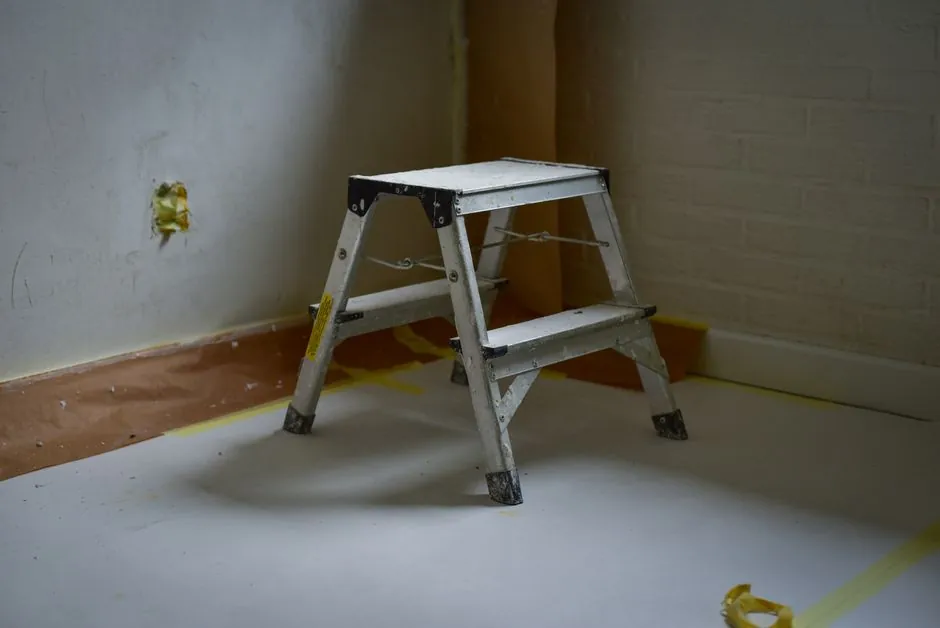
An 8 ft aluminum straight or step ladder rated 225-300 lb covers most interior finishing chores from painting crown moulding to installing ceiling fans, with Type II and Type III models dominating the residential finishing segment [S3][S5].
For fixed interior access such as lofts, basements, and hatch openings, custom-welded steel frames with ribbed aluminum anti-slip steps in 1000-3000 mm lengths are sold as made-to-measure units, while OEM-grade rails, rungs, and stiles are extruded from 6061/6063 alloy [S2][S4]. Weight sits near one-third of a comparable steel section, which is why aluminum dominates the portable interior ladder category [S1][S2].
Portable Step Ladders: 2-8 ft Range, Type II/III Ratings
For ceiling-fan swaps, crown-moulding paint runs, and drywall touch-up, a 2-8 ft aluminum folding step ladder at 225-300 lb load capacity is the workhorse spec; the 3-step household-grade aluminum folding step stool sits at a 225 lb rating for short-duration tasks [S3][S5]. The Louisville 8 ft H-frame straight ladder at 300 lb load capacity is a common retail benchmark for indoor finishing projects where reach beats portability [S3]. Aluminum steps and rails keep the carried mass low enough for solo operators to throw the unit on a roof rack or carry it up a stairwell, and they resist UV degradation better than painted steel when stored near windows between jobs [S1].
Fixed Interior Access: Steel Frame with Aluminum Steps
For basement, cellar, loft, and hatch access where the ladder stays installed, a welded steel frame paired with ribbed aluminum anti-slip steps gives the best rigidity-to-mass balance. Standard sizes run 1000-3000 mm in length and 400-900 mm in width, with optional handrails adding roughly $200 per side and powder coating available in any RAL colour [S4]. The aluminum tread surface holds up to repeated footwear contact and cleans easily, while the steel side members carry the structural load against concrete, wood, or metal mount points. See how this fits alongside broader finishing material decisions in interior build-out.
Material Specs: 6061 vs 6063 Alloy for OEM Rails and Rungs
OEM ladder extrusion is built around two alloys: 6061 for higher-strength rails and stiles, and 6063 for rungs, D-shape steps, and corrugated anti-slip surfaces. A complete ladder aluminum structure is a system of rails, rungs, brackets, end caps, feet, and hinge components, not a single extrusion, and the die design is reviewed against target load and environment before production [S2]. Wall thickness and alloy choice follow the intended duty rating; mill, anodized, or powder-coated finishes are all available off the same tooling, and machined cut-to-length components ship ready for assembly. For background on how the base aluminum alloy behaves under load, the 6061-T6 / 6063-T5 pair remains the default for ladder stock.
Selection Criteria: Duty Rating, Height, Tread, Footing
Four gates filter the right pick: ANSI duty rating (Type II 225 lb, Type III 200 lb, Type IA 300 lb, Type IAA 375 lb), usable height, tread geometry, and footing. Anti-slip ribbed aluminum treads outperform smooth extrusions on oily or dusty job sites, and wider H-frame bases beat A-frame styles for ceiling work where the user leans outward [S3][S4]. For a single multi-position ladder that handles stairwells and foyers, a telescopic or articulating aluminum unit is the practical compromise, with the added point that a 15% three-year adoption rise in water-fed pole systems has not displaced ladders for interior glass and ground-floor storefront work [S1]. Interior finishing rarely needs fiberglass; the non-conductive benefit is wasted indoors, and aluminum saves roughly two-thirds of the carried weight for the same rating. The full aluminum ladder category spans step, straight, extension, multi-position, telescopic, and platform formats.
Standards and Compliance Anchors
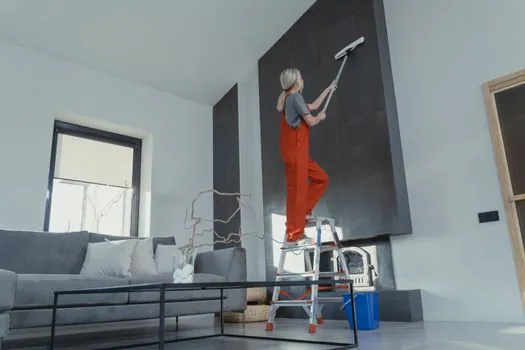
Portable ladders sold in North America carry an ANSI duty rating (Type II through Type IAA), and the U.S. OSHA ladder-use violation penalty sits at up to $16,131 per instance for professional contractors as of 2024 [S1]. For fixed interior access, no equivalent ANSI ladder duty rating applies; the spec instead follows the project structural requirement and the manufacturer's load test data. Custom OEM extrusions are typically dimensioned to the buyer's regional safety standard rather than a single global rule, which is why suppliers confirm target application before quoting die design [S2].
Comparison: Portable Step vs Fixed Steel-Aluminum vs OEM Extrusion
Portable aluminum step ladders (2-8 ft, 225-300 lb) win on solo-operator speed and reusability across rooms; fixed steel-frame with aluminum treads (1000-3000 mm) wins on rigidity and permanent interior integration; OEM 6061/6063 extrusion rails and rungs win on cost-per-unit at distributor scale and on custom tooling flexibility [S2][S3][S4]. For ceiling-fan and crown-moulding work the portable unit is the only sensible pick; for cellar hatches the fixed steel-aluminum hybrid carries more load for less deflection; for branded ladder lines or private-label OEM runs, sourcing mill-finish or anodized 6063 rung stock direct from an extruder beats buying cut-billets from a distributor.
Failure Modes and Constraints to Watch

Aluminum ladders are corrosion-resistant but they will dent on impact, and overloaded step stools beyond 225 lb will rack the hinge; the 3-step household-grade folding stool is not a substitute for a Type II 6 ft or 8 ft unit on a job site [S3][S5]. Fixed steel-frame ladders with aluminum steps are delivered ready to bolt to concrete, wood, or metal, but combined hatch and ladder projects need separate reinforcement and glass specification review, which is not bundled into the base unit [S4]. Custom extrusions require a confirmed drawing or sample before die work starts, and buyers without a 2D or 3D file should expect a sampling lead time on top of production [S2].
For interior finishing projects spec'd through 2026, the actionable signals are: confirm ANSI Type II or higher on any portable aluminum unit above 6 ft, lock the 6061/6063 alloy call on OEM extrusion orders, and verify ribbed anti-slip aluminum treads on any fixed-access ladder. Buyers weighing ladder specs against broader access kit can compare the related coverage on Suspended Working Platform Selection for Plumbing Installation when ceiling work shifts to overhead pipe runs.