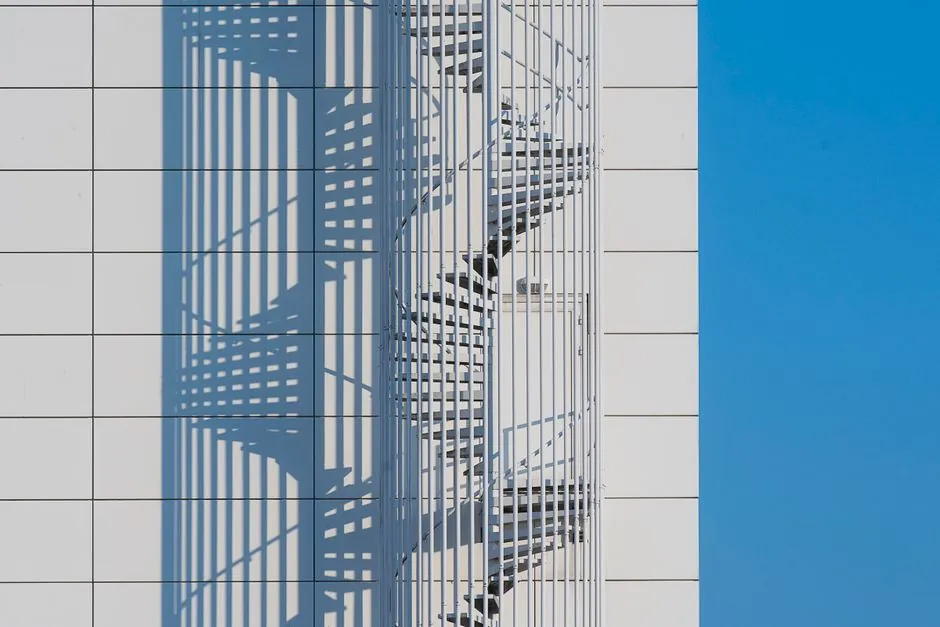
On steel-structure builds, the dominant aluminum ladder class is the scaffold-fixed vertical unit, built from 6063-T5 or 6061-T6 extrusions with 63x24 mm rectangular stiles, 1.2-1.5 mm wall, and 30 mm square anti-slip rungs, available in 1 m to 6 m standard lengths and rated to a 150 kg safe working load [S2][S3][S6].
For site access in 2026, the material and dimensional envelope is well converged: extension ladders from WMDS-series stock ship 8 to 13 step pairs spanning 2.9 m to 7.4 m extension height, all at the same 150 kg safe load class, with 6063-T5 as the baseline temper and 6061-T6 reserved for the heavier commercial A-frame step-ladder range [S4][S7].
Alloy Selection: 6063-T5 vs 6061-T6 on Steel Sites
Most export-grade scaffold ladders are 6063-T5 aluminum extrusions, with 6063 alloy cited directly for straight-pole ladder stock at 63x24 mm tube geometry and 1.8 kg/m linear weight [S2]. 6063-T5 offers the better surface finish for anodizing, which is the standard corrosion-protection finish on current export ladder stiles, and is the alloy of choice when the ladder is going to live outdoors or be moved between jobs.
For heavier commercial A-frame step ladders, 6061-T6 is the upgrade grade, with 6061-T6 yielding roughly 1.4x the ultimate tensile strength of 6063-T5 in published temper data and is the grade cited for the heavy-duty commercial-building range [S7][S9]. On a typical steel-construction site, specifying 6063-T5 for vertical scaffold access and 6061-T6 for high-traffic A-frame step ladders is a defensible default; both grades are weldable, but most OEM ladder stiles are mechanical-fastened rather than welded.
Four Ladder Classes and Their Install Location
Aluminum ladder stock on a steel site breaks into four installable classes, each with a defined location: domestic A-frame step ladders (9-12 step, 150 kg max load, floor-standing, no wall contact), telescopic single-rail units (2.0-4.5 m working height, rung-by-rung latched extension), sliding three-section combination ladders (3.1-9.91 m extended length, 75° lean, 280 mm rung pitch, 30 mm rung section), and fixed vertical cage ladders for permanent steel-frame attachment [S5].
Step ladders install on any flat floor with the locking spreader fully extended before foot loading; telescopic units deploy in collapsed carry-mode, then extend rung-by-rung with each latch audibly engaged; sliding combination ladders bear against the wall at 75° with both stabilizer feet down and the OEM-fitted wheel or rubber buffer protecting the substrate; fixed cage ladders bolt to the host steel member via base bracket, with hoop-cage mandatory above 2 m fall height and the cage starting 2.2-3.0 m above the landing per the governing standard cited in current installation guidance [S5].
Comparison Table: Aluminum Ladder Class vs Steel-Site Use Case
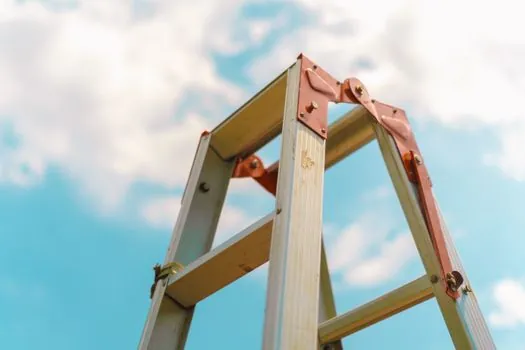
The decision matrix below lines up the four classes against the four criteria that drive a steel-construction call: typical reach, rated load, footprint, and whether it is the right ladder for working near energized overhead lines. [S5]
A-frame step ladder: 0.9-3.6 m reach, 150 kg load, self-supporting footprint, suitable for indoor MEP trim where no overhead line hazard exists [S5]. Telescopic single-rail: 2.0-4.5 m working height, 150 kg load, narrow 355-490 mm base, portable between floors, also bare-aluminum conductive so not for live-line work [S5]. Sliding combination (6047 series type): 3.1-9.91 m extended length, 75° lean, 150 kg class, stabilizer feet out, requires 1:4 base-to-wall offset ratio at the 75° lean [S5]. Fixed vertical cage ladder: full structural height, 150 kg class, permanent to steel member, no lean footprint, required where a permanent access route serves multiple trades for the life of the structure [S5][S7].
The single disqualifier across all four: bare aluminum is electrically conductive, so any ladder going up within the approach distance of an energized overhead line greater than 1 kV must be substituted with a fiberglass-stile equivalent, not an aluminum stile with an insulated rail [S5].
Standards, Load Ratings, and Reject Criteria
Two certifications dominate the export ladder market: EN131 Professional Grade for the European market and ANSI A14.2 for the North American market, both of which appear on current OEM data sheets for 6063-alloy straight-pole ladder stock [S2][S6]. The 150 kg safe working load is consistent across step, extension, telescopic and fixed-cage classes in the 2026 OEM data set, and is the baseline rating an order should specify when no higher industrial rating (typically 175 kg or 250 kg) is called out [S4][S5].
Reject criteria at site acceptance, per the 2026-07-24 installation reference, are: stile dents greater than 5 mm depth, rung rivet play greater than 2 mm, foot-pad wear through to the substrate, locking spreader without full spring return, hinge bolts not at OEM torque, and any fraying on rope/pulley of sliding sections; any single failure is a write-off, not a field repair, because aluminum fatigue cracks propagate invisibly from the first rivet hole [S5]. For a 75° lean, the 1:4 base offset is the field check that catches most angle errors; a 4 m wall contact height puts the feet about 1 m out, which an installer can mark on the deck with tape before deployment [S5].
Steel-Construction Failure Modes Specific to Aluminum Ladders

Three failure modes are specific to steel-construction sites and worth designing out before the ladder lands on the deck: galvanic contact with bare steel, spark risk in hot-work zones, and aluminum swarf contamination of structural steel. [S5]
Galvanic contact: bare aluminum in standing water against uncoated structural steel will pit the steel within a wet season; specify rubber foot-pads and stile-end caps on every fixed-cage ladder bracket, and never let a ladder sit in a puddle against a steel column for more than a shift. Spark risk: aluminum is non-sparking for most alloy-tempers, but grinding or cutting the ladder on site produces fines that are themselves ignition-capable; keep hot-work permits clear of any area where ladder maintenance is being done. Aluminum swarf contamination: never lay an aluminum ladder directly on a steel beam that is about to be welded; weld-through of aluminum-contaminated steel produces porosity and undercut, and the area must be ground clean before any welding resumes. For an overview of the aluminum ladder class envelope and its construction-tool neighbors, the encyclopedia entry maps the working-height and load band used across this article.
Selection Path: A Six-Step Spec for Site Purchase
Step 1: define reach. Below 3.6 m, an A-frame step ladder covers it; 2.0-4.5 m on a narrow footprint, a telescopic; above 4.5 m and below 10 m, a sliding combination; permanent multi-trade access, a fixed cage [S5]. Step 2: confirm 150 kg load class minimum, upgrade to 175 kg or 250 kg only if two-person work or heavy tool carry is documented [S4]. Step 3: confirm 6063-T5 alloy with anodized finish for general exterior stock, 6061-T6 for heavy commercial A-frames [S2][S7]. Step 4: confirm EN131 Professional Grade and/or ANSI A14.2 on the data sheet before shipping [S2][S6]. Step 5: confirm accessories are shipped with the unit (stabilizer feet, rubber buffers, base brackets) so site fabrication is not needed [S5]. Step 6: confirm reject criteria are on the site acceptance form (dent depth, rivet play, foot-pad wear, spreader spring) before the ladder goes into service [S5].
On construction tools procurement in general, ladder selection sits in the same access-and-fall-protection envelope as scaffolding couplers, base jacks, and stair towers; treat it as a permanent-line item with a replacement trigger, not a per-job consumable. For a broader read on how ladders slot into the wider construction machinery and equipment flow on a steel-structure project, the encyclopedia overview links the relevant adjacent categories.
Track two signals over the next procurement cycle: any shift in the OEM 150 kg safe-load baseline (a move to 175 kg as the new stock rating would change the comparison table), and any tightening of the approach-distance rule for bare aluminum near energized overhead lines, which would push more sites toward fiberglass-stile ladders. For a more general read on aluminum alloy selection across adjacent site tooling, the encyclopedia entry maps the same 6063/6061 split used in this spec to ladders, planks, and formwork systems.
See also our earlier report, Mold and Die Adhesive Selection: Epoxy, Cyanoacrylate, and Silicone Systems.