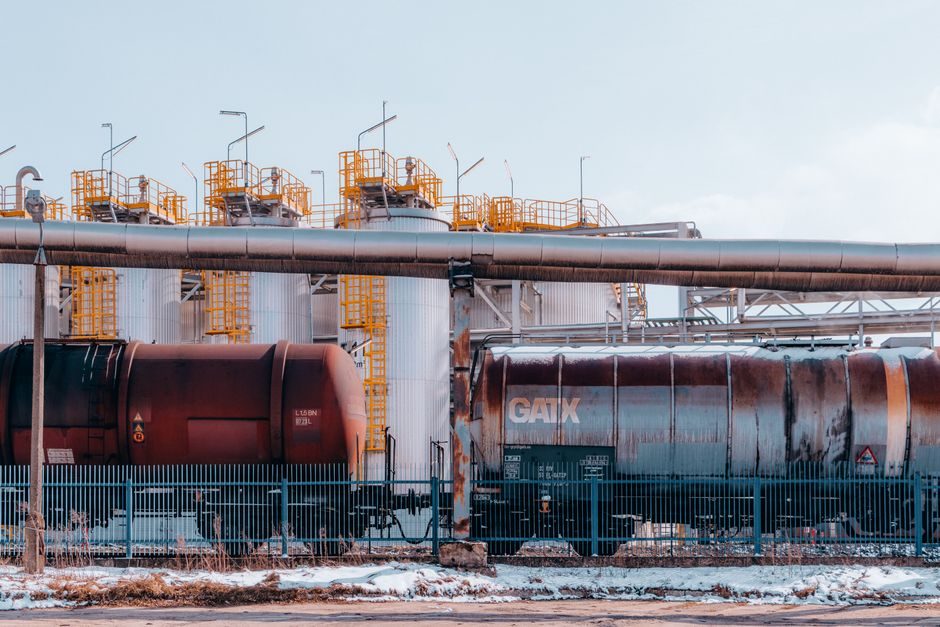
For work at height in a chemical processing plant, the ladder specification is driven less by reach height and more by three plant-specific factors: alloy temper, certification mark, and contact compatibility with the chemicals on site. Industry guidance is converging on 6061-T6 (structural duty) or 6063 (architectural / lighter mobile units) for the stiles, EN 131 or ANSI A14.2 for the certification, and FRP or phenolic-resin treads where acids, alkalis, or stray galvanic current are present [S1][S2].
The buyer pool is split between European OEM brands with documented EN 131 / EN ISO 14122 compliance and Chinese OEM/ODM clusters (Foshan, Yongkang, Tianjin) that ship 30-year-experience production lines with ISO 9001:2015 paperwork and mixed aluminum / fiberglass ladders [S2][S4]. For chemical-plant buyers, the relevant comparison is not ladder-vs-ladder but alloy-vs-coating-vs-certification mark against the chemicals handled at the working point.
Alloy and temper: 6061-T6 vs 6063 vs FRP hybrid
Aluminum ladders for plant service are dominated by 6000-series extrusions. 6061-T6 in the stiles gives a tensile strength around 290 MPa with a T6 temper, which is the usual structural choice for platform and mobile ladders rated for two-person loads [S2]. 6063 has lower tensile strength (around 190 MPa) but a cleaner anodising surface, so it shows up more on warehouse / mobile ladders where finish and weight matter more than peak load [S1].
The third option is full FRP (fiberglass-reinforced plastic) or hybrid aluminum-stile / FRP-tread ladders. FRP is non-sparking, non-conductive, and resistant to a wide band of acids and solvents, which is why maintenance planners spec it for solvent-handling, chlorine-area, and HF-area work.
For general-purpose chemical-plant ladders that are not in a designated hazardous-area, 6061-T6 aluminum is the default; for solvent splash zones, tank-farm access where stray current is a documented concern, or any zone classified under IEC 60079 for flammable vapours, FRP or aluminum-FRP hybrid is the correct call. The relevant decision is documented in the plant's hazardous-area classification sheet, not on the ladder vendor's catalogue page.
Certification: EN 131, ANSI A14.2, and EN ISO 14122
Three certification marks cover most of the global chemical-plant ladder market. EN 131 (European standard for portable ladders) is the mark carried by European OEM ladders and by most Chinese OEM export units shipping into the EU [S1]. ANSI A14.2 (American National Standard for ladders — portable metal) covers the US / Middle East duty cycle. EN ISO 14122 (fixed access ladders on machinery) applies once a ladder is bolted to a vessel, column, or reactor skirt rather than used as a portable step.
Buyers should check the certification mark on a per-unit basis, not a per-vendor basis, because some Chinese OEM lines (Foshan Xingon, Yongkang Sanma) offer both EN 131-stamped export units and unmarked domestic-stock units at lower price points [S2][S5]. The unmarked units are typically 15-25% cheaper but cannot be specified on a plant that runs to EU or US process-safety audit standards.
For chemical-plant procurement, the practical rule is: portable ladders inside the battery limits carry EN 131 or ANSI A14.2; fixed vertical ladders on reactors, columns, and storage tanks carry EN ISO 14122 plus the relevant fall-arrest rail (typically a vertical lifeline certified to EN 353-1 or OSHA 1910.140). A ladder quote that does not state the certification mark in the line item is a quote to be returned for clarification, not a quote to be awarded.
Where aluminum is the wrong choice

Aluminum ladders are not appropriate in three chemical-plant scenarios. First, anywhere copper-bearing solutions (cupric chloride, copper sulfate catalyst solutions) are handled and where splash to the ladder is credible — aluminum is rapidly attacked by copper-salt solutions, producing localized pitting that is not always visible without dye-pen inspection. Second, in mercury-cell or mercury-handling areas: aluminum forms an amalgam with mercury and loses structural integrity. Third, in strong caustic (NaOH above ~20%) splash zones — aluminum is amphoteric and dissolves in concentrated alkali. [S1]
The substitution is FRP, stainless-steel 304/316, or in some legacy plants, hot-dip galvanized steel. For most other plant atmospheres — including outdoor tank farms, indoor reactor bays, and packaging lines — 6061-T6 aluminum ladders give a 15-20 year service life with annual visual inspection, which is why they remain the default spec for non-classified and Zone 2 areas. The relevant aluminum grade for general chemical-plant ladders is discussed in more detail in the aluminum alloy reference page.
Sourcing map: European OEM vs Chinese OEM/ODM cluster
European OEM (Italy's Faraone Industrie is the documented example) positions on EN 131 + custom-engineered mobile platforms for warehouse and light-process work, with shorter lead times and higher per-unit pricing [S1]. The buying case is reduced engineering time on the plant side — the OEM takes the certification, the load calc, and the platform layout as a package.
Chinese OEM/ODM clusters — Foshan (Guangdong), Yongkang (Zhejiang), Tianjin — quote on 30-year manufacturing experience (Foshan Xingon, established 1996, is one documented name) and offer mixed aluminum / fiberglass / scaffolding catalogues, with OEM/ODM customisation, ISO 9001:2015 paperwork, and typical FOB pricing well below European OEM [S2][S4][S5]. Lead time is usually 30-45 days for a 20 ft container of mixed ladders. The trade-off is buyer-side inspection: the buyer, or a third-party inspector, must verify the certification mark, the alloy stamp, and the weld quality on the rungs.
The decision typically lands on Chinese OEM for portable ladders in volume, and European OEM for fixed-access ladders, custom platforms, and any unit that bolts to a reactor skirt.
Inspection and field check points
Three field checks decide whether a ladder stays in service. First, stile integrity: no longitudinal cracks, no deep gouges, and no white-powder corrosion (aluminum-oxide bloom is acceptable as a surface film but not as a structural layer). Second, rung-to-stile joint: no movement when a 50 kg lateral load is applied by hand at the rung centre. Third, foot / non-slip pad: intact, with no chemical attack swelling; FRP pads typically outlast rubber in solvent areas. [S2]
Documentation-wise, each ladder should carry: a serial number, the certification mark (EN 131 / ANSI A14.2 / EN ISO 14122), the manufacturer name, the year of manufacture, and the maximum static load rating (typically 150 kg for EN 131 portable, 120 kg for ANSI A14.2). For a chemical-plant audit pack, pair the ladder register with the area hazardous-area classification and a usage-permit note for any unit deployed inside a classified zone. Background on the working-at-height access equipment class is in the suspended working platform sizing reference and the aluminum window-door profile context.
FAQ signals and adjacent kit
Two practical questions surface in almost every chemical-plant ladder RFQ. One — can an aluminum ladder be used in a Zone 1 area? — depends on the area classification, not the ladder material: in Zone 1, the ladder itself is not normally a source of ignition, but the rung contact, the user's tools, and any impact spark are. FRP is the conservative choice in Zone 1 and any Zone 0 perimeter. Two — what is the right ladder for working at height on a reactor skirt? — fixed EN ISO 14122 stainless or FRP, with a vertical fall-arrest rail; portable aluminum ladders are not a substitute for a fixed access system on a reactor. [S3]
Adjacent kit that frequently rides with the ladder spec: insulation and warning tape for the work-zone perimeter, chemical anchor bolts for fixed-access ladder baseplates, and the chemical reagent compatibility sheet for the working point. Procurement teams building a working-at-height package typically pull the ladder, the anchor bolts, the perimeter tape, and the fall-arrest rail in a single sourcing event rather than four separate RFQs.
Two OEM patterns to monitor: European OEM release of FRP / hybrid lines to defend share against Chinese OEM import, and Chinese OEM move to EN ISO 14122 fixed-access ladders as the European OEM margin band tightens.