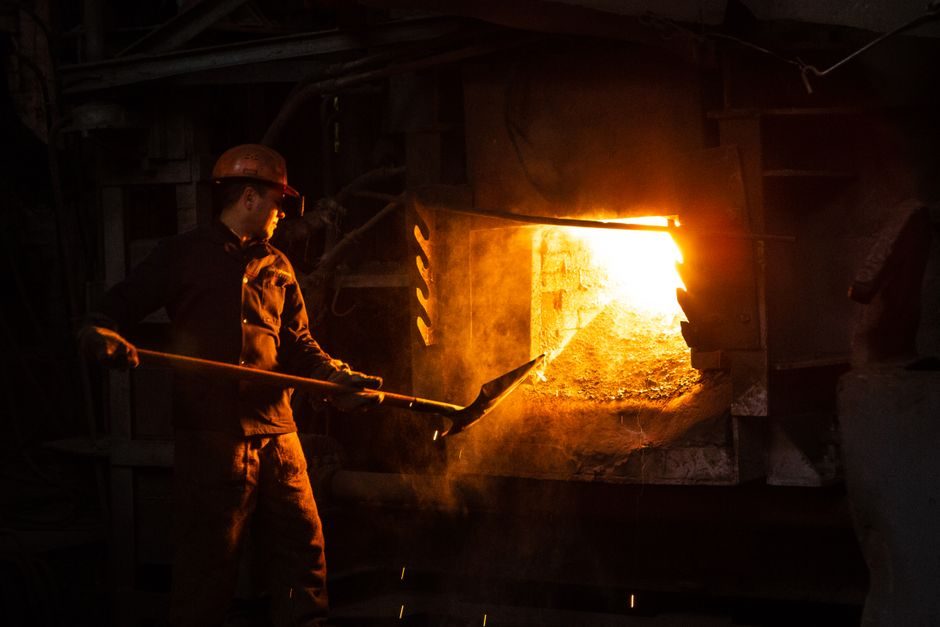
An aluminum component's landed cost resolves into six verifiable buckets: raw alloy, melting/casting energy, primary forming, secondary machining and finishing, tooling amortization, and overhead including certification — and each bucket scales differently with part geometry, order volume, and alloy temper [S1][S2].
North American fabricators reporting public 2026 capacity data range from 23-machine die-cast job shops operating in 93,000 sq. ft. facilities to integrated trailer builders running multi-axis CNC cells alongside in-house welding [S1][S2], and the spread in unit cost follows the spread in process intensity rather than the spread in shop size alone.
Raw Alloy and Temper Selection as the First Cost Gate
Alloy choice sets the floor on every downstream cost line. Marine, trailer, and structural fabricators consistently specify 5052-H32 for sheet and 6061-T6 for extrusions, citing weldability, corrosion resistance, and availability as the gating attributes [S2]. Die-cast shops, by contrast, work primarily with secondary A380-family and zinc alloys whose melt temperatures roughly 100 °C below 6061's liquidus reduce furnace energy cost per shot [S1].
Bardane Manufacturing's published capability list emphasizes aluminum and zinc die castings across a 23-machine, ISO 9001:2015-certified cell — a configuration that locks the facility into alloys tolerant of high-pressure die-casting dies rather than the 5xxx/6xxx series used in welded fabrication [S1]. The same facility footprint, retooled for extrusion or roll forming, would carry a different alloy menu and a different scrap-recovery economics curve.
Buyers comparing quotes should normalize first on alloy + temper + certification, because a 6061-T6 versus 6063-T5 substitution alone can move extrudate price 8–15% before any geometry or tolerance is considered.
Primary Forming: Die Casting, Extrusion, and Roll-Formed Fabrication
Die casting amortizes die steel and clamping tonnage across the run. The published cost driver at job-shop die casters is die cost and cycle time: a 23-machine cell producing custom aluminum and zinc castings spreads die engineering over thousands of shots, and per-part cost collapses rapidly once volumes exceed the die-break threshold (typically 5,000–20,000 parts for simple geometries) [S1].
Extrusion cost is governed by billet price, container diameter, press tonnage, and die complexity. Standard shapes share dies across buyers; bespoke profiles require dedicated tooling and minimum-run commitments. For architectural applications such as curtain wall and window systems, suppliers like AluOne pair proprietary profile systems (ALUMIL M3, SONATA 45) with in-house fabrication, which transfers die amortization into the supplier's inventory rather than the buyer's per-part line [S5].
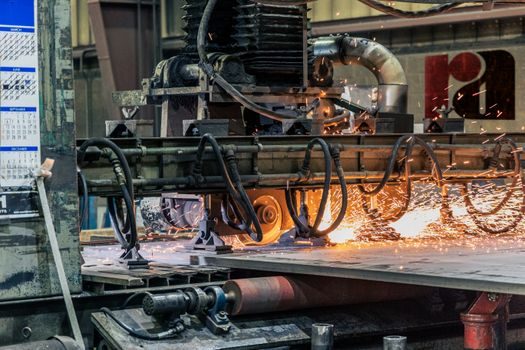
Roll forming and welded fabrication dominate the trailer and truck-body market. Express Custom's product line lists utility trailers from 4'×6' (CAD 4,270) to 12-ft deck-over configurations (CAD 6,430+), with welded 5052-H32 and 6061-T6 assemblies forming the cost spine [S2]. Material utilization, weld length, and labor minutes per part are the dominant cost drivers in this regime, not tooling amortization [S2].
Secondary Operations: Machining, Finishing, and Surface Treatment
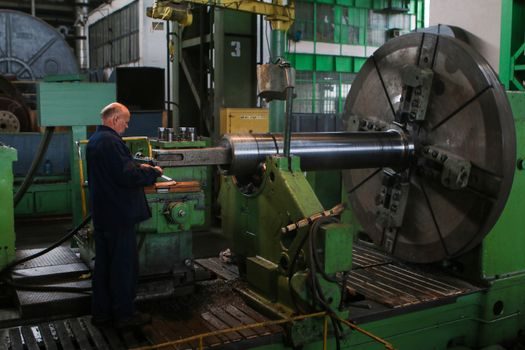
Die-cast parts almost always require secondary machining to hold tolerances tighter than the as-cast envelope. Bardane's facility list explicitly includes CNC machining, drilling, tapping, and minor assembly as in-house secondary steps, a configuration that adds an estimated 20–40% to the as-cast part cost when tolerances call for it [S1].
For architectural aluminum, finishing is a separate cost line entirely. Powder coat, anodize, and PVDF fluorocarbon coating each add both per-square-foot material cost and per-part handling cost; coastal and high-UV installations drive the selection toward anodized or PVDF finishes, which materially shifts the per-pound installed cost. Patio-cover and screen-room fabricators in hurricane-rated markets (Louisiana, Florida) add engineering for wind loads, a cost that flows into custom design and on-site installation rather than per-pound material [S3].
Aluminum Specialties Manufacturing reports typical residential install windows of seven days from order in the Greater Baton Rouge Area, with custom design and on-site construction bundled into the quote — a model that internalizes design and installation labor into the unit price [S3].
Tooling, Setup, and Volume Tier Effects
Tooling is the highest-leverage cost driver at low volumes and the lowest-leverage at high volumes.
For welded fabrication, tooling is minimal (jigs and fixtures) but setup labor and weld procedure qualification carry the equivalent weight. A buyer ordering 10 custom trailers faces a fundamentally different cost curve than one ordering 500, because setup minutes and weld-program development dominate at low volume and amortize out at high volume [S2].
Volume tier matters more than nominal shop size: a 50-person trailer fabricator running two shifts on a single 5052-H32 utility-trailer SKU can match or beat a larger competitor's unit cost on that SKU while losing money on one-off custom builds [S2].
Certification, Quality Systems, and Compliance Overhead
ISO 9001:2015 certification through an accredited body (TUV-Rheinland, in the case of Bardane) imposes a fixed annual overhead but unlocks bidding on aerospace, defense, and Tier-1 automotive work [S1]. For architectural systems, CE marking and AAMA/WDMA performance ratings for aluminum windows and doors carry equivalent overhead weight, and the cost is recovered across the project book rather than passed to any single order.
These line items appear small individually but compound across a bill of materials.
Total Cost of Ownership: Installation, Maintenance, and Lifecycle
Aluminum's corrosion resistance and ~2.7 g/cm³ density shift total cost of ownership (TCO) in two opposing directions. Against steel of equivalent strength, aluminum trailers and truck bodies cut tare weight by hundreds of kilograms, raising payload and fuel economy — a benefit Express Custom explicitly markets on its lighter/tougher/better positioning [S2]. The same property, however, raises per-pound material cost roughly 2–3× over mild steel at 2026 spot prices.
Lifecycle maintenance is the tiebreaker. Anodized or PVDF-finished aluminum veneer panel systems on architectural facades carry 20–30 year repaint cycles versus 5–10 years for painted steel; welded 5052/6061 marine trailers carry near-zero rust-preventive maintenance versus annual underbody treatment for steel. Quantify the maintenance delta over the asset's expected service life and the lifecycle cost often flips against steel despite the higher first cost.
For aluminum ladder and access-equipment buyers, the TCO calculation reduces to weight (handling and transport cost) and duty-cycle fatigue life, with 6061-T6 the dominant alloy. For aluminum alloy selection on structural parts, the 5xxx series weldability advantage versus 6061's strength advantage is a 5–10% material cost gap that buyers should price explicitly rather than absorb in fabricator selection.
Comparison: Three Common Aluminum Forming Routes on Cost Drivers
On per-part cost, the three dominant 2026 North American forming routes rank roughly as follows. Die casting wins on cycle time and surface finish for complex 3D geometries at high volume, but loses on alloy flexibility and minimum-order commitment. Extrusion wins on linear profile cost and material utilization but is geometrically constrained to constant cross-section. Welded fabrication (roll-formed + assembled) wins on low-volume flexibility and alloy flexibility but loses on labor content and weld quality consistency. [S1]
Quantitatively: high-pressure die casting on a 500-shot die typically lands at USD 0.50–3.00 per aluminum part plus material at volumes above 20,000; standard extrusion profiles run USD 1.50–6.00 per pound finished; custom welded trailer and truck assemblies price primarily on material + labor minutes, with shop rates in 2026 typically USD 85–125 per hour fully burdened in North American fabricators [S1][S2].
Sourcing Signals to Track Over the Next Two Quarters
Two signals are worth watching. First, die casting machine cell retrofits and capacity announcements — Bardane's published 23-machine configuration is a useful baseline against which regional capacity additions can be benchmarked [S1]. Second, integrated architectural-system pricing for curtain wall and window packages, where suppliers like AluOne bundle profile, glass, and installation into a single line, complicates direct comparison with piece-price extrusion quotes [S5].
For deeper context on cell-level capacity math, the aluminum capacity planning reference walks through cell-count and amperage sizing. Buyers weighing die-cast versus fabricated alternatives will also find the aluminum Industry 4.0 stack map useful for understanding how process-data capture is starting to shift per-part cost visibility. For shop-equipment cost context outside the aluminum line, the industrial oven price band map provides a parallel cost-driver framework on heat-treat and finishing equipment.