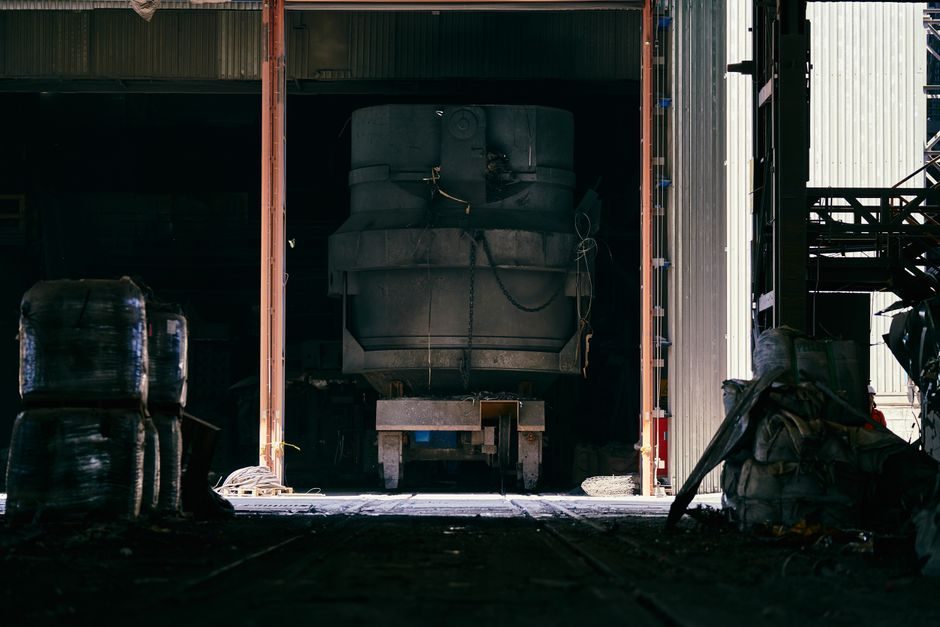
Industrial oven and furnace sourcing in mid-2026 is anchored by two regional clusters: Indian system integrators offering batch, convection, gas, and tray ovens at Rs. 85,000 to Rs. 2,00,000 per unit, and Chinese hot-air circulating drying ovens at US$1,500-8,000 per piece for the 200-500°C laboratory/light-industrial band [S3][S4].
The buyer decision is fundamentally about heat-transfer class (convection vs. infrared vs. vacuum), maximum continuous operating temperature, atmosphere control (air, inert gas, vacuum), and material-handling interface (batch tray, conveyor, roller hearth, bell). Buyers in paint shops, pharma API drying, automotive curing, and electronics pre-heating all converge on the same SKU families but specify very different temperature uniformity, airflow, and safety envelopes [S1][S2][S3].
Temperature Classes and Chamber Architecture
Industrial ovens cluster into four operating bands: low-temp drying and curing up to 200°C, standard hot-air circulation at 200-400°C, high-temp drying/sterilising at 400-500°C, and furnace-class equipment above 500°C for heat treatment and metallurgy [S4]. Made-in-China listings for the 200-500°C band quote forced-air-circulation hot-air ovens at US$3,000-8,000 per piece, with laboratory high-stability variants at US$1,500-4,500 per piece [S4].
Chamber design diverges sharply by application. Box-type muffle furnaces are offered as a product category by manufacturers and suppliers such as Anil Scientico [S2]. Industrial batch ovens and gas-fired ovens from Indian suppliers target larger payloads with horizontal airflow, priced at Rs. 85,000 and Rs. 1,50,000 respectively [S3]. Conveyorised and roller-hearth ovens add continuous throughput for paint, powder-coating, and forging-pre-heat lines [S1][S3].
Heating Source: Electric, Gas, and Induction
Electric tubular heating dominates the SME Indian and Chinese offering: tube furnaces at 220V and 1-5 kW with ISO 9001:2008 certification cover annealing and lab heat treatment [S2]. Box-type muffle and tempering furnaces run on 220V single-phase at 100-300 kg payload, with CE marking and 1-2 year warranties [S2]. Electric tray dryers and hot-air ovens are the entry tier, both priced at Rs. 85,000 and Rs. 1,00,000 by Kencor Systems [S3].
Gas-fired industrial ovens — typically LPG or natural gas with combustion-air control and exhaust stacks — suit high-throughput paint, powder-coating, and food-drying plants where electricity tariffs or available kW limit resistive heating; Indian gas-oven listings start at Rs. 1,50,000 [S3]. Induction furnaces and gas-nitriding furnaces address higher-temperature metallurgical work, with manufacturers such as Maharith Thermal supplying bell, continuous, and gas-nitriding configurations with automatic material handling to the Asian sub-continent [S1].
Price Bands by Region and Build
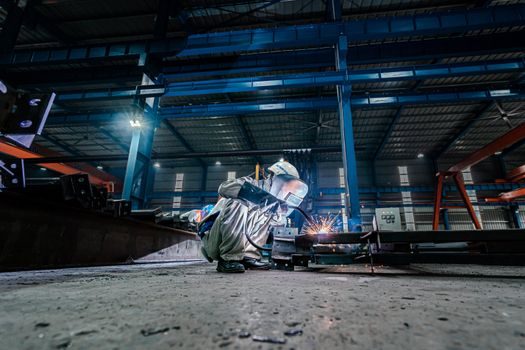
Indian SME-industrial oven prices, per Kencor Systems catalog listings dated 2026-07-30: Industrial Batch Oven Rs. 85,000; Electric Tray Dryer Rs. 85,000; Industrial Hot Air Oven Rs. 1,00,000; Convection Industrial Oven Rs. 1,30,000; Gas Industrial Oven Rs. 1,50,000; Electric Industrial Oven Rs. 2,00,000 [S3].
Chinese hot-air circulating oven pricing on Made-in-China, listed 2025-08-09: laboratory high-stability drying ovens US$1,500-4,500 per piece; precision hot-air circulating drying ovens US$2,000-6,000 per piece; 200-500°C industrial hot-air drying ovens US$3,000-8,000 per piece (2025-08) [S4]. Indian muffle and tube furnaces are listed by Anil Scientico at the 100-300 kg payload class with 220V supply and 1-5 kW power — pricing is quote-on-request against build configuration [S2]. For process-engineering reference on heat-source comparison, see the entry on industrial ceramic heating elements.
Selection Criteria by Application
Specifying an industrial oven starts with payload weight and dimensions, target temperature uniformity (typically ±5°C for curing, ±2°C for pharma drying), airflow pattern (horizontal vs. vertical), and atmosphere requirement (ambient air, recirculated, exhaust-vented, or inert-gas-purged) [S1][S3]. Buyers should also confirm certification: CE-marked units are standard for European export, while ISO 9001:2008 appears on Indian lab-furnace lines for buyers needing quality-system documentation [S2].
For paint shops, powder-coating, and e-coat, conveyorised gas or electric ovens with vertical upward airflow and Class A exhaust treatment are the norm. For pharmaceutical API drying and sterilising, GMP-compatible batch or vacuum ovens with HEPA-filtered supply air and data-logging capability are mandatory. For electronics pre-heating and PCB curing, forced-convection batch ovens at 150-250°C with ±2-3°C uniformity are typical. For metallurgical heat treatment — hardening, tempering, annealing — furnace-class equipment (muffle, bell, or pit) replaces the oven above ~500°C [S1][S2].
Limitations, Failure Modes, and Standards
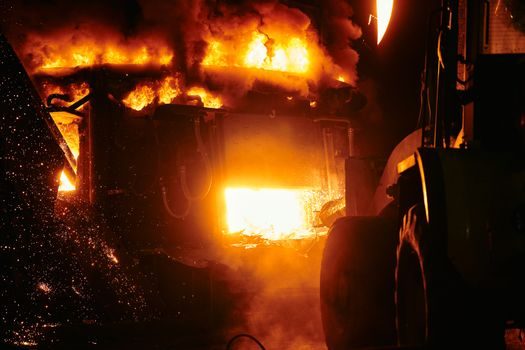
The three most common field failures on industrial ovens are: heater-element burnout from airflow restriction or dust ingress, thermocouple drift causing off-spec curing, and door-seal degradation on batch ovens leading to temperature uniformity loss. Preventive maintenance intervals typically fall at 1,000-2,000 operating hours for element inspection and 500 hours for airflow-fan bearing service [S2][S3].
Standards to confirm at PO: IEC 60079 series for any oven installed in an ATEX/IECEx-classified hazardous area, CE conformity for European-market deliveries, ISO 9001 quality-system certification for the manufacturer, and — for furnace-class heat treatment of oil-and-gas components — NACE MR0175 for sour-service materials compatibility [S1][S2]. Buyers specifying ovens for hazardous-area powder-coating or solvent-curing lines must verify the explosion-venting and purge-air design against the zone classification, not the generic CE plate. For camera-based thermal-mapping of oven uniformity surveys, see industrial borescope reference.
Supplier Landscape and Sourcing Routes
Three sourcing channels dominate the 2026 mid-market: (1) Indian direct-from-manufacturer with website catalog pricing and quote-based options — Maharith Thermal (Chennai), Anil Scientico (Varanasi), Kencor Systems (Delhi); (2) Chinese B2B platform sourcing on Made-in-China with published FOB price bands and Alibaba-style RFQ; (3) Hong Kong / global trade-fair sourcing via HKTDC Sourcing for buyers needing consolidated supplier comparison [S1][S2][S3][S4][S5].
For projects above Rs. 50 lakh or US$60,000, direct factory visits to verify manufacturing capacity, welding quality on the chamber, and refractory installation remain the most reliable due-diligence path [S1][S2]. Indian suppliers typically offer 1-2 year warranties and on-site commissioning; Chinese export listings frequently state FOB pricing without installed commissioning, which the buyer must contract separately [S2][S4]. For buyers cross-referencing thermal-process equipment against material-handling lines, see the apparel distribution belt conveyor layout spec map for upstream/downstream conveyor matching.
Trackable Sourcing Signals to Monitor
Two specific signals to watch in the second half of 2026: (a) Indian SME-supplier price-list revisions — Kencor's last catalog snapshot was 2026-07-30 with convection ovens at Rs. 1,30,000; any movement above 10% will likely track electricity-tariff revisions and stainless-steel 304/316 coil pricing. (b) Chinese FOB pricing for the 200-500°C hot-air band — the 2025-08 snapshot showed US$3,000-8,000 per piece on Made-in-China; the next quarterly refresh will be the cleanest read on landed-cost trend for African and Southeast Asian importers [S3][S4].
Component reference pages worth checking: industrial adhesive.