
Solid aluminum veneer panels in 2026 are typically produced in 1.5–4.0 mm gauges from 1100/3003 series alloys, with H24 temper stock at maximum 1220 mm × 2440 mm blanks per current supplier data [S6].
Aluminum Composite Panels (ACP) remain the price-driven alternative: a three-layer sandwich with a low-density core between two thin skins, stocked at US$0.10–0.70 per m² MOQ 20,000 m² on China B2B channels [S2].
Solid Veneer vs ACP: Construction and Material Split
Solid aluminum veneer panels are single-layer rolled sheets, usually formed with a front panel, reinforced ribs, and a stamped angle bracket, while ACP uses a two-sheet composite with a thermoplastic or mineral-filled core [S2][S6].
The substrate alloy matters: 1100 (pure) gives formability for curved façades, 3003 (Mn-alloyed) gives higher strength for tall curtain-wall spans, and 5005 / 5052 grades appear where anodizing quality is needed [S6]. Solid stock is normally H14/H24 temper, balancing bendability and dent resistance.
For curtain-wall skins, the aluminum alloy choice drives both cost and corrosion behaviour: 3003-H24 is the most common commercial baseline, 5005-H34 is specified for anodized architectural trim, and 5052 appears on coastal façades where salt-spray resistance is rated higher.
Coating Systems: PE, PVDF, FEVE — Where Each Fits
Polyester (PE) coating is the economy tier — short fade-resistance cycle, suited to interior walls and signage; PVDF fluorocarbon (typically 70% Kynar 500/Hylar resin content) is the outdoor architectural default with 20+ year colour-retention ratings claimed by most mills [S1][S6].
FEVE (Lumiflon-type) fluorocarbon powders sit between PE and PVDF on cost but offer broader colour and gloss ranges, including high-gloss and metallic finishes used on signature commercial towers [S6].
Specifying coating thickness: PE typically lands at ≥18 µm, PVDF at ≥25–40 µm in two-coat, two-bake or three-coat systems. PVDF over primer plus clear topcoat is the default for tower envelopes; solid colours use 2-coat, metallics use 3-coat to lock pigment orientation.
Geometry, Tolerance, and Common Panel Formats
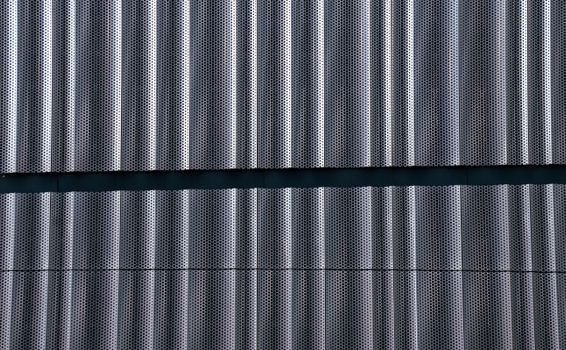
Standard 4'×8' (1220 × 2440 mm) blanks dominate; non-standard widths run to 1500 mm on extended mills. Flatness tolerance is typically ≤2 mm/m on 3 mm solid stock, tighter on thicker gauges. [S1]
Fabrication paths differ: shape A is single-sheet formed with rear stiffeners, shape B is a composite that must be cold-bent to ≤0.5 mm radius on roll formers without cracking the PVDF film. Curtain-wall corners usually require angle-bracket reinforcement per supplier drawings [S6].
Rib/bracket layout: rear stiffener ribs are typically 25–50 mm deep, spaced 300–600 mm on centre, screw-fixed to the underlying aluminum window-door framing or to galvanised steel substructure. Wind-load design follows local code (GB/T in China, AAMA TIR-A11 / ASCE 7 in North America).
Buying Criteria Comparison: Solid vs ACP vs Honeycomb
Decision matrix (lower number = better value, where 1 is best in class): [S2]
Solid veneer: weight ~4.2 kg/m² at 1.5 mm to ~11.2 kg/m² at 4.0 mm (ρ = 2700 kg/m³). Fire rating: A1 non-combustible, lead time 15–25 days, cost mid-to-high, flatness premium.
ACP (PE core): weight ~3.5–5.5 kg/m² at 4 mm total. Fire rating: B2 typical, B1 with FR core available, lead time 10–20 days, cost low (US$0.10–0.70/m² entry tier).
ACP (FR/A2 mineral core): weight ~5.5–7.5 kg/m² at 4 mm. Fire rating: A2-s1, d0 per EN 13501-1 on FR grades, lead time 15–25 days, cost mid.
Aluminium honeycomb panel: weight ~4.5–6.5 kg/m² at 10–25 mm total, but ~30× the stiffness-to-weight. Fire rating: A1, lead time 20–30 days, cost high. Specified on high-rise façades and cleanroom partitions where panel area exceeds 1.5 m².
Real Use Cases by Sector
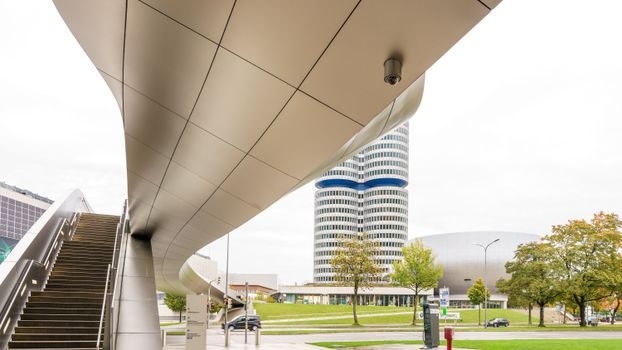
Curtain-wall envelope on commercial towers: 3 mm solid 3003-H24 with PVDF 3-coat — typical on floors 5–40, with thicker 4 mm stock on lower podium zones.
Interior decorative walls and ceilings: 1.5–2.0 mm solid or 3 mm ACP with PE coating — typical in retail fit-out, where cost per m² matters more than fade cycle. The aluminum ceiling sub-category rides the same substrate and tooling.
Billboard / ad board backing: 2.0–3.0 mm solid, often routed and bent into 3D letters. TOBOND-type outdoor panel data lists Guangzhou-origin supply at 1000 m² minimum order, 1000 m²/month capability [S3].
Industrial equipment housings and cleanroom walls: aluminium honeycomb with A1 fire rating — chosen over ACP where non-combustibility is mandated (tunnels, metro stations, hospital zones).
Limits, Failure Modes, and What Buyers Mis-Spec
Most field failures on aluminum veneer trace back to four patterns: PE coating specified outdoors (chalk loss in 3–5 years), 1.5 mm stock on tall façades (oil-canning visible in afternoon sun), wrong alloy on coastal jobs (pitting around fasteners), and no rear stiffener (panel flutter in wind). [S3]
Thermal expansion is ~23 µm/m·°C on 3003 alloy — for a 2.4 m panel across an 80 K swing, expansion is ~4.4 mm, so expansion joints and slotted cleats are mandatory, not optional.
Galvanic corrosion: direct contact between aluminium and carbon steel substructure without isolation tape or stainless fixings will pit through 3 mm stock in under five years in coastal atmospheres. Use EPDM gaskets, stainless 304/316 fasteners, and powder-coated or galvanised substructure.
Standards, Sourcing Reality, and Price Levers
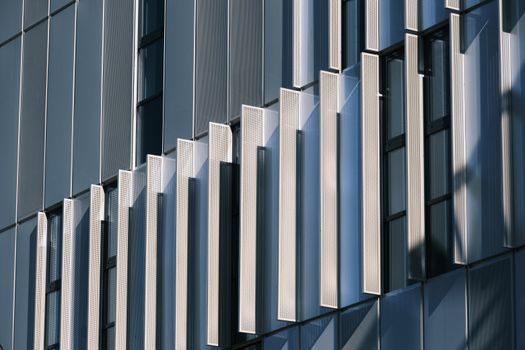
Buyers sourcing from Chinese B2B channels should expect: TT or LC payment terms, FOB or EXW Guangzhou / Qingdao / Shenyang incoterms, MOQ 1000 m² for custom colour runs, 15–30 day lead time post-PO [S3][S5].
Price bands (USD/m²) for 2026-06 transactions: entry-level ACP PE-core 4 mm at US$0.10–0.70; mid-grade ACP FR-core 4 mm at US$2.50–6.00; solid 3 mm PVDF 2-coat at US$8–15; solid 3 mm PVDF 3-coat metallic at US$12–22; aluminium honeycomb 20 mm at US$25–45.
Track the following signals into H2 2026: (1) PVDF resin price moves (Kynar 500 contracts reset quarterly); (2) A2-core ACP capacity additions in Shandong and Guangdong; (3) any tightening of EN 13501-1 / GB 8624 fire classifications that would shift spec from PE-core to FR-core. Builders' general cost-curve context tracks the broader building stone pricing trajectory, where transport and quarry levies mirror façade-panel delivery economics.