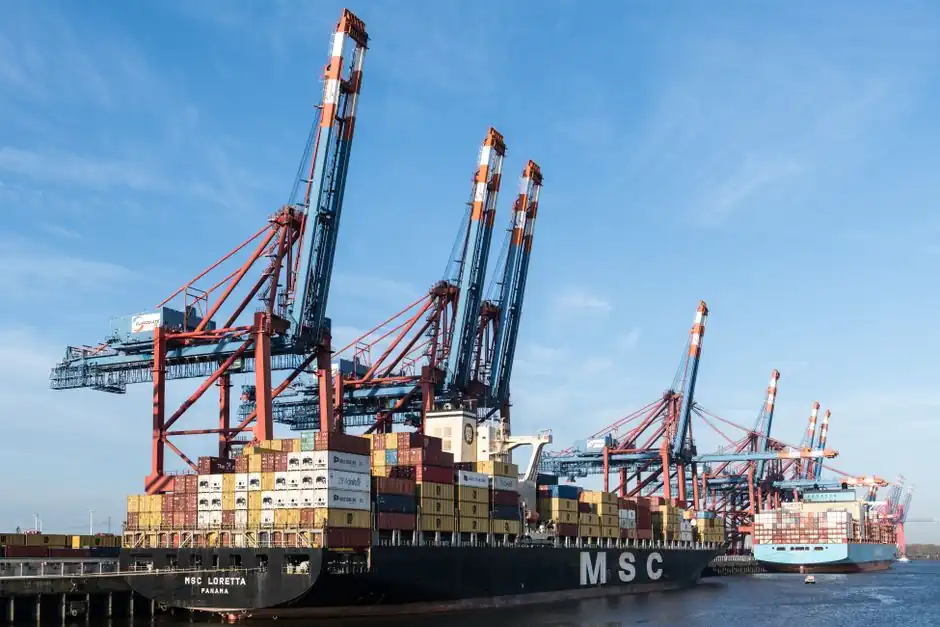
Maritime transport carries roughly 80% of world trade by volume and contributes about 3% of global CO2 emissions, a footprint that has put the sector on a hard decarbonization runway [S3][S4]. The IMO target is net-zero "by or around 2050," and the only credible deep-cut pathways in late 2026 still run through carbon-free or carbon-neutral bunker fuels [S1][S4].
Two molecules dominate the discussion: ammonia (NH3), which contains no carbon at all, and methanol (CH3OH), which can be produced renewably as "green methanol." Each has moved into early commercial use, but on very different timetables, and neither is a drop-in replacement for heavy fuel oil [S1][S6].
Why ammonia and methanol sit at the top of the candidate list
Ammonia is attractive precisely because it carries zero carbon: burning it does not produce CO2, and advanced engine test programmes point to 90-95% reductions in tank-to-wake emissions versus fossil marine fuels [S1]. Methanol contains carbon but, when synthesised from renewable hydrogen and biogenic CO2, can still be net-zero on a well-to-wake basis, while also cutting SOx, NOx and particulate matter versus HFO [S1][S5].
On the energy-density side, the trade-off is brutal. Methanol contains roughly 2.5 times less energy per litre than conventional marine fuel, so fuel tanks and bunker volumes must grow accordingly [S3]. Ammonia stores even less energy per cubic metre, which is the single biggest engineering objection for long-haul trades, and one of the reasons deep-sea segments are slower to convert [S3][S5].
Where each fuel sits on the deployment S-curve in 2026
Methanol is moving out of "proof of concept" and into "initial scale": about 60 methanol-capable vessels are in service, more than 300 further ships are on order, and roughly 20 ports now offer green-methanol bunkering [S1]. Ammonia is described as "rapidly approaching proof of concept," with the first dual-fuel ammonia engines and demonstration voyages completed, but no large ammonia bunker network yet in commercial operation [S1][S5].
Both fuels remain firmly inside the IMO's "emergence" phase of the transition S-curve, meaning single-digit percentages of newbuild orders at best, with bulk carriers, tankers, and container ships forming the early adopter base [S1][S4]. The bunkering mix is still dominated by HFO at about 30% and VLSFO at about 45%; LNG has grown from roughly 1% in 2019 to about 4% by 2026, providing a reference point for how a new bunker fuel can scale once regulation and supply align [S3].
Side-by-side comparison: ammonia vs methanol vs LNG vs HFO

Decision criteria for a deep-sea operator weighing newbuilds in 2026 look something like this, drawn directly from the research sources: ammonia scores best on zero-carbon combustion and full decarbonization potential, but worst on toxicity, slip, and bunkering availability; methanol wins on near-term availability and lower-toxicity handling, but carries a meaningful energy-density penalty and still needs a renewable feedstock to be net-zero; LNG is the most mature low-emission option but is a fossil fuel with a methane-slip problem, so it is at best a bridge [S1][S3][S4].
Concretely, ammonia's secondary emissions are the central objection: ammonia slip is highly toxic to crew and port communities, NOx formation is significant, and any N2O slip carries a global-warming potential roughly 273 times that of CO2 over 100 years [S1]. Methanol burns cleaner at the engine but still requires a pilot fuel, which adds a small CO2 and NOx overhead unless that pilot is also renewable [S1].
What the fuel cannot fix on its own
Even with a full switch to green ammonia or e-methanol, the upstream burden is heavy. Both fuels depend on green hydrogen from electrolysis, and producing the roughly 300 million tonnes of bunker fuel that shipping consumes each year in renewable form will require very large additions of renewable electricity, electrolysers, and Haber-Bosch or methanol-synthesis capacity [S1][S4]. Without that upstream build-out, the carbon math collapses back toward grey production.
Safety and yard regulation are equally material. Ammonia's toxicity puts it under the same kind of scrutiny as other industrial valve and containment standards that govern bulk toxic-gas transport, with a need for leak detection, double-walled piping, and crew gas-handling training that goes well beyond LNG practice [S1][S5]. Methanol is far easier to handle but its low flame visibility, low energy density, and material compatibility issues (certain elastomers, aluminium at high temperature) demand explicit fuel-system redesign rather than a tank swap [S1][S3].
Which ship types and trades the two fuels actually fit
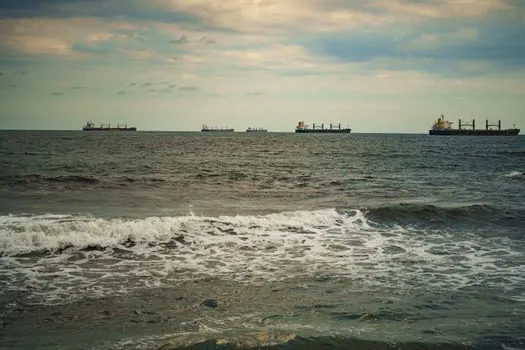
Methanol in 2026 is the practical choice for short-sea container shipping, car carriers, and chemical tankers that can refuel in the existing green-methanol bunker footprint and operate on routes where the 2.5x volume penalty is tolerable [S1][S3]. Ammonia makes more sense for large bulk carriers and product tankers on long, fixed deep-sea routes, where the higher toxicity risk can be managed with sealed-engine rooms, vent-capture systems, and limited port personnel exposure, and where the absence of onboard CO2 emissions outweighs the volume problem [S5][S6].
For trades shorter than a week, slow-steaming gains and route optimisation can still cut carbon intensity by 30% or more, and rotor sails plus slender hulls can add up to another 30% on suitable vessels; these are stackable with any future fuel, including ammonia and methanol [S4]. None of these efficiency measures remove the need for a low-carbon fuel, but they shrink the size of the fuel system the operator has to design, a point that is becoming more concrete as newbuild engine orders specify fuel consumption under real voyage profiles rather than at the flow meter test bench [S1][S4].
Safety standards and regulation framing the next two years
The IMO's 2020 sulphur cap demonstrated how a single regulation can reshape the bunker market inside a year, and the 2023 IMO GHG Strategy reinforces the 2050 net-zero target with mid-term checkpoints that will tighten carbon-intensity limits on existing ships [S3][S4]. Class rules from IACS members and the IGC Code (for ships carrying liquefied gases, including ammonia) already exist, but ammonia-specific bunkering and engine-room codes are still being finalised, which is why most 2026 ammonia newbuilds are ordered with extensive vendor-supplied safety packages [S5][S6].
Methanol benefits from being a widely shipped chemical with mature SOLAS and IBC Code coverage, and from simpler crew training requirements, which is part of why its orderbook outpaces ammonia by roughly an order of magnitude in mid-2026 [S1]. Both pathways still rely on instruments familiar to any process plant: pressure transmitter arrays on bunkering lines, mass-flow metering on fuel supply, and gas-detection loops in machinery spaces, all of which now have ammonia- and methanol-rated variants from the major instrument vendors [S5].
Bottom line: can they really decarbonize shipping?
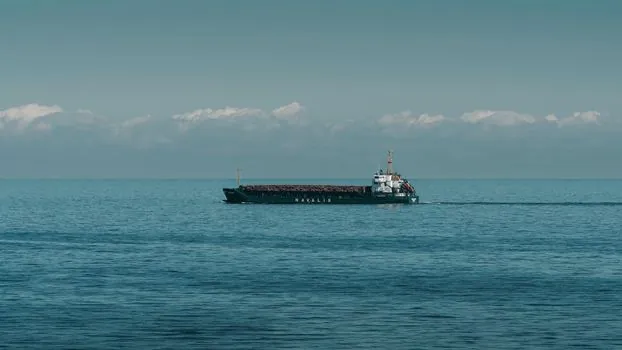
Yes, but only as a system. Ammonia and methanol each have a credible technical route to 90-95% tank-to-wake CO2 cuts, and the engineering artefacts (engines, tanks, bunkering skids) are already in service, not on a whiteboard [S1][S3]. The binding constraints in 2026 are upstream renewable hydrogen supply, port bunkering infrastructure, and the safety regime around ammonia slip, not the fuels themselves [S1][S4].
The trackable signals to watch through 2027 are: the number of ammonia-bunker-equipped ports beyond the current pilot handful, the share of newbuild container-ship tonnage ordered methanol-dual-fuel versus LNG-dual-fuel, and whether class rules publish a final ammonia-fuelled machinery-space standard without forcing a return to LNG as the "safe" interim [S1][S3][S6]. The lighting equipment and electric lamps fitted to ammonia-fuelled engine rooms will also be a quiet but real signal, since they must meet hazardous-area ratings that most LNG-fuelled vessels still treat as optional.
Related analysis: Combination Smoke and CO Detector vs Separate Units: Spec-Level Trade-Off.