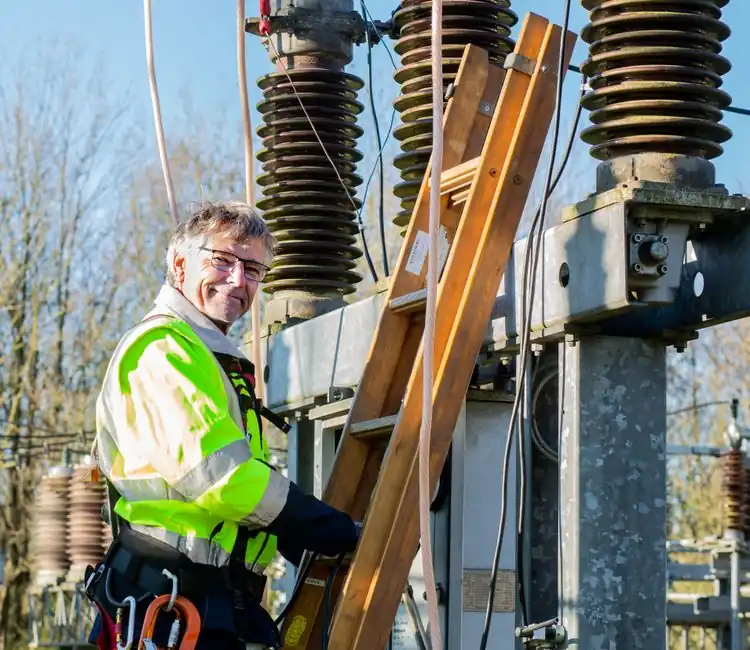
Anti-static equipment for electrical work is not a single product, it is a four-layer system: dissipative clothing, ESD gloves, conductive footwear, and grounded work surfaces, each governed by a distinct standard (EN 1149-5, EN 16350, EN ISO 20345, IEC 61340) [S2]. Specifying only one layer breaks the grounding chain and leaves personnel and components exposed to discharge [S2].
The selection question that drives every line item is: which hazard class does the worksite fall into, ATEX zone 1/2 (gas/vapor), zone 21/22 (combustible dust), or a plain EPA/ESD-protected electronics area? Each class pulls a different combination of anti-static equipment, and mixing insulating PPE with anti-static PPE in the same kit is a common engineering error that defeats the purpose of both [S1].
How the Four Layers Connect: The Grounding Chain
An uninterrupted grounding chain is the core engineering requirement: garments, gloves, boots, and the floor must all dissipate charge together, and the human body becomes the central node [S2]. If any link is non-conductive, charge accumulates on the worker and discharges at the next conductive path, which is typically the tool tip or a circuit board [S2][S4]. In electronics manufacturing, static-related device failures can account for up to 33% of production losses, which is why the chain is treated as a single system rather than a list of separate purchases [S2].
Clothing must be fully closed to function: suits left unzipped, cuffs loose, or sleeves rolled up create gaps where charge can build on the skin instead of bleeding off through the fabric [S4]. The same logic applies to gloves; an ESD glove with a surface resistivity below 10^8 Ω per EN 16350 does nothing if the worker removes it to handle a part [S2][S4].
Standards Map: Which Document Governs Which Layer
Anti-static PPE is governed by a stack of standards, and the right one depends on the layer and the geography. For clothing, EN 1149 (electrostatic properties of protective clothing), with EN 1149-5 as the common performance spec, is the European baseline, while ASTM F1506 covers flame resistance, arc flash, and anti-static in one document for U.S. electrical workers [S2]. For gloves, EN 16350 sets the surface-resistivity limit at <10^8 Ω and defines the test method [S2].
Footwear falls under EN ISO 20345, which includes specific tests for static dissipation and is the citation that has to appear on the CE mark of any safety boot carrying an anti-static claim [S2]. At the workbench, IEC 61340 governs ESD protection of electronic devices, covering work surfaces, grounding straps, ionizers, and the broader EPA program [S2][S3]. ANSI/ESD STM2.1 is the U.S. equivalent for garment resistivity testing, and EN ISO 18080 covers the electrostatic evaluation of textiles more broadly [S2].
For environments with flammable gases, vapors, or dust, ATEX 2014/34/EU and the IECEx scheme set the equipment-level requirements; the PPE selection then has to align with the zone classification of the worksite [S2].
Selection Criteria: Matching Equipment to the Hazard
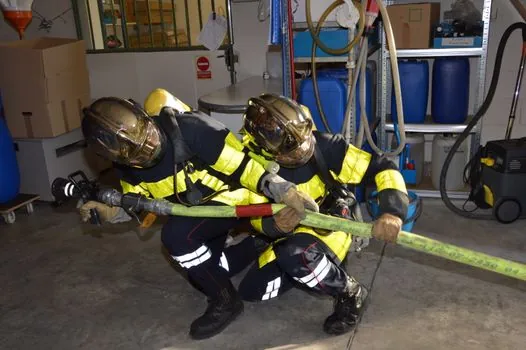
Three inputs drive a spec-first selection: hazard class, mobility need, and whether the worker is also handling energized conductors. For a Zone 1/2 ATEX gas environment where the worker is also doing live electrical work, the kit combines FR-rated arc-flash clothing (ASTM F1506 or IEC 61482), conductive boots (EN ISO 20345 anti-static class), and EN 16350 gloves, because every layer must dissipate while the outer layer must also resist ignition [S2][S5].
For a static-sensitive electronics workstation, the priority is IEC 61340 compliance: a grounded ESD mat, a wrist strap, a dissipative coat (EN 1149-5 or ANSI/ESD STM2.1), and humidity held between 40% and 60% relative to suppress tribocharging [S3][S4]. Climate control is part of the equipment spec, not an afterthought; dry winter air below 30% RH is when nuisance shocks and field failures spike [S4].
For general electrical construction (panel work, wiring, motor terminations) without an ATEX zone, the kit is closer to the standard electrician set: Class E hard hat, arc-rated face shield, FR clothing, dielectric insulated gloves for shock, and rubber-soled or composite-toe boots that are non-conductive rather than anti-static [S5]. Anti-static is not a substitute for dielectric protection, and conflating the two is a common spec error [S1].
Active vs Passive Static Control: When You Need an Ionizer
Passive control (grounding straps, conductive mats, anti-static flooring, dissipative garments) handles charge that has a conductive path to ground. Active control (ionizers, ionizing bars, ionizing blowers) is required when the charged material is an insulator, like plastic film, paper, or non-conductive web, because there is nowhere for the charge to drain on its own [S3].
Active static eliminators generate balanced positive and negative ion streams that neutralize surfaces within a defined range, and they are widely used in converting, packaging, printing, plastics, and semiconductor lines where web speeds and material choices defeat passive methods [S3]. Passive anti-static brushes (ESD brushes) are the lower-cost option for solder removal, lead trimming, and detail work where the operator is grounded but the workpiece is not [S3]. Selection between the two is a function of throughput and material: passive for slow, manual, conductive-touch operations, active for fast-moving or insulating webs.
Anti-Static Equipment Options Compared
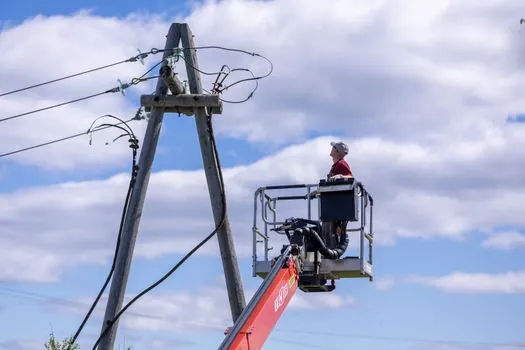
On four decision criteria (resistivity/performance standard, typical use environment, cost band, key limitation), the main equipment types line up as follows. Conductive/dissipative flooring (IEC 61340, ANSI/ESD S7.1): floor-level grounding, electronics and ATEX areas, mid-to-high installed cost, requires periodic resistivity verification. Dissipative garments (EN 1149-5, ASTM F1506, ANSI/ESD STM2.1): body-side charge bleed-off, electronics assembly and ATEX, low-to-mid per garment, ineffective if worn open [S4]. ESD gloves (EN 16350, surface resistivity <10^8 Ω): hand protection and part handling, electronics and flammable-vapor zones, low per pair, must be worn continuously [S2]. Anti-static safety boots (EN ISO 20345): foot-side grounding path, general electrical and ATEX work, mid per pair, sole contamination degrades performance [S2]. Ionizers / ionizing bars (IEC 61340, NFPA, ESDA): neutralization of insulators, plastics, packaging, converting, mid-to-high per unit, requires power and periodic balance verification [S3].
The right combination is a system match, not a stack of individual best-in-class picks. A dissipative coat without grounded flooring, or an ionizer without a wrist strap, leaves a gap that the next charged event will find.
Common Spec Errors and Failure Modes
Three mistakes recur on procurement documents. First, specifying anti-static boots for a worker who also needs dielectric protection: anti-static footwear is designed to dissipate, not to insulate, and the two requirements have to be met by separate layers or by hybrid dielectric/anti-static soles [S1][S5]. Second, buying EN 1149-5 garments but leaving them unzipped on the shop floor: the dissipative surface is the inner conductive grid, which only functions when the suit is closed [S4]. Third, treating the floor as cosmetic: ESD floor tiles only work if installed without insulating adhesive contamination and if the resistance to ground is tested on a schedule, because a single high-resistance seam compromises the entire grounding chain [S4].
On active systems, the failure mode is ionizer imbalance: a bar that emits more positive than negative ions will charge every passing web the opposite polarity, which is worse than no ionizer at all [S3]. Periodic balance verification per IEC 61340-4-7 is a maintenance line item, not an optional service.
Trackable Signals for the Next Spec Cycle

Three things are worth watching on procurement planning. First, the 2025-09 revision cycle of common electrical PPE guides and the consolidation of FR/arc-rated/anti-static claims under ASTM F1506, which is increasingly specified alongside IEC 61482-1-1 for arc-rated garments [S5]. Second, the spread of EN 16350-compliant gloves into general electrical kits, not just ATEX, as more procurement documents adopt the <10^8 Ω surface-resistivity line as a baseline [S2]. Third, related coverage worth tracking: a spec-first map for explosion-proof electrical gear for hazardous-area boundaries, and a work-at-height perimeter alarm map for the same ATEX-adjacent sites where static control is one layer of a larger layered-safety spec.
The underlying component specifications are covered under aerial work platform, and aerial work truck.