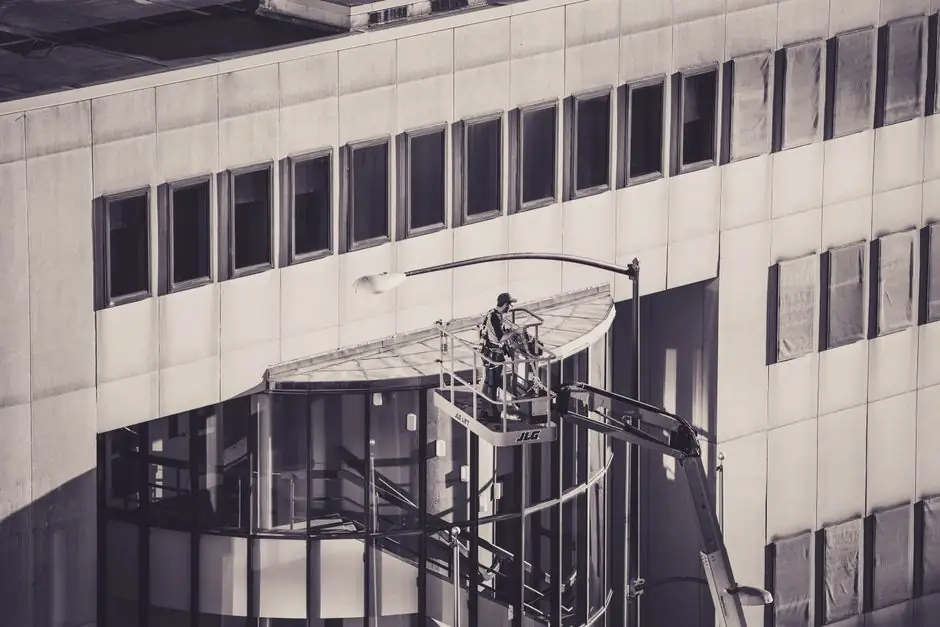
Buried seismic sensors, fence-mounted vibration sensors, free-standing infrared/microwave beams, and camera-based analytics are the four detection families a work-at-height contractor or site security engineer must compare when designing a perimeter alarm layer for roof, scaffold, mast, or aerial work platform staging zones [S1].
On a work-at-height site the perimeter is rarely a clean fence line: it can be a roof edge, a scaffold deck, a suspended platform footprint, or a mobile crane outrigger pad. The detection family that wins on one of these geometries often loses on another, so a spec-first map is required before any hardware is ordered [S1][S2].
Detection Families and the Physical Signal Each One Reads
Each of the four families reads a different physical signal at the boundary: ground vibration (seismic), fence fabric movement (piezo or accelerometer), beam interruption (IR or microwave), or pixel change (video analytics) [S1]. The same event, an intruder crossing the line, produces all four signals at once, but only the family whose sensor is actually present at that geometry will register it.
Seismic detectors are buried in the soil and are unaffected by wind, rain, or direct sunlight; fence-mounted detectors need the fence itself to be rigid enough to transmit vibration; IR/microwave beams require a straight, unobstructed sightline between transmitter and receiver; camera analytics need a clear field of view and stable lighting or onboard IR illumination [S1]. On a work-at-height site this last constraint is the one that usually disqualifies a stand-alone camera system at the roof edge, where parapet shadows, glare, and moving clouds produce constant nuisance triggers.
False-Alarm Sources on Roofs, Scaffolds, and Yard Setups
Wind-driven fence movement is the dominant false-alarm source for fence-mounted detectors; birds, foliage, dust, and beam misalignment drive IR/microwave false alarms; seismic sensors are filtered by adaptive algorithms tuned to the human-step frequency band, so they reject most wind and rain [S1]. On a roof, where there is often no fence at all, fence-mounted detectors drop out of the comparison entirely, and a buried seismic grid laid into the rooftop access hatches and service walkways becomes the only concealed option.
For yard-level work-at-height staging, where an aerial work truck is set up overnight, a hybrid approach is common: buried seismic at the access gate, fence-mounted vibration on the scaffold-sheeting perimeter, and an IR beam as a third confirmation layer. Selecting the right location starts by identifying the most vulnerable choke points, such as ladder access bays, hoist tie-ins, and material-loading ramps, and placing sensors only at those points [S4].
Comparison of the Four Detection Families Across Seven Decision Criteria
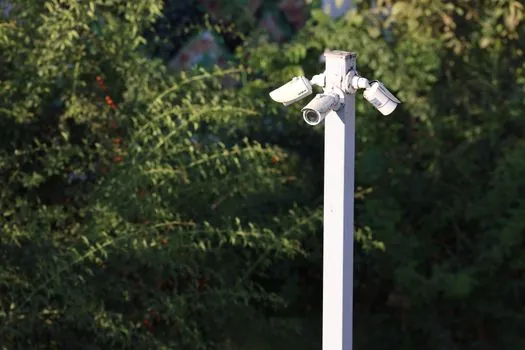
Using the seven criteria laid out in the SensoGuard comparison table, with the camera-analytics column added for completeness: buried seismic is fully concealed, requires no fence, is unaffected by weather, has minimal false alarms, works across irregular terrain, cannot be cut or bypassed, and needs the lowest maintenance. Fence-mounted sensors are visible on the fence line, require an existing rigid fence, are sensitive to wind, false-alarm on animals and debris, and only cover the fence line itself. IR and microwave beams need straight unobstructed sightlines and degrade in fog, heavy rain, or snow. Video analytics on their own need clear line of sight and stable lighting, but paired with a buried seismic cue they become a verification layer rather than a primary detector [S1].
This single comparison is the decision artifact a spec engineer should walk into a procurement meeting with. If the site has no fence, fence-mounted drops off the shortlist. If the perimeter is short and straight, IR beam wins on cost. If the perimeter is irregular, sloped, or shared with a public walkway, buried seismic plus analytics is the only combination that scores consistently across all seven criteria [S1][S2].
Integration With Site Safety Systems and Height-Gauge Routines
On a work-at-height site the perimeter alarm is rarely a standalone box. It feeds the same control room that handles the mast height gauge interlocks, the man-down beacons, and the permit-to-work log. Scalability, open-protocol integration, and remote monitoring are therefore ranked above raw detection range in any realistic selection matrix [S2].
Three integration requirements show up on every work-at-height spec: (1) dry-contact or IP output to the site SCADA or BMS so an alarm can latch an aerial work platform into a safe-state, (2) event logging with timestamped video clip export for incident review, and (3) cybersecurity hardening on any IP-connected detector, because an internet-exposed perimeter sensor is now a known intrusion vector [S2]. A vendor that cannot produce a firmware bill of materials, a CVE disclosure policy, and a documented MQTT or MODBUS TCP map should be de-scoped before price is discussed.
Who Buried Seismic Is For, and Who It Is Not For
Buried seismic is the right answer for a site with no fence, an irregular perimeter, and a low tolerance for visible hardware, such as a hospital roof, a data-center yard, or a heritage building facade. It is the wrong answer for a short straight run under 30 m where an IR beam costs a tenth of the price and installs in a day, and it is the wrong answer for a leased site where trenching is contractually excluded [S1].
Fence-mounted sensors are the right answer when an existing rigid chain-link or palisade fence is already in good condition and the budget is tight. They are the wrong answer on temporary scaffold-sheeting, where the fabric moves in the wind and the false-alarm rate will not be tolerable. IR and microwave beams are the right answer for clear straight runs of 30-200 m, such as a vehicle gate or a long compound side, and the wrong answer for any geometry with a corner, a tree, or a parked aerial work truck in the path.
Tripwire-Style and Portable Units for Short-Duration Work
For short-duration work-at-height tasks, such as a one-week roof survey or a mobile scaffold deployment, a portable tripwire-style perimeter alarm loaded with a primer or blank cartridge is a recognised option, with documented placement rules: avoid high-traffic areas, anchor to a stable object like a tree or fence post with screws or zip ties, keep the tripwire taut but not over-tensioned, and disarm before any adjustment [S4]. These units are low cost and fast to deploy, but they expose the user to primer-handling risk and they do not integrate with site SCADA, so they belong in a different procurement track from the fixed systems above.
For comparison context on adjacent spec-first selection problems, see this mining perimeter alarm spec map for 2026 and this firefighting staging perimeter alarm map, both of which apply the same detection-family comparison against harsher environmental constraints. For non-security instrumentation on the same sites, the protocol gateway selection map is a useful reference for the integration side of any perimeter alarm architecture.
Failure Modes and Constraints Spec Engineers Most Often Miss
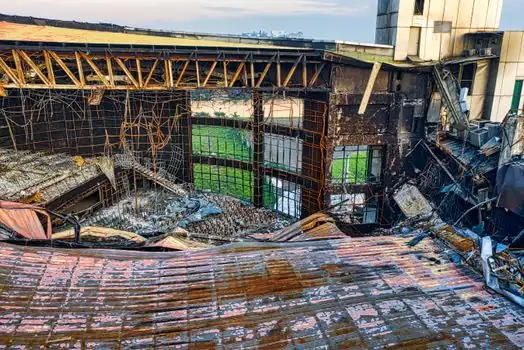
Three failure modes are repeatedly under-specified in work-at-height perimeter alarm projects: (1) beam misalignment after a vehicle strike or scaffold reposition, which can silently disable an IR link for days; (2) vegetation growth into a seismic zone, which raises the background vibration floor and erodes detection probability; (3) shared-perimeter false alarms, where a public footpath runs inside the detection field and the system cannot be retuned without a software visit [S1][S2].
Mitigations belong in the spec, not in the commissioning report: a six-monthly beam-alignment audit, an annual vegetation-cut schedule tied to the seismic zone map, and a documented retune protocol with the vendor. Reliability and durability in harsh conditions is the single attribute most often over-promised in vendor literature and most often under-tested during site acceptance, so the factory-acceptance test should include a recorded walk-test at the published detection probability before payment is released [S2].
Trackable signals for the next planning cycle: vendor disclosure of IP-firmware CVE remediation lead times, integration of seismic detectors with mast height gauge interlocks on telescopic boom sites, and the publication of a unified false-alarm-rate benchmark across the four detection families.