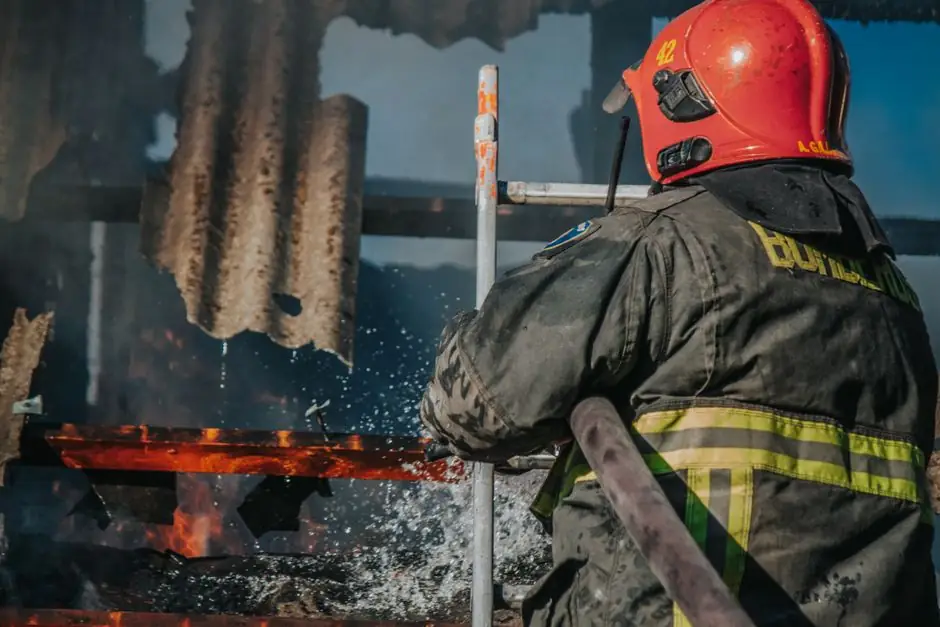
Anti-static equipment for fire and rescue operations splits cleanly along two hazard lines: protecting the wearer from spark-induced ignition in flammable atmospheres, and protecting onboard electronics from electrostatic discharge during handling and refit [S3].
The two tracks answer to different standards, EN 1149-5 for personal anti-stat workwear and IEC 61340 for ESD-controlled environments, and conflating them is the single most common specification error in apparatus-room procurement [S3].
Two Standards, Two Failure Modes: EN 1149-5 vs. IEC 61340
EN 1149-5 specifies the requirements for electrically conductive protective workwear used to prevent incendiary sparks on the wearer, which is why it is woven into most flame-resistant firefighter station wear and wildland PPE [S3]. IEC 61340, by contrast, governs ESD protection for the production process and the equipment inside it, covering items like workstation mats, flooring, and packaging for sensitive electronics [S3].
A garment that complies with IEC 61340 is not automatically compliant with EN 1149-5, and an ESD-safe mat is not, by itself, a fire-safe work surface; the grid spacing and resistivity targets differ because the discharge energy thresholds differ [S3]. For apparatus that carries both crew and electronics, both specifications need to be written into the tender.
Resistivity Bands and Material Behaviour
Insulative materials have high surface resistivity and let static charges sit on the surface; conductive materials have low resistance and dump the charge to ground almost instantly; static-dissipative materials sit in the middle, draining charge slowly and in a controlled manner, which is what most ESD workbenches and clean-room floors use [S2].
Anti-static material is a functional category, not a resistivity band: it can be either conductive or dissipative, the defining feature is that it prevents charge build-up in the first place, whereas a plain insulative material does not [S2]. Fire-retardant plastic sheeting used as a dust-containment wall or vapour barrier inside fire-affected structures is typically a 6-mil polyethylene film with the anti-stat property engineered into the weave so the charge dissipates across the sheet rather than accumulating at a point [S1].
What the Firefighter Brings: Anti-Stat PPE
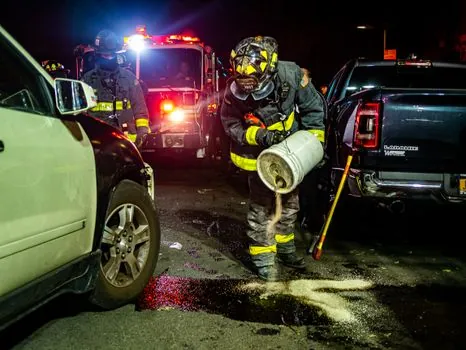
Anti-stat properties in a firefighting garment are achieved with a conductive thread woven into the fabric at regular intervals, forming a grid that bleeds charge off the surface before it can reach incendiary energy [S3]. The grid spacing is tighter for full ESD compliance, while EN 1149-5 anti-stat garments use a looser grid because the goal is to stop sparks, not to protect microelectronics [S3].
For a wildland or industrial firefighter this distinction matters at the locker-room shelf: EN 1149-5 base layers and station wear are part of the personal protective equipment chain, whereas an IEC 61340-compliant coverall is a process tool for protecting radios, thermal imagers, and pump-panel electronics during service. A broader view of the equipment ecosystem that surrounds these garments, including flow hardware, monitors, and intake valves, is laid out in the firefighting hardware overview reference page.
What the Apparatus Bay Needs: ESD Materials
Where the rig is being serviced or electronics are being bench-tested, the floor and workbench must be static-dissipative rather than insulative, so any charge walked in on a boot or a chair wheel drains through the surface at a controlled rate [S2]. Multi-layer static-dissipative matting with a conductive backing, the same construction used in medical and laboratory settings, is the typical spec for an electronics bench inside a fire station or training facility [S2].
For protecting portable electronics, oversized anti-static bags with an elastic closure are a low-cost, targeted answer for storing radios, thermal-imager batteries, and laptop service units during maintenance; the antistatic bag itself is not fire retardant, which is a deliberate trade-off in favour of handling ESD-sensitive components [S1]. For broader static control on the floor and over work surfaces, dedicated anti-static equipment such as wrist straps, heel grounders, and dissipative floor finishes complete the system.
Sheeting, Containment, and the Fire Retardant Layer
Fire retardant anti-static plastic sheeting is a separate product class from anti-stat clothing: it is a 6-mil polyethylene film with both the charge-dissipation weave and an FR additive, commonly used as a dust-containment wall or vapour barrier on remediation jobsites [S1]. The product referenced in the Americover datasheet passes NFPA 701 flammability tests, the same standard used to qualify plastic sheeting for public-occupancy and construction sites [S1].
The reinforcement version of the same film can double as a vapour barrier or insulation cover when the project also needs durability beyond the single-use FR sheet, and the sheeting is reusable on jobs where contamination and load permit [S1]. A point often missed at the desk: the sheeting dissipates charge across the sheet, while EN 1149-5 garments bleed charge through the wearer to ground; the two are complementary, not interchangeable, on the same incident scene.
Selection Criteria Mapped to the Crew and the Rig
The decision tree is short. If the hazard is a flammable or explosive atmosphere around the firefighter, the spec is EN 1149-5 anti-stat workwear layered with the appropriate flame-resistant outer shell. If the hazard is sensitive electronics on the apparatus or being bench-tested, the spec is IEC 61340 ESD mats, flooring, and packaging, plus conductive thread grid spacing tighter than the anti-stat grid [S3].
If the hazard is dust or vapour at a fire or remediation site and the sheet needs to be both FR-rated and charge-dissipative, the spec is a 6-mil anti-static fire retardant polyethylene film that passes NFPA 701 [S1]. The same logic also guides enclosure lighting in apparatus bays: lighting fixtures that are certified for the zone, rather than dust-prone, are covered in the lighting equipment and electric lamps reference.
Limits, Common Errors, and What to Verify on Receipt
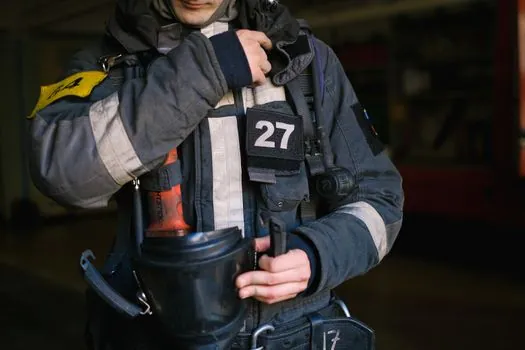
Two predictable failure modes sit on the receiving dock. First, an ESD-only garment accepted as anti-stat PPE, which leaves the wearer unprotected against spark ignition because the thread grid and test method are not the EN 1149-5 ones [S3]. Second, a fire-retardant sheeting accepted as anti-static without an NFPA 701 test certificate and a stated surface-resistivity band, which gives no measurable charge-dissipation performance [S1].
Ask for the test certificate, the surface-resistivity range in ohms, the grid spacing in millimetres for woven garments, and the NFPA 701 or EN 13501-1 fire rating on the sheeting datasheet. Field-side NDT equipment and static-control checks for new apparatus deliveries also fall under the same audit-trail discipline.
Track two signals over the next procurement cycle: the publication of any harmonised update to EN 1149-5 affecting grid spacing and charge-decay time, and the wider adoption of IEC 61340-5-1 surface-resistance limits in apparatus-bay and electronics-bench tenders from European fire services. Related reading on broader fire and rescue hardware selection is in the flow and pressure hardware reference page.
See also our earlier report, OEM vs ODM for Industrial Fasteners: Spec-Driven Selection.