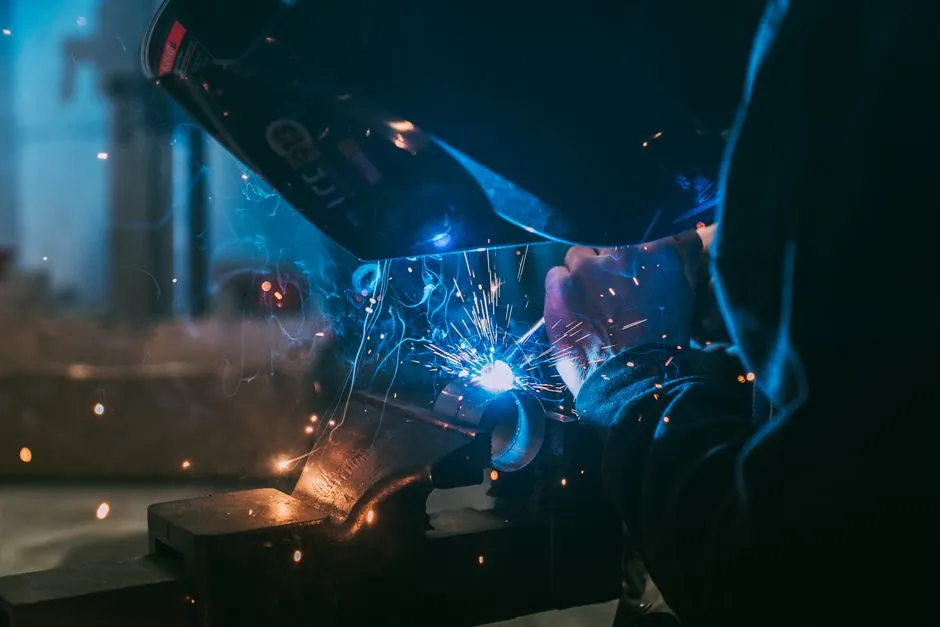
Argon, a chemically inert noble gas, captures roughly 35% of global welding gas volume, the largest single share of any shielding gas, per the 2026 welding gas market outlook [S3]. That same report sizes the broader welding gas market at USD 3.68 billion in 2026, projected to USD 4.99 billion by 2032 at a 5.2% CAGR, with Asia-Pacific accounting for about 43.42% of regional share [S3]. Argon's position as the default shield for GMAW, GTAW, and stainless decarburisation makes it the most exposed single gas in any air-separation supply shock.
Industrial buyers in 2026 are working from a market where the top five welding gas producers hold nearly 60% of global supply, a moderately consolidated structure that limits short-term substitution when an ASU trips or power costs spike [S3]. Argon is not mined or synthesised on demand; it is recovered as a byproduct of cryogenic air separation, so its availability is mechanically tied to the throughput of oxygen and nitrogen customers, which makes procurement timing a function of steel mill and hospital oxygen runs.
Why argon, and why tightness hits this gas first
Argon is chemically inert, has a relative density of about 1.40 versus air, and produces a stable, low-spatter arc, the combination that makes it the shielding gas of choice for TIG/GTAW on stainless, aluminium, and titanium, and for MIG/GMAW on non-ferrous and austenitic grades [S1][S4]. In MIG on carbon and mild steel, blends of 75% Ar / 25% CO2 or 90% Ar / 10% CO2 are the workhorse mixtures; for stainless MIG, argon with 5% or less oxygen is the most common formulation [S2]. Pure argon TIG is the dominant configuration for thin-wall stainless tube and aerospace alloys, which is why even a 5% shortfall at an air separation unit (ASU) cascades into aerospace and food-grade fabrication first.
The shielding function itself is what makes demand inelastic. The molten weld pool must be kept clear of oxygen, nitrogen, and hydrogen; oxygen causes oxidation, nitrogen dissolves into the pool and embrittles the joint, and hydrogen drives hydrogen cracking and porosity [S5]. Substituting a cheaper or more available gas into a TIG procedure on 304L stainless is not a like-for-like swap: you trade arc stability, bead profile, and corrosion performance, which is why welding and cutting tool specification pages treat argon choice as a metallurgical decision, not a procurement one.
Supply-side mechanics: argon as a byproduct of air separation
Cryogenic air separation units (ASUs) produce oxygen, nitrogen, and argon together; argon typically makes up about 0.93% of atmospheric air by volume, so every tonne of oxygen carries with it a small, fixed argon coproduct stream. When steel mills, hospitals, or merchant gas customers cut oxygen offtake, the integrated argon stream shrinks in proportion. Energy is the dominant operating cost: ASU power draw scales with the oxygen production rate, so electricity spikes in 2026, particularly in Europe and parts of Asia, translate directly into argon run-rate cuts and price floors [S4].
The market structure amplifies the effect. The top five industrial gas companies control close to 60% of global welding gas volume, and the larger the merchant, the more its regional ASUs are optimised for oxygen, with argon recovered as a side stream [S3]. When a major ASU idles for maintenance, or when a region shifts hydrogen production toward electrolyser oxygen, the local argon balance tightens before any headline news cycle registers. For buyers, this is the operational reason a 1% oxygen demand change can move argon spot prices by double digits in a quarter.
Where argon goes by end-use, and what is at risk in a tight year
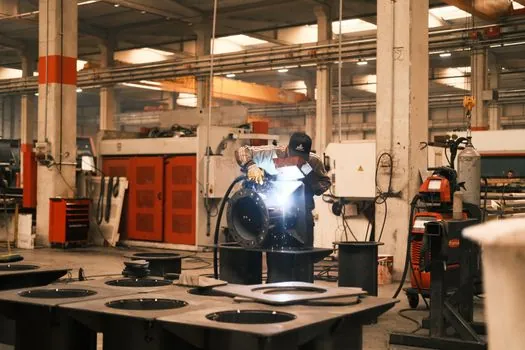
By end-use, the Metal Manufacturing and Fabrication segment accounts for about 39% of welding gas demand in 2026, the largest slice of the market, with Construction and Infrastructure, Automotive, Shipbuilding, and Energy following [S3]. Argon also pulls demand from three non-welding sinks that compete for the same molecule: semiconductor plasma etching and deposition, double-glazing insulation, and specialty lighting including HID lamps and neon signage [S4]. The lighting equipment and electric lamps segment retains a niche argon call because the gas prevents filament oxidation at incandescent operating temperatures; semiconductor fabs lock in long-term argon supply for low-ionisation-energy plasma processes that are difficult to retune.
Steelmaking is the second industrial anchor. Argon-oxygen decarburisation (AOD) is the standard refining route for stainless steel, where argon is injected to lower the CO partial pressure and allow decarb without excessive chromium oxidation; a 100-tonne stainless heat can consume several hundred cubic metres of argon. EAF shops also use argon for bottom-bubbling and ladle shrouding, which means a tight gas year shows up in stainless slab output before it shows up in weld shops. Buyers who treat argon as a welding consumable miss the fact that the power supply for an ASU and the metallurgical chemistry of an AOD vessel both have to clear before a single cylinder reaches a job site.
Shielding gas selection under tight supply: where substitution actually works
Argon is not interchangeable with CO2 in a MIG procedure. Pure CO2 gives higher penetration and lower gas cost, but a less stable arc, more spatter, and more fume; it is acceptable for carbon steel in dip-transfer and some flux-cored work, but is not specified for stainless or aluminium [S1][S2]. Helium is the only noble gas with a similar arc profile, and it is scarcer and more expensive, so helium is reserved for high-temperature aluminium and copper TIG, not bulk carbon-steel MIG. The practical mitigation, where argon is tight, is to right-size the mix rather than abandon argon.
For carbon and mild steel MIG, the 75/25 Ar/CO2 and 90/10 Ar/CO2 mixtures let the buyer reduce argon per cubic metre of weld by 10 to 25% relative to pure argon, while keeping the arc stability that makes robotic and semi-automated cells viable [S2]. For stainless MIG, the typical Ar + 2 to 5% O2 mix lets the operator trim argon by a small percentage, and the oxygen addition actually improves wetting and bead profile, so the change is metallurgically neutral [S2]. For TIG on stainless and aluminium, there is no drop-in substitute; you either accept a higher-grade gas contract or you shift work to thicker sections where pulsed MIG with an Ar/He blend becomes economic. Procurement teams that frame the question as 'which gas replaces argon' will lose; teams that frame it as 'which procedure can run on a leaner Ar mixture' will hold throughput.
Procurement playbook for a tight argon year
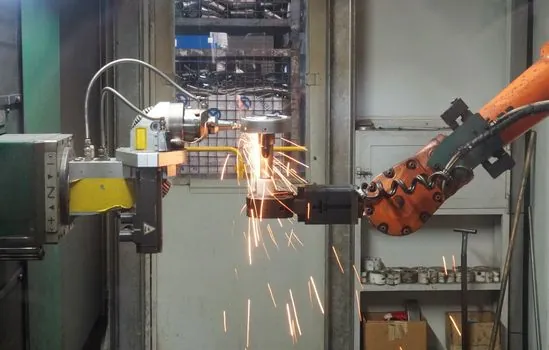
The contract structure matters as much as the chemistry. Long-term supply agreements with take-or-pay clauses and indexed pricing tied to electricity and oxygen offtake have become the default for large automotive and shipbuilding buyers; spot buyers absorb the volatility. Diversifying across two or three ASUs, even at a slightly higher unit cost, is a common hedge because no single regional outage then halts production. For fab shops, on-site argon generation via nitrogen-membrane plus small ASU hybrid is an emerging option for high-utilisation sites, but the capex pay-back only closes above roughly 200 to 300 cubic metres per month of steady demand, below that, merchant cylinders and bulk liquid remain the economic answer. [S4]
Operational levers are smaller but real. Reducing purge losses on TIG starts (post-flow timer discipline, smaller torch cups), switching root-pass TIG on stainless to pulsed MIG with an Ar/He blend where the WPS allows, and consolidating cylinder inventory to cut boil-off all free up liquid argon without touching chemistry. A 1 to 2% per week loss in standby cylinders is normal for small users; recovering half of that is equivalent to a mid-single-digit percentage increase in effective supply without spending a dollar on gas.
Standards and safety context for shielding gas selection
Welding procedure specifications (WPS) under ASME Section IX and the shielding gas ranges they permit are the real constraint: any mix change must be qualified on the procedure or the weld is not to code, which is why a 90/10 Ar/CO2 mix cannot be quietly swapped in on a procedure qualified on 75/25 without re-qualification. For stainless service in sour or chloride-rich environments, the user also has to track NACE MR0175 / ISO 15156 hardness limits and ASTM A262 practice selection for the welds themselves, and the shielding gas composition can influence the as-welded ferrite number, which in turn drives ASTM A262 results. None of this is affected by a tight argon market per se, but it is the reason a fabricator cannot simply substitute to chase a cheaper cylinder. [S2]
Welding fume exposure is regulated in most jurisdictions by occupational exposure limits for the parent metal, with OSHA permissible exposure limits for hexavalent chromium on stainless and a range of country-specific limits for manganese, nickel, and ozone generated by the arc; argon itself is an asphyxiant and requires oxygen monitoring in confined spaces per general industrial hygiene practice, but it is not on the chemical exposure limit lists the way CO2 and NO2 are. This is why the practical safety risk in a tight argon year is not on the operator but on the supply chain: an unvented room with a stuck argon regulator can displace oxygen without warning.
Market signals to track in the next two quarters

Track three things: the regional electricity-to-oxygen price spread, which sets the ASU running cost and therefore the argon offer floor; stainless crude-steel output, which sets the AOD argon call; and the semiconductor fab capex pipeline, which sets the long-term high-purity argon pull from electronics [S3][S4]. A 1 to 2% shift in any of those moves argon more than a 5% change in welding shop demand, because the electronics and stainless sinks are higher priority for merchant gas producers. Shipbuilding order books in Asia-Pacific, the largest regional block at 43.42% of the welding gas market, are the most concentrated leading indicator for the next quarter's merchant argon spot price [S3].
For further reading on adjacent supply risks that move the same industrial gas majors, see the HVDC transformer lead-times analysis for context on the broader 2026 industrial supply squeeze, and the aramid fibre supply note for how by-product supply chains are behaving under similar cost pressure. For stainless procedure work, the DBA vs rebar for welded stud connections piece is a useful reference on the WPS discipline that gates any shielding gas change.