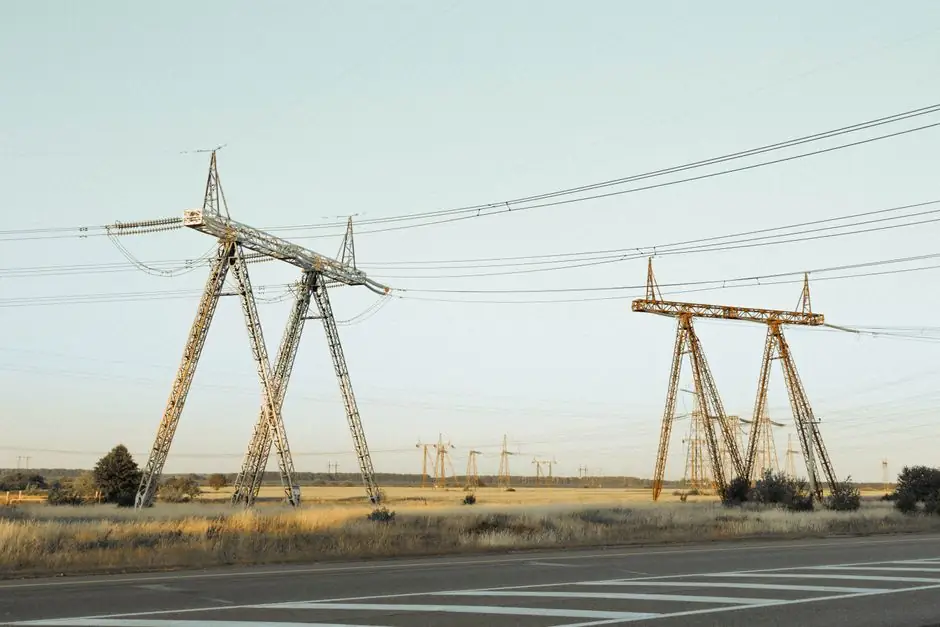
For procurement planning in September 2026, HVDC converter transformer lead times run 36-60 months in North America and Europe, while AC power transformer lead times run 110-160 weeks depending on MVA class and region [S2][S6].
The gap is not a one-off. The power transformer segment and the HVDC converter transformer segment both bind on the same three constraints: grain-oriented electrical steel, copper, and a thin base of qualified manufacturers, but the HVDC unit adds a converter-valve interface, polarity-reversing DC bushings, and a single-unit factory acceptance test that no shop can parallelize.
What the 2026 AC and HVDC lead-time numbers actually look like
Wood Mackenzie's Q2 2025 survey and follow-on reporting through 2026 put standard AC power transformer lead times at 128 weeks on average, with generator step-up units averaging 144 weeks and some orders extending to four years [S1][S5]. A 2026 buyer guide breaks that down further: 110-130 weeks for units above 100 MVA, 60-90 weeks for the 30-100 MVA class, and 160+ weeks at the extreme end of the U.S. large power transformer queue [S6].
HVDC converter transformers sit above all of those numbers. CWIEME's March 2026 analysis cites 36-48 months for specialized units, with North American and European LPT lead times extending up to 60 months in some cases versus roughly 12 months in APAC [S2]. Independent market research corroborates that large high-voltage power transformer lead times are a structural drag on grid build-out, and HVDC units fall into that same constrained bucket [S7].
Distribution-class transformers, by contrast, have eased off their 2023 peak above 100 weeks and now sit closer to 12-26 weeks for off-the-shelf catalog units, with custom dry-type builds running 50+ weeks and specialized padmounts above 40 weeks [S3][S4]. The HVDC versus AC comparison is therefore a large-power-transformer question, not a distribution question.
Why HVDC converter transformers are slower than AC units
A converter transformer is not a power transformer with a different nameplate. It is a purpose-built unit that interfaces with the line-commutated or voltage-source converter valves at one end and the AC grid at the other, and that interface drives the schedule in three concrete ways. [S2]
First, converter transformers must handle DC bias, harmonic heating, and short-circuit stresses that an AC step-down unit never sees, which forces thicker insulation, more complex winding arrangements, and longer dielectric testing. Second, the DC bushings on the valve side are a single-source component with its own multi-month queue. Third, each HVDC link is a one-off engineering package, so the factory acceptance test cannot be amortized across a production run; the unit is the run.
The same four structural drivers CWIEME lists for LPT lead times apply with extra weight to HVDC: highly customized engineering, long manufacturing and testing cycles, dependence on a small set of specialized components, and a limited global base of manufacturers capable of producing the largest units [S2]. OEM utilization on LPT lines is around 70% globally and projected to reach 80% by 2030, which is the headline metric to watch when a buyer asks whether a new HVDC order can pull factory capacity forward.
Material and capacity bottlenecks that hit both AC and HVDC
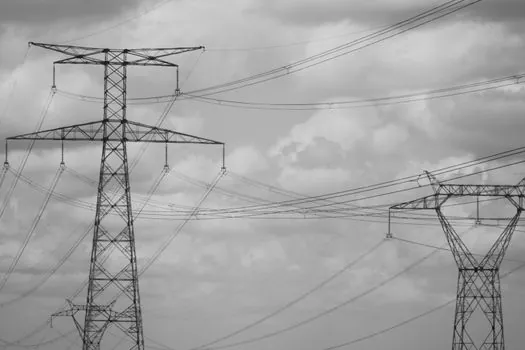
Grain-oriented electrical steel (GOES) is the single biggest shared input. Cleveland-Cliffs is the only domestic U.S. producer, with plants in Pennsylvania and Ohio, and roughly 80% of large power transformers used in the United States are imported, so any GOES disruption flows directly into both AC and HVDC queues [S1]. Copper windings and high-grade aluminum for tap changers and bushings layer on top of the GOES constraint [S3][S4].
Generator step-up transformer demand has grown 274% since 2019, and overall power transformer demand is up 119% over the same period, against a manufacturing base that has not added capacity at the same pace [S1][S2]. Component-level bottlenecks inside the transformer itself, including LBOR switches, fusing, gauges, bushings, and tap changers, have been extended since 2020 and create secondary delays even on otherwise standard AC builds [S4].
Pricing tracks the same pressure curve. Power transformer prices are up 77% since 2019, distribution transformer prices up 78-95%, and the IEA's 2025 "Building the Future Transmission Grid" report finds some prices at 2.6 times pre-pandemic levels in real terms [S1][S2]. HVDC converter transformers are quoted inside that same macro envelope, with project-specific surcharges for the converter interface.
Who HVDC and AC lead times are for, and who they are not
If a project needs a substation transformer for a 30-100 MVA industrial load, a wind farm collection point, or a data center campus, the relevant lead-time window is 60-90 weeks for AC units, and the question is whether the buyer can accept a 110-130 week slip by moving above 100 MVA [S6]. Standardized padmount and dry-type product sits in the 12-50 week range and is appropriate wherever a catalog spec is acceptable [S3][S4].
HVDC converter transformer lead times are the right question only for long-distance bulk transmission, offshore wind export cables, and asynchronous grid interconnections where the converter station is itself the project. A substation engineer specifying a 138 kV/13.8 kV unit for a factory should not be reading HVDC numbers, and an HVDC project developer who quotes a 26-week AC number to a stakeholder is quoting the wrong product class.
Modular pre-engineered approaches and unit-retrofit strategies are being marketed as ways to bypass the queue, but for HVDC-class equipment there is no real modular bypass; the converter interface is bespoke either way [S8]. The procurement decision is therefore less about finding a faster supplier and more about ordering 18-24 months before energization is needed.
Comparison: HVDC converter vs AC power vs distribution transformer lead times
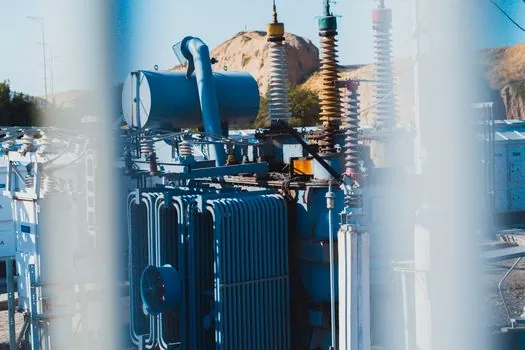
Side by side on the four criteria a planner cares about, the segmentation is clear. Best-case delivery windows: HVDC 36 months, AC LPT 24-36 months, distribution 12-26 weeks. Material risk profile: HVDC and AC LPT both exposed to GOES and copper, with HVDC adding DC bushing single-source exposure; distribution shares the same GOES exposure but at lower unit mass. Manufacturing base: HVDC has a narrower qualified-OEM pool than AC LPT, which is already narrow; distribution has more suppliers and shorter queues. Buyer mitigation options: HVDC and AC LPT both require multi-year forward ordering and limited retrofit substitutes, while distribution buyers can pivot to padmount stock or unit retrofit to cut months off the schedule [S1][S2][S3][S4][S6].
For context on how lead-time pressure is playing out in adjacent electrical commodities, the analog and power management IC lead times in 2026 sit at 26-40 weeks, which is shorter than AC transformer queues but long enough to influence substation control-panel schedules that ship on the same project timeline.
What to watch next in the HVDC and AC transformer queue
Two trackable signals will tell a 2026 planner whether the gap between HVDC and AC lead times is widening or compressing. First, OEM LPT utilization: CWIEME puts the current global figure around 70% with a 2030 projection of 80%, and any sustained move above 80% will push HVDC delivery windows past 60 months [S2]. Second, U.S. import share of large power transformers, currently near 80%, and any movement on domestic GOES capacity beyond Cleveland-Cliffs's Pennsylvania and Ohio footprint, will set the floor for both AC and HVDC lead times simultaneously [S1].
For a project breaking ground in late 2026 with a 2029 energization target, the working assumption is a 36-48 month HVDC converter transformer window against a 24-32 month AC power transformer window, and any procurement plan that does not lock converter-transformer slots before the AC substation order is late, not early.
For the relevant spec sheets and selection criteria, see lead screw, and ac motor.