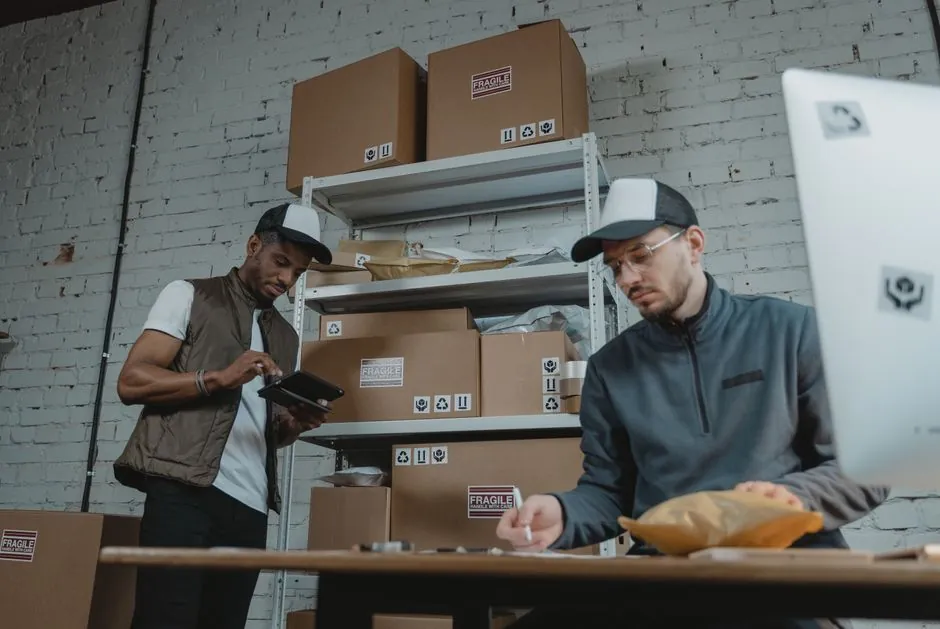
AS/RS and AMR goods-to-person are not competing SKUs, they are different stack architectures, and the wrong one burns 18 to 36 months of integration budget [S5].
Goods-to-person AMR (G2P-AMR) and shelf-to-person variants deliver totes or mobile shelves to a fixed workstation, so the operator never walks the aisle; traditional AS/RS (unit-load cranes, mini-load, shuttle-based, VLM) stores totes in a fixed grid and uses cranes, lifts, or bots to extract them on demand [S3][S5]. Each architecture moves people, bins, and capital differently, and that is the only way to compare them honestly.
What each system actually does on the floor
AS/RS is a defined-location storage technology with four canonical components: storage racks, an input/output station, the storage/retrieval machine (crane, shuttle, carousel, VLM, or grid bot), and a warehouse management system that owns the put-away and pick logic [S5]. The retrieval machine follows established routes between predefined bin locations, which is why AS/RS delivers sub-second deterministic cycle times and the highest storage density per square meter of any intralogistics option [S4][S5].
G2P-AMR replaces the picker walk: a fleet of autonomous mobile robots lifts a tote, shelf, or mobile rack from a storage zone and drives it to an ergonomic workstation where the operator (or a robotic arm) does the pick [S1][S3]. In a 2024 IEEE implementation, fiducial markers plus wheel-odometry fusion let the AMRs navigate aisles narrower than 1 meter and run a Dijkstra-planned path, proving that goods-to-person robots can operate in confined spaces that fixed AS/RS cranes cannot reach [S1].
Productivity numbers that should drive the spec
G2P-AMR systems are documented to raise picking productivity up to 6x over conventional pick-and-walk methods, with manual-labor reliance falling by roughly 50% in operations that previously struggled to retain pickers [S3]. When a G2P-AMR is paired with an AS/RS tote buffer and a robotic arm for goods-to-robot picking, an additional 10% productivity gain is typical, with some sites reporting 3x overall versus fully manual picking [S3].
AS/RS productivity is rated in different units: cycle time per double-handling (typically 30 to 90 seconds for mini-load, 60 to 180 seconds for unit-load cranes, and 10 to 25 seconds for shuttle-based grid systems) and storage density in cubic meters per square meter of footprint [S4][S5]. Where G2P-AMR wins on people substitution, AS/RS wins on deterministic throughput, footprint compression, and SKU density per cubic meter [S4][S5].
Decision matrix: G2P-AMR vs AS/RS vs shelf-to-person
The three stacks line up against four selection criteria in the table below; the right answer is a function of SKU count, order mix, ceiling height, and brownfield vs greenfield [S3][S5][S7].
Storage density favors shuttle-based AS/RS and VLM, which can compress the same SKU count into 30 to 50% of the floor area used by a G2P-AMR grid [S4][S5]. Picking productivity favors G2P-AMR at the workstation (up to 6x) and goods-to-robot G2P-AS/RS hybrids (up to 3x manual) [S3]. Capital lead time favors G2P-AMR because no fixed racking, cranes, or mezzanines are required, so brownfield retrofits install in 8 to 16 weeks, whereas unit-load AS/RS typically runs 9 to 18 months from PO to live [S3][S5].
Flexibility and unit-load range tip back to G2P-AMR: heavier-duty G2P-AMR frames handle totes, full pallets, and multi-tier shelves, while Personal Assist AMRs (PA-AMR, the "person-to-goods" approach) are typically engineered for each-pick only [S3]. For a primer on the AGV vs AMR vs AS/RS split, the AGV robot comparison guide covers the mobile-platform taxonomy, and the AMR robot reference covers localization, safety scanners, and WES integration.
Who each stack is FOR, and who it is not for
G2P-AMR is FOR e-commerce, 3PL, and spare-parts operations with 5,000 to 500,000 SKUs, an order profile dominated by each-picks, and ceiling heights under 12 meters where fixed cranes do not pencil out [S3][S7]. G2P-AMR is NOT for sites handling pallet-level inbound/outbound at very high throughput, where a unit-load AS/RS crane cycle still beats a fleet of mobile robots on cost per move [S5].
Shuttle-based AS/RS and VLM are FOR dense micro-fulfillment, pharmaceutical and electronics buffers, and any site with ceiling height above 10 meters and a stable SKU master; the storage rack and shuttle rails act as the storage rack backbone, with storage totes handled as a managed storage cage pool [S4][S5]. They are NOT for brownfield sites with uneven floors, low ceilings, or low SKU counts where the WMS integration alone wipes out the density gain.
Shelf-to-person AMRs are FOR mid-volume operations with mixed tote and case picks, where mobile shelves replace stationary racking and the fleet scales with seasonal demand [S8]. A related construction equipment and racking decisions guide explains how aisle width, slab flatness, and load class influence the install envelope for either stack.
Integration, WES/WCS, and failure modes
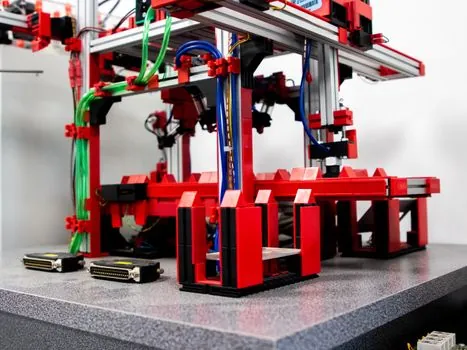
Both stacks demand a warehouse execution system (WES) that issues tasks to robots or cranes and reconciles them with the WMS; the G2P-AMR pattern uses shortest-path routing with a WES-managed fleet and supports goods-to-robot cells where a 6-axis arm picks from the presented tote [S3]. AS/RS leans on a warehouse control system (WCS) that owns crane scheduling, hoist interlocks, and tote tracking inside the rack [S2][S5].
Common failure modes diverge sharply: G2P-AMR fleets suffer from congestion in narrow aisles and from fiducial or LiDAR localization drift in high-glare or high-dust zones, which the 2024 IEEE paper addressed with a fiducial-graph + Dijkstra path planner [S1]. AS/RS failure modes are mechanical (hoist rope wear, shuttle wheel flat-spotting), fire-suppression triggered by hot-swapped lithium batteries in shuttle bots, and WCS deadlock during peak put-away surges [S4][S5].
Real use cases, and what the spec sheet does not show
Toyota Automated Logistics (the unified brand combining Bastian Solutions, Vanderlande warehousing, and viastore from April 1, 2026) positions goods-to-person systems as a high-density pick option that pairs with case, piece, and palletizing lines for mixed-mode fulfillment, with WES/WCS software as the integration layer [S2]. Prime Robotics, Geek+, and Interlake Mecalux document the same architectural pattern with differentiator language: G2P-AMR framed as a labor-substitution play, PopPick framed as a hybrid goods-to-person workstation, shelf-to-person framed as a mobile-rack play [S3][S5][S8].
What the spec sheets understate is the order-mix sensitivity: a site with 80% each-pick and 20% case-pick usually lands on G2P-AMR or shelf-to-person, while a site with 20% each-pick and 80% case-pick still benefits from unit-load AS/RS cranes for the case side [S3][S5]. Hybrid is the default answer, not the exception: G2P-AMR for the each-pick face, AS/RS for the buffer, and a WES that owns the handoff.
Track the IEEE follow-up work on fiducial-free SLAM for G2P-AMR (2026 conference cycle), the WMS vendors shipping native WES modules that abstract the AMR vs crane choice, and the shuttle-bot battery UL 3300 / IEC 62133-2 compliance push for in-rack lithium fleets, all of which will move this matrix again within 12 months [S1][S4]. For a process-engineering view of when the picking line should be a storage handling cell rather than a robot, that reference lays out the manual, semi-automated, and fully automated decision points.
Related analysis: PVDF Coating Thickness for 3mm Aluminum Veneer Panels: Spec Rules, Process Limits, and.