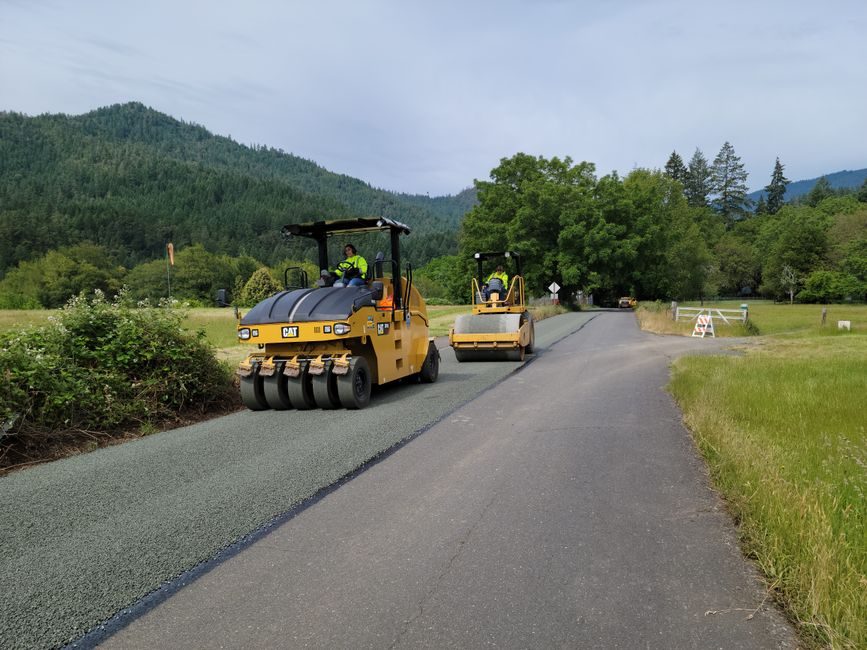
An asphalt paver is a self-propelled roadbuilding machine that receives hot-mix asphalt from trucks, distributes it across a defined width via conveyors and augers, and pre-compacts the mat with a heated, vibratory screed before rollers finish the work [S1].
Modern tracked and wheeled units cover laydown widths from roughly 1.8 m to 9 m, with placement rates in the 10-100 t/h range depending on model class and auger configuration. Caterpillar, Volvo CE, Dynapac, Vögele (Wirtgen Group) and Bomag dominate the global OEM roster, with rental fleets common for short-duration paving windows [S1].
Core Advantages of Modern Asphalt Pavers
Mechanized laydown produces a more uniform mat thickness and consistent surface texture than manual placement, which directly improves density targets before rolling [S1].
For rental economics, models such as the Caterpillar AP355F or AP555F are listed in the 8-12 t operating-weight class with paving widths up to ~6 m [S1].
Disadvantages and Operating Constraints
Asphalt pavers carry high capital cost — list prices on 2026 OEM configurators run from roughly USD 250,000 for compact utility units to over USD 800,000 for full-size highway-class tracked pavers with extending screeds. [S1]
Other recurring friction points: transport weight and dimensions require lowboy trailers and often permits for highway moves; screed wear, auger flight replacement and conveyor chain service are scheduled-cost items at 500-hour intervals on most OEMs; continuous mat quality depends heavily on operator skill — inconsistent head-of-material control at the auger chamber causes segregation, tearing and temperature drops that rollers cannot fix. Tracked units also need rubber-pad or steel-pad inspection every shift, while wheeled pavers can lose tractive effort on soft base or steep grades, capping their usable grade to roughly 6-8% in loaded conditions. Note that the 70-90% pre-compaction figure and 6-8% wheeled grade limit are typical industry values for general reference, not manufacturer-published specs for a specific model.
Tracked vs Wheeled: Selection Criteria

Tracked pavers deliver higher tractive effort and more consistent mat density on soft bases; wheeled pavers are faster to reposition between job segments but sacrifice traction.
A practical comparison for spec writing: Tracked (e.g. Cat AP555F class) — high flotation, works on unbound bases, lower ground pressure (~30-40 kPa with standard pads), slower road-speed transit (~3-5 km/h); suitable for highway mainline and airport runways where mat uniformity drives density bonuses. Wheeled (e.g. Cat AP300D class) — high road-speed mobility (~15-20 km/h), simpler undercarriage, higher ground pressure (60-80+ kPa), better for urban streets, parking lots and patch work where frequent transverse moves outweigh raw tractive effort. For screed decisions, vibratory-only units suit lifts under 50 mm; tamper/vibratory screeds are specified for 50-200 mm lifts to hit target pre-compaction.
Project-Size and Economics Match
Asphalt pavers earn their keep on projects exceeding roughly 500 t of asphalt — below that threshold, rental plus operator cost typically exceeds the density and speed gain over manual or small-machine placement. [S1]
For short-duration municipal work, daily rental rates of USD 1,500-4,000 plus screed-extend and grade-control options are common, while long-term highway contractors amortize purchased units over 8-12 year service lives with mid-life engine and screed-plate rebuilds. Crew composition stays fairly standard: 1 paver operator, 1 screed operator, 1-2 dump-hopper attendants plus 2-4 roller operators downstream. The asphalt paver installation checklist covers the pre-laydown checks that decide whether a shift hits target density on the first pass.
Who Should — and Should Not — Specify a Full-Size Paver
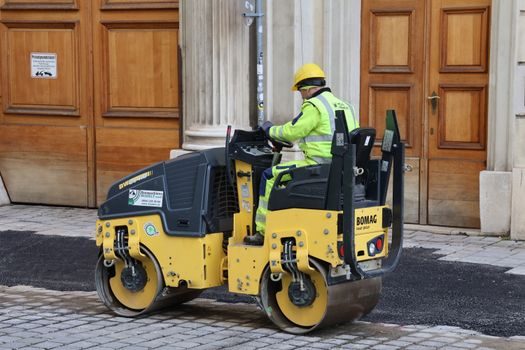
Tracked highway-class pavers suit mainline paving, airport taxiways and any project over ~5,000 t; they are overkill for driveways, small parking patches and municipal pothole programs where a compact utility paver or manual crew is more cost-effective. [S1]
Buyers should match screed width to the widest typical lane in one pass — under-width screeds force longitudinal cold joints that density tests will flag, while over-width screeds on small jobs create waste and handwork at the edges. For fleet planners weighing total cost of ownership across an 8-10 year window, the cold milling machine TCO breakdown is a useful parallel reference because milling and paving fleets share similar engine, DPF and undercarriage cost lines.
Failure Modes and Maintenance Triggers
The three failure modes that end a paving shift early are auger-chamber segregation, screed-plate warping from uneven heating, and conveyor-chain stretch — all visible during pre-shift walk-around but routinely missed on fast-turnaround rental fleets.
Watch-points engineers should hard-code into inspection checklists: screed plate flatness under 2 mm across the 3 m wear zone (replace or re-machine once exceeded), auger height set to within 25-50 mm above the finished mat to avoid streaking, conveyor chain tension per OEM gauge (typically 30-50 mm of mid-span deflection), and tamper bar bearing temperature below 80 °C under load. Hydraulic-system contamination and Tier 4 Final DPF regen cycles are the two highest scheduled-cost items on modern OEM units, and any comparison with cold milling machines shows near-identical service intervals on those subsystems.
Standards and Sourcing Notes
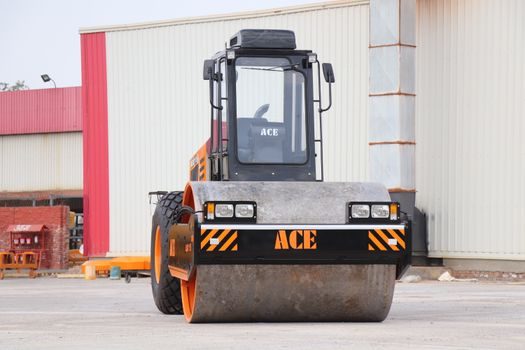
Asphalt paver performance claims should be cross-checked against OEM technical data sheets rather than marketing brochures, because laydown rate, pre-compaction and screed heating times vary materially between model tiers. [S1]
For related model-class detail and 2026 OEM lineup positioning, the asphalt paver types and classifications reference maps tracked vs wheeled vs wheeled-mini segments. Material handling on large laydown sites also depends on conveyor-driven industrial valves for asphalt transfer lines and on calibrated flow meters for tack-coat and emulsion blending — both show up in paver-yard plant setups.
Trackable signals for the next quarter: OEM 2027 model-year launches with Stage V and EPA Tier 4 Final final-tier engines entering the rental fleet, and incremental screed-heating electrification to replace diesel burners on compact utility units.