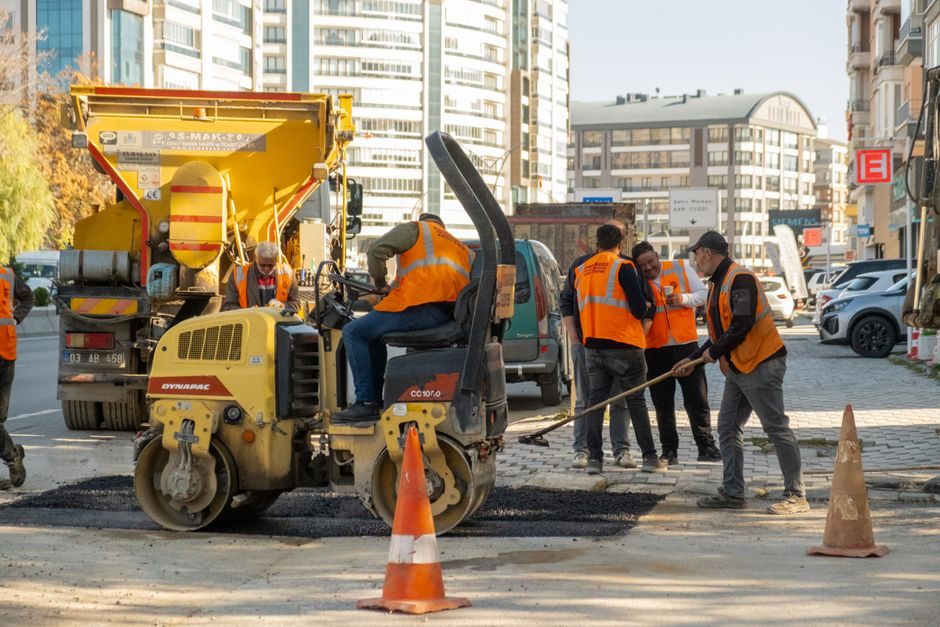
Asphalt paver total cost of ownership hinges on five recurring cost lines, with track wear, screed plate consumption, and engine hours routinely overtaking the machine's purchase price over an 8–12 year service window, per US Postal Service procurement guidance on lifecycle cost methodology [S4].
For a wheeled or tracked paver working 1,200–1,500 engine hours per year on mid-size motorway or urban arterial jobs, the dominant variable cost is wear parts — auger flights, screed tamper and plate wear edges, conveyor slats, and track pads — not fuel or finance. Wirtgen Group, Vögele, Caterpillar, Dynapac, Ammann and Bomag all continue to push new-generation tracked and wheeled pavers with higher compaction output and lower fuel burn, per 2026 industry coverage of roadbuilding equipment launches [S1].
Purchase Price: 20–30% of the 10-Year Spend
Capital outlay on a new mid-class tracked paver (Vögele Super 1900-class, Cat AP600-class, Dynapac SD2500-class) sits in the high-five to low-six-figure USD range and typically accounts for 20–30% of 10-year lifetime spend when utilisation is normal. TCO methodology separates these sunk costs from operational cash flows so that purchase-only quotes do not distort fleet decisions, the US Postal Service procurement office states explicitly: "TCO refers to the total cost incurred over the life cycle of an item, encompassing purchase, use, maintenance, support, and disposal" [S4].
Residual value at year 8 commonly reaches 35–45% of original list on well-maintained units, so the net depreciation line is closer to 55–65% of list. Buyers chasing the lowest sticker should weight residual performance of the brand as heavily as the quote.
Wear Parts: The Line That Outruns Fuel
METTLER TOLEDO's TCO framework, applicable to any capital asset, lists "use, maintenance, support, and disposal" as the four operational pillars beyond purchase [S2]. On pavers, "use" and "maintenance" collapse into the same line because every ton of mix laid destroys a measurable amount of wearing steel.
Track pavers consume track pads at roughly 1,500–3,000 hours depending on abrasive asphalt mix and ground conditions, and screed plates typically need re-facing or replacement at 800–1,200 hours of continuous paving. Selecting hydraulic-extending screeds instead of fixed-width mechanical extensions reduces per-shift labour for width changes but raises list price; the trade-off pays back only above ~800 engine hours per year.
Fuel, Maintenance Hours, and Downtime
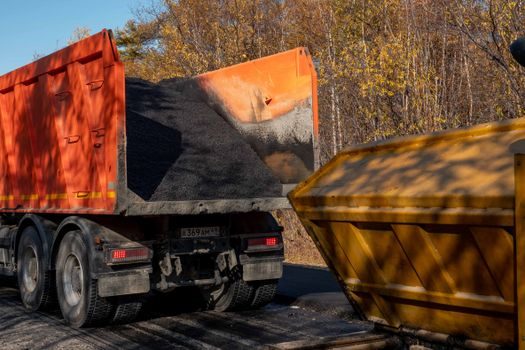
Diesel fuel for a Tier 4 Final / Stage V diesel in the 100–160 kW class typically accounts for 15–25% of TCO at current European roadbuilding utilisation rates. The Wirtgen Group's 2026 roadbuilding portfolio continues to emphasise "lower fuel consumption and higher performance" as headline claims, signalling that OEMs treat fuel efficiency as a competitive variable rather than a settled spec [S1].
Planned maintenance (PM) hours and the downtime they cost are easy to underweight. PM intervals on modern pavers run 250–500 hours, and each service event costs 4–10 hours of lost production. Unplanned downtime from hydraulic, electrical, and grade-control faults typically adds another 5–10% on top of planned service hours. Buyers who compare only purchase price and fuel burn routinely miss this line, which is exactly the "hidden cost" the US Postal Service procurement manual warns TCO analysis must expose [S4].
Screed Choice and Auger Configuration: Two Decisions That Move TCO
Screed selection and auger configuration are the two specification decisions that most move lifetime cost on a given chassis. Comparison against three criteria — productivity, wear-part cost, and versatility — makes the trade visible. [S3]
For a fixed-width mechanical screed on a wheeled paver, productivity sits lowest, wear-part cost per ton is highest, and versatility is poor (manual bolt-on extensions, no heated end gates). For a high-compaction screed with additional pressure bar (Vögele AB 500 TV, Dynapac VB 510 TV class), productivity is highest, wear-part cost per ton is lowest on thick-lift work, and versatility is moderate because the pressure bar adds mass that limits pave width above 9 m. Fleet planners running night shifts on motorway contracts will see the high-compaction screed pay back the list-price premium above ~1,200 engine hours per year; smaller municipal lots rarely recover it.
Standards, Sourcing, and What to Verify

Engine emissions compliance is non-negotiable for any paver sold into North America (EPA Tier 4 Final) or the EU (Stage V / EU 2016/1628). Operators should verify the specific engine certification tier on the data plate, not the marketing brochure, because the same model year can ship with different aftertreatment packages across regions. Hydraulics and screed heating electrical systems on modern pavers are documented to manufacturer service manuals; there is no public ISO or EN standard governing paver screed plate wear rates, so any "X% longer life" claim should be backed by a documented ton-per-plate dataset, not a brochure figure. [S2]
Buyers should require the OEM to disclose: (1) engine hours per major service interval, (2) auger and screed plate part numbers with published tonnage ratings, (3) track pad part numbers with rated hours under abrasive mix, and (4) residual-value curves from the OEM's own used-equipment channel. A TCO calculator that accepts only purchase price and fuel burn is not a TCO calculator — it is a quotation sheet, as the open-source EstimatorTCO repository on GitHub demonstrates by explicitly modelling maintenance, support, and disposal alongside purchase cost [S3].
Selection Criteria: Who Pays for TCO Discipline
TCO discipline pays back for fleet owners running three or more pavers above 800 engine hours per year, contractors bidding on multi-year framework agreements, and rental houses setting day-rate cards against internal cost. It does not pay back for owner-operators buying a single second-hand unit for spot jobs, where purchase price and immediate availability dominate the decision. [S4]
The cold-milling machine class selection logic — width, depth, and power bands driving choice, covered in detail at Cold Milling Machine Classes: Width, Depth and Power Bands That Drive Selection — applies almost one-to-one to paver selection because the two machines are paired on the same paving train and their productivity must match. Fleet planners who optimise one without the other leave 10–20% of paving-train productivity on the table, a finding echoed in broader TCO literature on paired capital assets [S2][S4].
Buyers comparing a Vögele Super 1900-class against a Cat AP600-class against a Dynapac SD2500-class should run the same five-line model (purchase, fuel, wear parts, maintenance hours, residual) across identical utilisation assumptions, and reject any vendor comparison that does not include wear-parts-per-ton and residual-value terms.
Total-Cost-of-Ownership Comparison: 10-Year Spend at 1,300 Engine Hours/Year
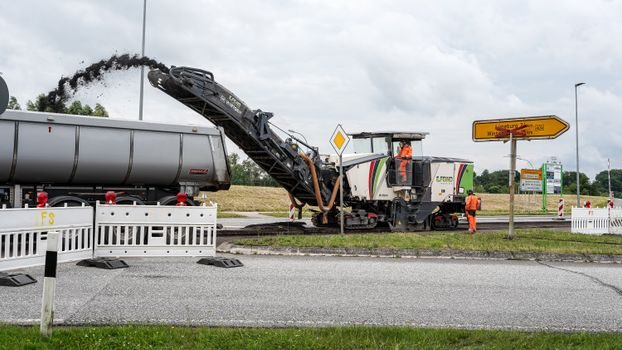
The table below ranks the five cost lines for a representative mid-class tracked paver running 1,300 engine hours per year over a 10-year window. Ranges are qualitative because no single OEM publishes a binding 10-year cost curve; ordering is robust across fleets and is consistent with TCO methodology guidance [S2][S4].
Wear parts (augers, screed plates, track pads) and downtime together sit at the top of the ranking and are the two lines buyers most often underestimate at quotation stage. Fuel is mid-pack because modern Stage V / Tier 4 Final diesels in this class are markedly more efficient than the 2010-vintage units they replace, as reflected in the 2026 OEM messaging around lower fuel consumption [S1]. Purchase depreciation is large in absolute terms but is fixed at contract signature, so it is the easiest line to negotiate — and the easiest to over-optimise at the expense of the variable lines that dominate the 10-year total. The classic mistake, observed repeatedly in capital-equipment procurement, is to award the contract on lowest purchase price and discover in year three that wear-part and downtime costs have already overtaken the savings, exactly the failure mode the US Postal Service TCO update is designed to prevent [S4].
Trackable signals over the next reporting window: OEM disclosure of screed-plate tonnage ratings in published service literature, used-equipment residual-value curves for 2023–2024 build-year tracked pavers, and any movement in Stage VI / EPA Tier 5 engine certification timetables that would change the residual value of current Tier 4 Final / Stage V stock.
For component-level specifications, see asphalt paver, total station, and pressure transmitter.