
On a cold chamber die casting machine, the ladle that feeds the shot sleeve and the machine's rated shot weight are the same sizing problem stated twice: ladle capacity has to match the metal charge the plunger pushes, and Dynacast's published threshold is shot weight above 90 g with an external melting pot, which is the point at which hot-chamber submersion stops being an option [S1].
Frech and the Inytialgo sizing guide (2026-08) both confirm the consequence: hot-chamber machines are sized for zinc and magnesium (Zamak at roughly 385 °C), while aluminum (around 660 °C) and brass require cold-chamber architecture with molten metal ladled into a horizontal shot sleeve and pushed by the plunger [S3][S4]. Shibaura Machine's integrated electric ladle, controlled through the TOSCAST bus, ties the ladle cup travel, biscuit size and machine-lockup into one closed loop, so any change in spray time rebalances the metal charge without operator input [S2].
Shot weight and ladle volume are the same number stated two ways
The ladle has to deliver a volume that corresponds, at the alloy's liquid density, to the shot weight the machine is rated for, plus a controlled biscuit; a mismatch in either direction shows up as flash (too much metal) or short shots / cold shuts (too little) [S7]. Industrial Innovations documents a baseline repeatability figure of 99%+ shot-weight accuracy for robotic ladling, with a maximum allowable variation on the order of 10% between successive shots, for example 60,000 lb vs 66,000 lb on the cited production run [S5].
Dynacast's cold-chamber key-features list pins the practical lower bound at "shot weight higher than 90 grams, external melting pot, ideal for high-melting-point alloys, automated machines", which lines up with the historical dividing line where the submerged gooseneck of a hot-chamber machine becomes impractical [S1]. Below that boundary, a hot chamber die casting machine is faster because it skips the ladling step; above it, the alloy and the part geometry force a cold chamber die casting machine and a matched casting ladle system.
Selection criteria: ladle type, alloy, and control integration
Three criteria dominate the auto-ladle vs shot-weight decision on cold-chamber cells: alloy, shot weight, and whether the ladle is integrated with the machine control. [S2]
Alloy dictates the chamber. Zinc and magnesium (Zamak family) work in hot-chamber machines because the submerged gooseneck survives the 380-400 °C working temperature, and a hot-chamber cycle is shorter because there is no ladling step [S3][S4]. Aluminum, brass, and any other alloy near or above the 660 °C aluminum liquidus must be ladled into a cold-chamber shot sleeve; the gooseneck of a hot-chamber machine would be eroded by the melt and by the iron pickup that contaminates the alloy [S3][S4].
Shot weight sets the minimum ladle volume. Dynacast's published cold-chamber band starts above 90 g, but real automotive structural castings run multi-kilogram charges, so a shot sleeve and ladle system are sized to deliver a reproducible fill, not a minimum fill [S1][S6]. Frech's comparison makes the same point: cold-chamber machines excel at larger and structurally complex parts, so the ladle has to carry more metal per cycle than on a hot-chamber cell of equivalent tonnage [S4].
Control integration decides the repeatability. Shibaura Machine's TOSCAST-controlled electric ladle synchronises the ladle cup with the machine's final locking movement and offers a separate automatic biscuit-size function; if the operator changes spray time, the controller adjusts the ladled amount instead of leaving a manual operator to re-trim the pour [S2]. Industrial Innovations' figure of 99%+ shot-weight accuracy for robotic ladling assumes a similarly tight control loop; the cited 10% maximum shot-weight variation is the threshold above which remelt cost, unplanned downtime and part quality start to drift [S5].
Comparison: manual ladle, aftermarket auto-ladle, integrated auto-ladle
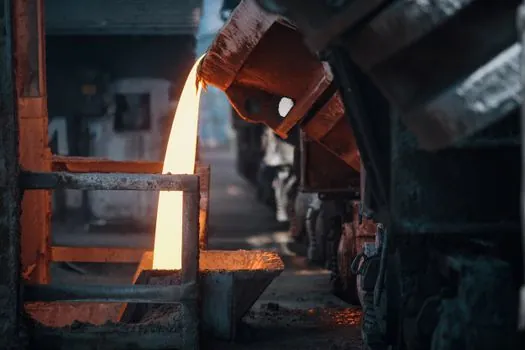
The three ladle options line up against the same four decision criteria drawn from the sources: shot-weight accuracy, cycle-time impact, control integration, and per-shot metal cost. [S2]
Manual ladling is the cheapest hardware and gives the worst repeatability. The Shibaura Machine piece notes that ladling itself is only a few seconds, but the human operator is the single biggest source of shot-to-shot variation, and remelt cost on the over-poured shots is the real economic penalty [S2]. Industrial Innovations' 10% maximum allowable variation is a target a manual operator cannot hold across a full shift, so on any cold-chamber cell above the 90 g entry point the manual option is functionally a baseline rather than a production configuration [S1][S5].
Aftermarket robotic ladles (third-party arm plus weigh-pour or volumetric cup) reach the 99%+ shot-weight accuracy and 10% maximum variation figures, but they sit on a separate control bus from the machine [S5]. Shibaura Machine is explicit that this decoupling costs the cell the ability to auto-rebalance the ladle when spray time, intensification pressure or biscuit target are changed, so the operator still has to step in to re-tune pour volume after every recipe change [S2].
Integrated electric ladles, such as Shibaura Machine's TOSCAST-driven unit, treat the ladle as a servo axis on the machine, with the biscuit size and the ladle cup travel computed inside the same controller that drives the clamping and injection phases [S2]. The accuracy figure is the same 99%+ band as a good robotic cell, but the integration removes the re-tuning step and ties the automatic level of metal in the shot sleeve to the actual cycle, so spray-time changes, die-spray variation, and alloy temperature drift are compensated shot by shot [S2].
Use cases: where the matched ladle pays back
On thin-wall structural aluminum castings (the SKS Die Casting and Dynacast description of cold-chamber parts as "more substantial than plastic injection moldings having the exact dimensions" and "more robust and lighter" than competing processes), the section thickness is small and the casting freezes fast, so a 10% over-pour means a 10% heavier biscuit, more remelt energy per part, and a higher scrap exposure on the trim press [S6]. Dynacast explicitly lists "parts large in size" and "intricacy and scale" as the cold-chamber sweet spot, which is exactly the regime where a matched auto-ladle stops being a luxury and starts paying back in OEE terms [S1][S2].
On automated cells tied to an automatic molding line downstream, the ladle is the only upstream step that can break the cycle. Industrial Innovations frames the economics as a 60,000 lb to 66,000 lb shot-weight band on a 10% maximum variation budget; pushing a cold-chamber cell into structural-aluminum volumes without a 99%+ ladle drops the cell below that band and burns the OEE gain the rest of the automation is supposed to deliver [S5]. Shibaura Machine's own framing is that the integrated ladle is sold on repeatability of biscuit size shot to shot, with the direct effect being lower remelt cost and higher uptime [S2].
Limits, failure modes, and standards the spec has to clear
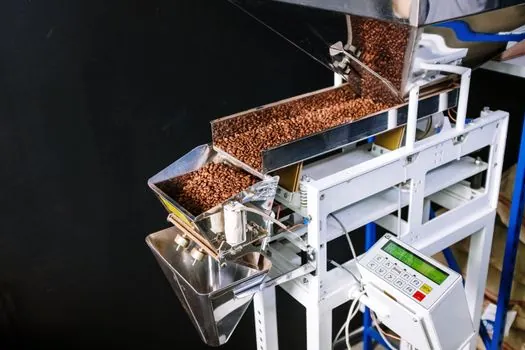
The hard limit on any auto-ladle is the alloy's liquidus, not the machine's tonnage. The Inytialgo sizing guide is blunt: an aluminum die casting machine is always a cold-chamber machine, and a hot-chamber quotation for aluminum is grounds to walk away, because a submerged gooseneck at 660 °C is not survivable [S3]. Frech's comparison adds the second limit: cold-chamber die life is shorter than hot-chamber because the steel sees harsher thermal cycling from each ladled charge, so any decision to push a larger ladle volume (to extend cycle time and reduce ladle strokes) has to be traded against accelerated die wear [S4].
Shot-sleeve fill behavior is the failure mode the spec has to anticipate. A ladle that delivers the correct mass but at the wrong temperature, or with the wrong pouring profile, leaves air entrained in the shot sleeve, which the plunger then compresses into the cavity; the controller on an integrated ladle can hold mass, but it cannot fix a pour stream that splashes in the sleeve. Fiss Machines' note that "the maximum and actually required ladle capacity must match the shot weight of the die casting machine and the intended casting" is the engineering version of the same point: the shot sleeve volume, the ladle volume, and the part's fill weight have to be set as one number, not three [S7].
On standards, the cold-chamber / ladle pairing is governed by NADCA process guidance and the OEM's machine-specific bulletins rather than a single ISO or ASTM clause; Frech, Shibaura Machine and Dynacast all describe the process in OEM terms, and the only quantitative repeatability target that recurs across the sources is Industrial Innovations' 99%+ shot-weight accuracy and 10% maximum variation band, which is a production target rather than a named industry standard [S1][S2][S4][S5].
Sourcing, and what to track on the next quote
Three signals to track on the next cold-chamber quote. First, the published shot-weight band: any cold-chamber quotation for a part below Dynacast's 90 g threshold is mis-classified and should be re-quoted against a hot chamber die casting machine [S1]. Second, the ladle accuracy figure written into the spec: 99%+ shot-weight accuracy and a 10% maximum shot-weight variation is the working benchmark the sources agree on, and the quote should be turned down if the supplier cannot put a number on the band [S5]. Third, the control boundary: an aftermarket robotic ladle will hit the accuracy number but not the auto-rebalance behaviour, while an integrated electric ladle on the machine bus (TOSCAST-class) will re-tune the biscuit when spray time changes, which is the operational reason the two options are not the same product even at the same accuracy figure [S2].
For a structural aluminum part, the simplest rule of thumb across the sources is: hot-chamber below roughly 90 g and zinc/magnesium alloys only; cold-chamber above 90 g for aluminum, brass and large structural parts, with the ladle sized to the machine's rated shot weight plus biscuit, and the ladle accuracy specified at 99%+ with a 10% maximum shot-weight variation, on an integrated machine bus where the cycle can re-tune the pour [S1][S2][S3][S4][S5][S7].
Background reading: Cold Milling Machine Demand Drivers: Highway Work, Large-Class Equipment, APAC Spend.