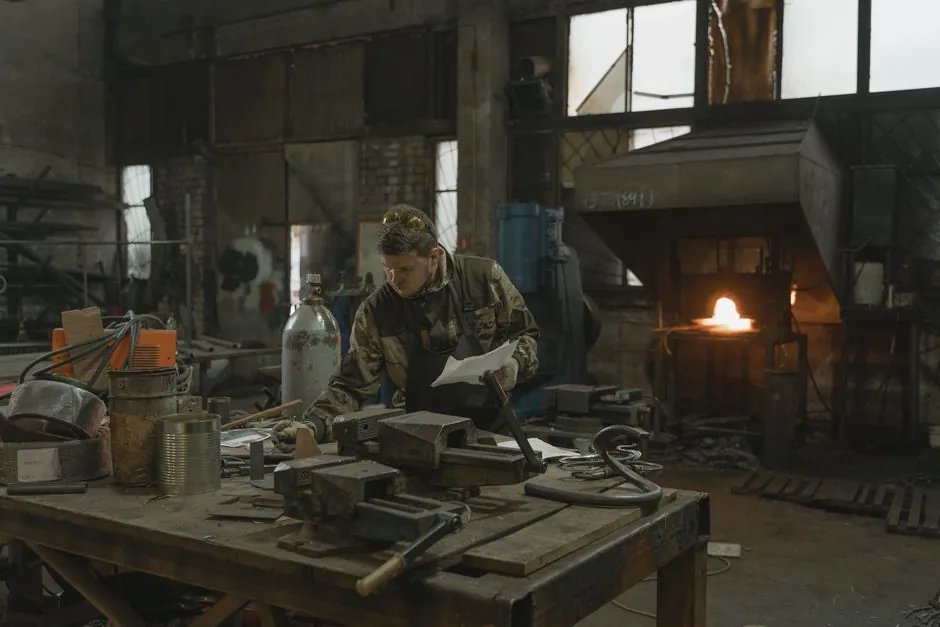
Austempered Ductile Iron (ADI) is produced by austenitising ductile iron at 850–900 °C for 20–40 minutes, then quenching into a molten nitrite–nitrate salt bath held at 280–400 °C to form acicular ferrite plus high-carbon stabilised austenite (ausferrite) [S1][S2].
Targeted ADI properties sit in the 600–1,000 MPa tensile, 10–18 % elongation, 320–380 HB window, and the isothermal hold must stay within ±5 °C of set point or carbon enrichment of austenite fails, producing brittle bainite instead of ausferrite [S1][S4].
Why a molten salt bath wins on heat transfer
A molten salt bath delivers a heat transfer coefficient of 600–1200 W/m²·K, roughly 3–8 times higher than still air in a recirculated atmosphere furnace and broadly comparable to still oil quenching [S3]. For a 25 mm cylindrical bar, the surface-to-core temperature differential during heat-up is typically 30–60 °C in a salt bath versus 80–150 °C in a gas furnace, a uniformity that directly lowers thermally induced stress and distortion [S3].
Salt baths operate across 150–1300 °C depending on composition, covering austenitising, quenching, and low-temperature tempering in a single medium [S3]. Nitrate–nitrite quench salts are the workhorse for the 280–400 °C ADI hold, and a well-controlled isothermal stage (commonly 360 °C) is the defining step that stabilises retained austenite through carbon diffusion [S1][S4][S5].
Where an integral quench furnace falls short
An integral quench furnace combines austenitising and rapid gas/oil cooling in one chamber, but its convective heat transfer coefficient typically sits in the 100–200 W/m²·K range, producing a Biot number that allows measurable surface-to-core gradients during the critical transfer window [S3]. When the transfer from austenitising to isothermal hold is delayed, pearlite precipitates and the ausferrite target microstructure is lost [S5].
Gas-quench furnaces also struggle to maintain ±5 °C stability across a 30–60 minute isothermal soak, the window in which carbon enriches austenite; even small drift shifts the ferrite-to-austenite ratio and degrades impact toughness [S1][S4]. For thick sections (≥30 mm), soak time in austenitising must extend to ensure complete carbide dissolution, and any added thermal lag in the quench stage compounds the risk of coarse pearlite formation [S1].
Process parameters: salt bath settings vs integral quench limits
Salt bath austenitising is commonly run at 910 °C, followed by direct transfer into a 360 °C nitrate–nitrite isothermal salt, with typical ADI-grade holding time per the chemistry and section size [S5][S6]. The chosen isothermal temperature (often expressed as 450–750 °F in shop-floor language) is influenced by ductile iron chemistry and the target hardness/toughness combination [S6].
Integral quench furnace cycles rely on rapid inert gas (nitrogen or helium) circulation to push cooling rates, but the gas medium cannot match the volumetric heat capacity of molten salt (2–4 MJ/m³·K), so quench severity drops as section size grows [S3]. For ADI section thicknesses above ~25 mm, the salt bath's higher heat extraction is the practical way to miss the pearlite nose on the TTT diagram and land cleanly inside the bainitic/ausferrite bay [S1][S3].
Selection criteria by application
Choose a salt bath when the part is ADI-grade ductile iron, the section is ≥20 mm, the spec demands tight hardness windows (320–380 HB) with high impact toughness, and the production volume justifies the salt handling and preheating discipline [S1][S4][S5]. Choose an integral quench furnace for through-hardening of plain carbon or low-alloy steels where ausferrite is not required, for small thin sections where quench severity is easier to hit, or for high-volume runs of simple geometries where furnace throughput outweighs the metallurgical premium of salt [S3].
For high-speed steel (M2), staged three-bath preheat is used to control thermal shock inside the narrow 1220–1240 °C austenitising window, an example of how salt bath protocols are engineered around transformation windows rather than around furnace convenience [S3].
Operating risks and shop-floor discipline
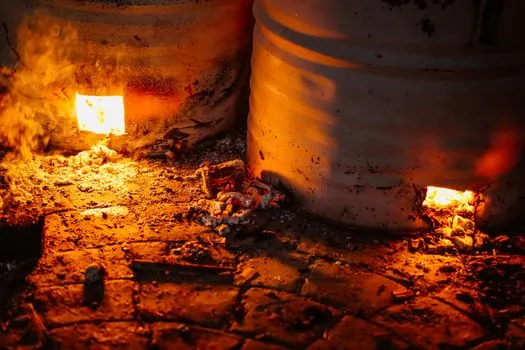
Nitrate–nitrite quench salts are strong oxidisers and must never contact cyanide, reducing agents, or organics; moisture ingress from a cold workpiece can trigger explosion, so all loads must be pre-heated before immersion [S3]. Neutral hardening chloride baths require periodic rectification (deoxidation) with methanol or silicon carbide to suppress decarburisation and keep bath chemistry on spec [S3].
Both routes demand calibrated thermocouples embedded in representative castings, with furnace or salt bath zone accuracy verified at ±5 °C before any ADI production lot is released, per austenitising-stage process guidance [S1]. Skipping this discipline is the single most common route to brittle bainite or mixed ausferrite-pearlite microstructures [S1][S4].
Standards and verification references
ADI grade selection follows ASTM A897/A897M and ISO 17804 by grade, with minimum mechanical properties (tensile, yield, elongation, impact, hardness) tabulated by austempering temperature range; these standards set the property targets the salt bath is engineered to hit, not the equipment itself [S1]. For ductile iron base material, ASTM A536 grade 60-40-18 is a common starting stock for ADI conversion [S7].
Reference wear-rate data for tempered ductile iron versus hardened steel (Dura-Bar Heat Treat Guide) is useful when justifying an ADI substitution: ductile iron wear rates track gray iron and respond to tempered hardness in a similar way to alloy steels, so the salt-bath ADI route is often a cost-down versus through-hardened steel gears and pinions [S7].
Decision summary: salt bath or integral quench
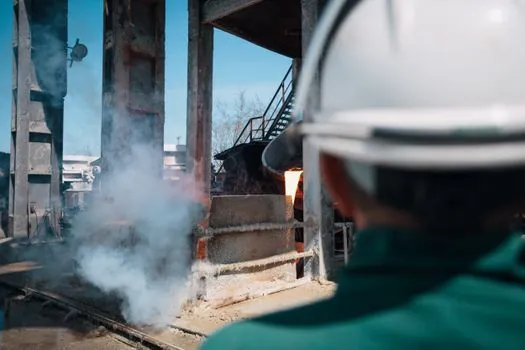
For ADI production, salt bath is the default: the 600–1200 W/m²·K heat transfer, ±5 °C isothermal control, and 280–400 °C nitrate–nitrite window are the only practical combination that delivers ausferrite in section sizes that matter for gears, hubs, and heavy equipment castings [S1][S3][S4][S5]. Integral quench furnaces remain the right pick for through-hardening of carbon and low-alloy steels, for thin-section components, and for high-volume runs where ausferrite is not on the spec.
Track the move toward higher austempering temperatures (lower bainite, higher ductility) in automotive gear specifications, and watch for revised ADI grade tables in the next ASTM A897/A897M maintenance cycle as foundries push the upper tensile limit past 1,000 MPa on heavier section castings [S1].
The underlying component specifications are covered under cast iron, temperature calibration bath, and crucible furnace.
This topic is covered further in Stretch Sleeve vs Shrink Sleeve Labeler for PET Bottles.