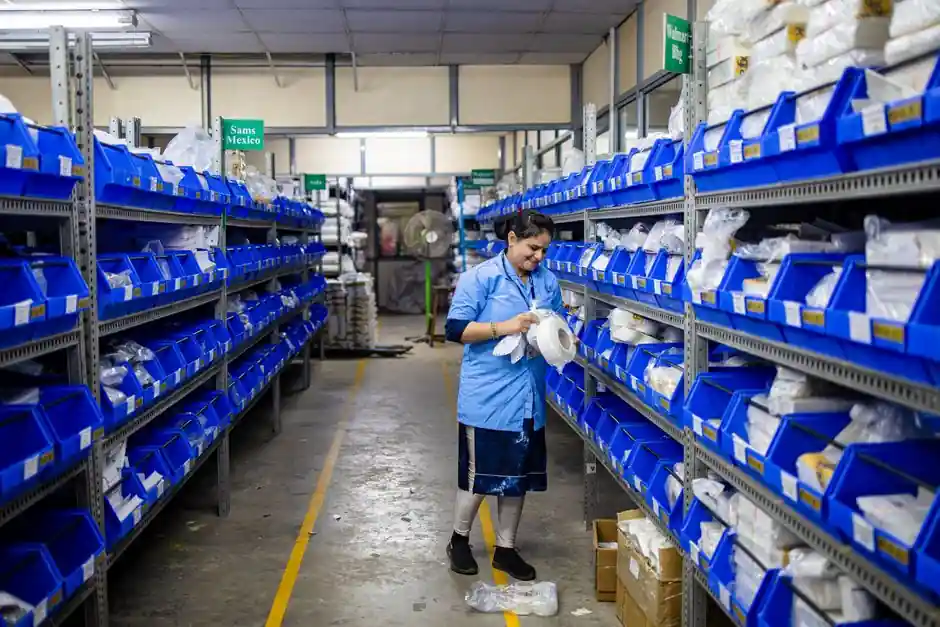
A cold chain order picker is typically a 24V or 36V electric stockpicker rated for sustained operation inside -5°F (-20.6°C) walk-in freezers, with operator PPE for arctic exposure and a truck class purpose-built for sub-zero battery retention [S4][S2].
Specifying the wrong truck class for a freezer aisle, or under-sizing a battery for a shift, costs more than the lift itself: a single temperature excursion on a pallet of seafood or dairy can trigger a retailer chargeback that wipes out the margin on the entire load [S1]. This article maps the truck classes, lift heights, and battery chemistries that actually work in -5°F and below, and where each one stops making sense.
Freezer Class, Lift Height, and Battery Envelope
Cold chain warehouses divide into three operating bands: dry cooler (35-55°F), refrigerated (28-35°F), and frozen (-5°F or lower), and the truck specified for each band differs in more than just paint color [S4]. A walk-in freezer at -5°F is the dominant job spec posted in 2026 cold chain selector listings, and the job descriptions call out PPE for arctic exposure alongside standard warehouse equipment [S4].
Electric stockpickers dominate this segment because IC/LPG forklifts cannot be safely operated in food-grade freezers without extensive ventilation. CLARK's current order picker line-up, for example, ships only as 24V or 24V/36V electric machines: the OSX at 3000 lb capacity and the OSQ 126/162/192 in the 24V stockpicker range [S2]. The 24V platform is the entry point for ground-level to mid-rise picking; the 36V platform extends duty cycle and lift speeds for taller bays. Neither platform is intrinsically "freezer-rated" out of the catalog, so cold chain buyers must spec cold-storage package options (sealed bearings, hydraulic fluid rated for sub-zero viscosity, and freezer-grade battery insulation) from the OEM.
Battery chemistry is the second hard spec. Standard lead-acid loses roughly 30-40% of usable capacity at -5°F, which forces mid-shift battery swaps on a 4-day work week. Lithium iron phosphate (LFP) cold-rated packs retain 80%+ usable capacity at the same temperature, at a higher unit cost, and they are now offered on electric counterbalance lines like CLARK's S25XE Renegade (7000 lb, lithium) as a reference point for chemistry migration in the same OEM family [S2]. For a freezer-bound order picker, the question is not "lithium or lead-acid" in the abstract, but "do we accept a 50% range derating and a battery-swap wall, or pay for the cold-rated LFP option up front."
Who This Truck Class Is For, and Who It Is Not
Electric narrow-aisle order pickers in the 24V/36V class are for facilities with pick heights up to roughly 192 inches (the OSQ 192 platform), aisle widths under 96 inches, and SKU velocity that justifies a dedicated picker rather than a reach truck or counterbalance [S2]. They pay back fastest in frozen and dairy operations where pick-face accuracy drives FSMA Food Traceability Rule compliance, and where a barcode or RFID scan at the pick face is the only defensible record of lot and country of origin [S1].
They are NOT the right tool for ground-level full-pallet picks in a high-throughput dry cooler, where a ride-on electric pallet jack covers more cases per hour at lower acquisition cost. The 2026 Capstone Logistics order selector posting in Hickory, NC specifies ride-on electric pallet jacks and reach trucks for ground-level order selection, not a vertical order picker, because the work profile is pallet-to-pallet rather than pick-face-to-carton [S3]. Reach trucks, by contrast, slot in where the operator stays on the chassis and elevates the load; the reach truck selection map for warehouse automation covers that adjacent decision in detail.
For operations running a mix of ambient, refrigerated, and frozen zones, the practical answer is usually a small dedicated fleet per zone, not a single universal truck. Cross-zone use invites condensation on electrical components and accelerates corrosion in ways that no scheduled maintenance interval fully contains.
Comparison: Stockpicker vs Reach Truck vs Ride-on Pallet Jack in Cold Chain
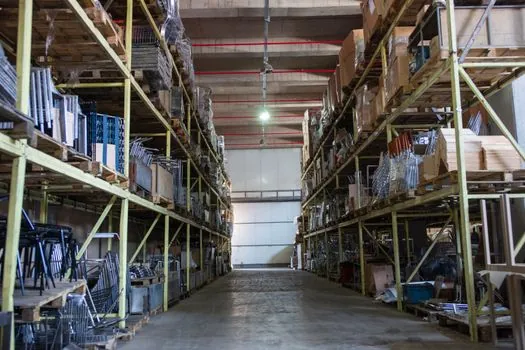
Three truck classes compete for the same picking budget, and the wrong choice compounds across cold storage logistics and packaging cost lines. The table below lines them up against the decision criteria that actually drive cold chain picking: pick height, aisle width, freezer suitability, and pick type. [S1]
Order picker (electric stockpicker, 24V/36V): pick height up to ~192 in (OSQ 192), aisle width 90-100 in typical, freezer-suitable with cold-storage package, pick type is case or each from rack face [S2]. Reach truck (e.g. CLARK NPX 4500 lb, 24V/36V): pick height to roughly 290-300 in on a racked pallet, aisle width 96-108 in, freezer-suitable only with the right OEM package, pick type is pallet-to-pallet from a racked position [S2]. Ride-on electric pallet jack (e.g. CLARK WPL40 4000 lb 48V, or WPL33 3300 lb): pick height ground to about 9 in, aisle width flexible, freezer-suitable with sealed components, pick type is full-pallet ground transport and order selection [S2][S3].
For freezer-bound case picking at face level, the stockpicker wins on ergonomics and scan accuracy. For pallet reserve and high-cube frozen storage, the reach truck is the right tool. For dry cooler dock-to-stage work, the ride-on pallet jack moves more cases per dollar. Putting a reach truck into face-level picking, or a stockpicker into full-pallet ground moves, is the most common mis-spec in 2026 cold chain RFPs.
Cold Chain Operating Realities: Shift, Pay, and Productivity
Posted 2026 cold chain picker roles converge on a few hard numbers. Capstone Logistics in Hickory, NC posts a 4-day work week on 2nd shift (3:00 PM to 1:00 AM, occasionally 3:00 AM) with weekly pay in a $750 to $1,250+ band, and lists ride-on electric pallet jack, reach truck, and forklift experience as the equipment baseline [S3]. The Pet Food Experts Denver cold chain selector post locks in -5°F for the work environment, names Infor WMS as the system of record, and requires experience with forklift, pallet jack, and high-reach truck operation [S4].
Staples, running a 2nd shift order picker role at $21.55/hour (with a $1.00/hour shift differential) in Kansas City, scopes the role to "picking above ground level while adhering to safety procedures" and requires the operator to "lift, lower, push, pull or carry product up to a maximum of 70 pounds by hand," with 100% standing/walking on concrete [S5]. DHL's order filler picker posting adds RF scanner proficiency as a required qualification, with WMS literacy as the implicit baseline [S8].
The common thread: 2026 cold chain picker hiring is equipment-literate, WMS-literate, and willing to pay a shift differential for freezer exposure. Operators are expected to scan at the pick face, and the WMS (Infor, VoCollect, Manhattan, SAP EWM, etc.) is the system that turns the truck into a traceable node in the cold chain.
Selection Criteria: Sizing the Truck to the Aisle, the Load, and the Audit
Three decision points filter the truck choice fastest. First, pick height: ground-level pallet work points to ride-on electric pallet jacks (WPL40, WPL33, WPX45) [S2]; face-level case picking up to 192 in points to a stockpicker (OSX, OSQ 126/162/192) [S2]; pallet reserve above 192 in points to a reach truck (NPX) [S2]. Second, freezer rating: -5°F sustained operation requires a cold-storage package, and the OEM cold-storage option is a separate line item, not a standard feature.
Third, traceability layer: the cold chain picking system depends on scan data at the pick face to satisfy FDA lot tracking, country-of-origin rules, and the FSMA Food Traceability Rule [S1]. A truck without a mounted RF scanner or a pick-to-light interface is a bottleneck on day one. For broader equipment family decisions across the warehouse, the reach truck selection map for port logistics and the reach truck selection map for air cargo terminals lay out adjacent spec boundaries worth checking before RFPs close.
Failure Modes and Constraints to Spec Against
Four failure modes show up repeatedly in 2026 cold chain RFP responses. (1) Battery derating at -5°F: a lead-acid 24V/36V pack can lose a third of its usable amp-hours, forcing mid-shift swaps that double the labor cost on a 4-day work week. (2) Condensation corrosion: pulling a freezer-spec truck into a 55°F dry cooler for a shift causes ice to melt into the electrical cabinet, and the failure shows up two to four weeks later as a corroded contactor, not immediately. (3) Hydraulic fluid viscosity: standard hydraulic oil thickens below 0°F and slows lift speeds; sub-zero fluid is a spec line, not a sales-line suggestion. (4) Operator PPE throughput: freezer-rated PPE, mandatory at -5°F, slows pick rate by 10-15% versus an unencumbered operator in a dry cooler, so labor planning should not assume dry-cooler productivity numbers on a frozen-pick job [S4].
A fifth, often missed: scan accuracy degrades when the operator is gloved and the barcode label is frosted. Anti-fog label stock or heated scan windows are a small per-aisle cost that pays back in first-pass read rate. None of these are exotic specs, but all five show up as avoidable write-offs in cold chain 3PL audits.
Sourcing, Standards, and the Next RFP Check
Order picker OEMs in 2026 publish platform-level data sheets and leave the cold-storage package as a separate option line. CLARK's stockpicker range, for example, is documented at the platform level (OSX 3000 lb 24V/36V, OSQ 126/162/192 24V) and the cold-storage option is a dealer-applied package rather than a published SKU [S2]. RFPs that ask for "freezer-rated" without naming the option line, the operating temperature band, and the battery chemistry target, get generic quotes back.
Verifiable next nodes to track on the next RFP: (1) whether the OEM offers a documented cold-storage package at -5°F sustained, and what hydraulic fluid and seal spec it includes; (2) whether LFP cold-rated battery is offered as a factory option on the 24V/36V stockpicker (not just on the counterbalance line); (3) whether the WMS integration is API-documented for scan-at-pick-face events, which is the audit trail the FSMA Food Traceability Rule actually inspects [S1]. Operators and 3PLs that lock those three answers down before issuing the PO consistently report fewer first-90-day retrofit costs.