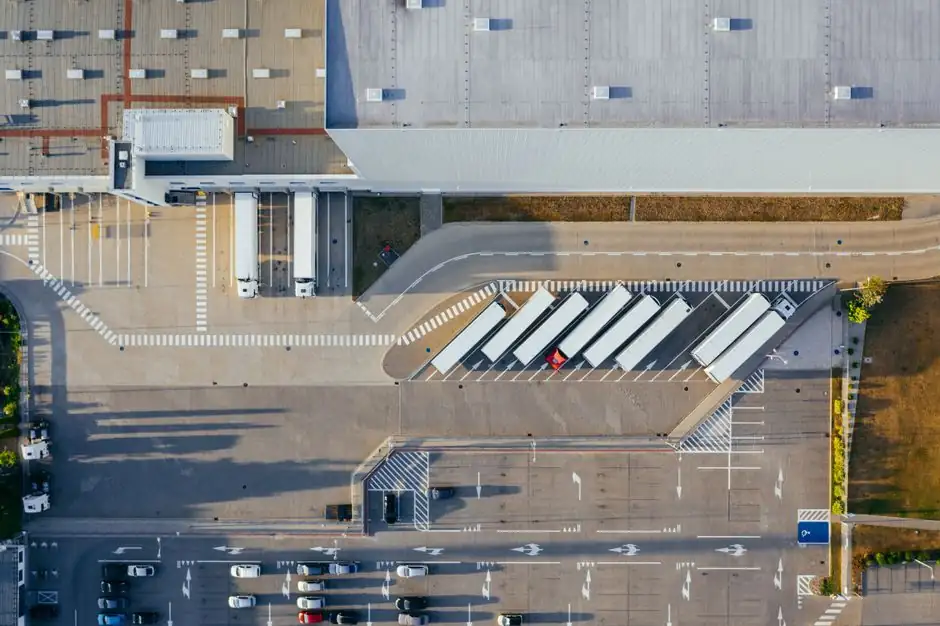
Reach trucks configured for 1.6-2.0 t loads and 12.0 m lift height are the standard narrow-aisle workhorse for retail distribution centers, where typical aisle widths run 8.5-9.5 ft per high-density guidance [S2][S5].
For retail DCs running FMCG and case-pick flows, the reach mechanism (pantograph forks that extend into the rack) beats a counterbalance forklift on storage density but loses on multi-environment flexibility, so layout drives the call [S2][S6]. The comparison below lines up reach truck, counterbalance forklift, and order picker against the criteria a retail DC procurement engineer actually uses.
Reach Truck Core Specs and Operating Envelope
Rated load capacity for a single-mast reach truck is 1.6-2.0 t per published comparison data, while extended-mast heavy variants reach 2.5 t for industrial components and metal goods [S2][S4]. Maximum lift height is listed at 12.0 m for reach units versus 3.0-6.0 m for counterbalance forklifts, which is the single biggest driver of pallet-position count per square metre [S2].
Battery duty for retail DC shift patterns is dominated by lithium-ion packs rated for 5 years or 5,000 operating hours on reach trucks, compared with 7 years or 10,000 operating hours on counterbalance forklifts [S2]. Electric drive is standard, with both drive and lift motors powered from the traction pack, and zero on-site exhaust, which keeps the unit compliant with indoor air-handling specs in enclosed DCs [S4]. A retail DC running two-shift pallet put-away typically lands in the 1.5-2.0 t capacity band, since most retail pallets (cartons of FMCG, packaged goods, case-pick totes) net out below 1.2 t even with pallet mass [S4].
Reach Truck vs Counterbalance Forklift vs Order Picker
The three lift-truck classes converge in narrow-aisle retail DCs but diverge sharply on primary job, aisle fit, and throughput driver. Reach trucks are built for pallet put-away and retrieval in 8.5-9.5 ft aisles with travel speed and pallet handling as the throughput lever [S5]. Counterbalance forklifts cover 10-11 ft aisles (or wider) and run multi-environment duties including outdoor yards and loading docks at 3.0-6.0 m lift, but sacrifice storage density per square foot [S2][S5].
Order pickers fill the case-pick slot: the operator platform rises with the forks so workers can pick individual items directly off rack bays, with the throughput driver being pick ergonomics and pick-path optimization rather than travel speed [S3]. A retail DC running 70% pallet put-away and 30% case pick is a textbook reach-truck plus order-picker fleet; one running 50/50 with frequent dock moves leans counterbalance plus reach [S3][S6]. For a deeper warehouse-automation view of how reach trucks slot into broader MHE design, see the Reach Truck Selection for Warehouse Automation spec map.
Retail DC Use Cases and Capacity Tiering

Retail and FMCG warehouses are flagged across multiple sources as the canonical reach-truck application, with the core value being fast-moving SKU handling in tall racking [S1][S4]. The 1.5 t tier fits small-to-medium DCs handling packaged goods, cartons, and retail totes, while the 2.0 t tier is the workhorse for medium-to-large DCs running food, pharma, and general merchandise at moderate lift heights [S4]. The 2.5 t step is reserved for heavy pallet profiles (machinery parts, metal goods, bulk industrial inputs) which retail DCs rarely see at the rack face [S4].
Cold-chain retail DCs (frozen and chilled grocery) are a clean fit: reach trucks are listed alongside cold storage as a primary use case because the electric power package, sealed cab options, and lack of IC exhaust suit temperature-controlled zones where ventilation is constrained [S1]. In a high-throughput e-grocery DC running 24/7, the lithium-ion duty cycle (5 years or 5,000 operating hours) covers roughly two battery-replacement intervals of a legacy lead-acid pack, which materially shifts the TCO model toward Li-ion for new builds [S2].
Aisle Width, Lift Height, and Floor Loading Constraints
Aisle width is the gating geometric constraint: reach trucks are listed at 8.5-9.5 ft minimum operating aisles, with stand-up counterbalance units needing 10-11 ft, so retrofitting an existing wide-aisle DC to reach-truck density typically requires racking replacement or VNA conversion rather than a forklift swap [S5]. Mast height dictates the racking spec: 12.0 m lift on a reach truck versus 3.0-6.0 m on a counterbalance unit means a reach-equipped DC can roughly double the vertical pallet positions per bay, which compounds with the narrower aisle to deliver 2-3x the cubic storage density of a counterbalance layout [S2][S5].
Floor flatness and load are non-obvious constraints: a 2.0 t reach truck at 12 m lift generates high point loads on the front wheels during mast extension, and DC slabs in older retail buildings may need a flatness survey before specifying reach-rated equipment, since outrigger-base reach designs concentrate load differently than a counterbalance chassis [S4][S5]. A power distribution upgrade is usually paired with a Li-ion reach-truck rollout, because opportunity charging at the rack end pulls 30-80 A circuits that legacy DC panels were not sized for. For facilities adding enclosed battery charging rooms, the local distribution cabinet typically needs a dedicated breaker.
Operator Safety, Ergonomics, and Failure Modes
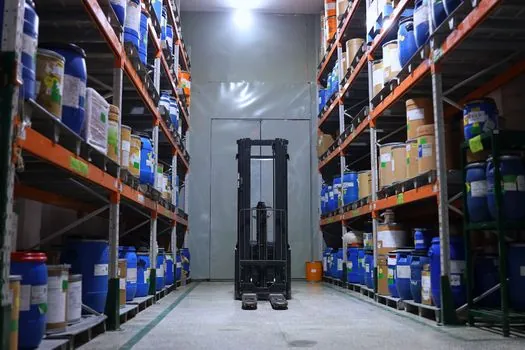
The risk profile of a reach truck in retail DC service is dominated by rack interface and tight-aisle maneuvering, while the order picker risk profile is elevated-operator fall protection; these are distinct failure modes and the operator training, daily inspection, and rack-protection spec have to match [S3]. Common reach-truck failure modes in retail DC duty are mast-chain elongation from high-cycle lift, pantograph roller wear from repeated rack entry, and steer-axle bearing fatigue from constant low-speed turning, all of which shorten service life if the truck is run past its rated shift-hour envelope [S4].
Operator ergonomics on modern reach trucks include adjustable seats, clear mast visibility (a key driver of rack-strike reduction), and low-effort fingertip controls, which directly address the two highest-cited injury mechanisms in narrow-aisle lift truck duty: back strain from repeated mount/dismount and neck strain from poor sightline at 9-12 m lift [S4]. In multi-shift retail DC operations, the addition of telematics for shift-hour tracking, impact-event logging, and battery state-of-health is now standard OEM fitment on Li-ion reach units, and feeds directly into the 5-year / 5,000-hour battery warranty terms [S2].
Selection Checklist for Retail DC Buyers
The decision sequence that consistently comes out of the comparison data is: (1) confirm minimum aisle width at 8.5-9.5 ft for reach or 10-11 ft for stand-up counterbalance; (2) size load capacity at 1.5 t for light retail totes, 2.0 t for general merchandise, 2.5 t only for heavy industrial profiles; (3) match mast height to racking (up to 12.0 m on reach, 3.0-6.0 m on counterbalance); (4) match battery duty cycle to shift pattern (Li-ion 5 yr / 5,000 hr for reach, 7 yr / 10,000 hr for counterbalance) [S2][S4][S5].
Counterbalance forklifts are the right call when the application needs outdoor yard work, frequent dock moves, or multi-environment flexibility; reach trucks are wrong for that duty despite their higher lift, because dock and trailer suitability is listed as limited for pantograph reach designs [S2][S5]. Order pickers are the right call when case-pick or piece-pick dominates the SKU profile and pick-path optimization is the throughput lever, not travel speed [S3]. Buyers specifying a reach-truck fleet for a new retail DC build should plan the power distribution box layout for opportunity charging from day one, since retrofitting chargers into an active DC is the most common source of project overrun on this equipment class.
Trackable next signals for retail DC reach-truck spec: OEM publication of updated 2026-2027 Li-ion warranty terms for multi-shift duty, and any retailer-led DC build announcements in late 2026 that lock in 12 m mast height as the new baseline. The companion spec map for pharmaceutical distribution covers cold-chain reach-truck variants and FDA-validated cleanability; for non-retail FMCG and industrial case-pick, see the reach-truck spec map for warehouse automation Reach Truck Spec Map for Pharmaceutical Distribution Centers.