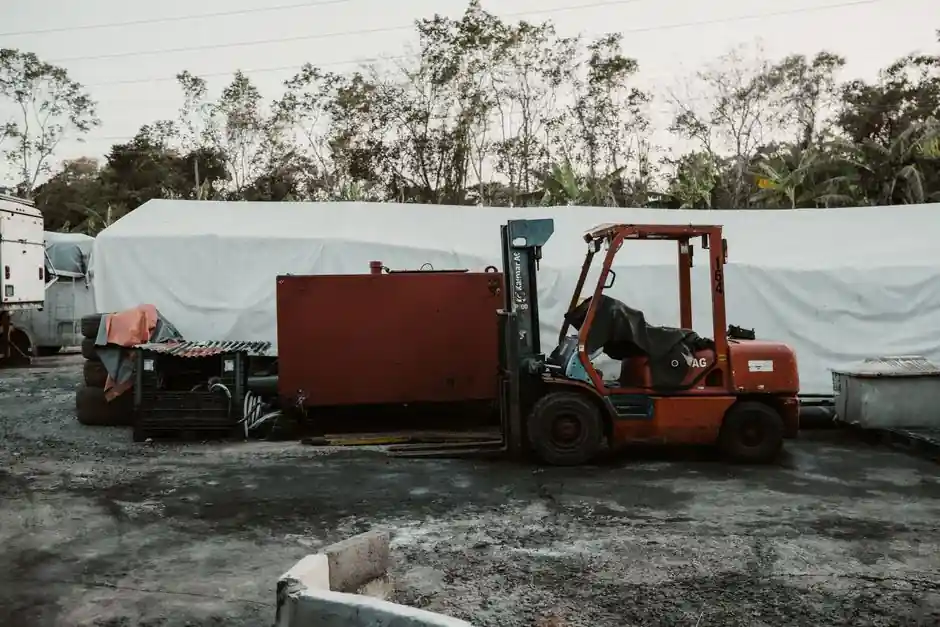
A counterbalance autonomous forklift in 2026 carries an acquisition price of USD 85,000 to 120,000, while a manual counterbalance truck lists at USD 30,000 to 35,000 off the lot, a 2.5x to 3.5x capital gap before integration is counted [S1][S4][S8]. Total cost of ownership on the autonomous side typically runs two to three times the purchase price once LiDAR, safety scanners, WMS integration, and commissioning are added [S4].
For readers new to the equipment class, a forklift is the baseline unit, and the autonomous variant layers navigation, obstacle detection, and fleet software on top of the same lifting chassis. The decision that matters for engineers is not sticker price but cost per pallet moved across the asset's life, which is what flips with shift count, throughput consistency, and damage rate.
Upfront capital: what each class actually costs in 2026
Manual counterbalance forklifts in the U.S. market sit at USD 25,000 to 35,000 new, with the most common on-the-lot figure around USD 30,000 [S1][S8]. Traditional forklifts can run as low as USD 15,000 for lower-tier configurations, and up to USD 50,000 for higher-capacity LPG or diesel units [S6].
Automated equivalents break out by class: basic automated pallet movers at USD 45,000–60,000, automated stackers at USD 60,000–80,000, counterbalanced automated forklifts at USD 85,000–120,000, straddle and reach trucks at USD 80,000–130,000, and very narrow aisle (VNA) autonomous units at USD 150,000–200,000 [S4]. High-end fully autonomous forklifts (LiDAR + vision + WMS-coupled) overlap VNA pricing at USD 150,000–200,000 per unit [S4]. A separate 2026 reference puts the autonomous counterbalance range at USD 75,000 to 80,000 or more for entry-tier systems, with high-end and VNA configurations climbing well above that [S8].
For a rough-terrain site such as a lumber yard or construction material handler, see the rough terrain forklift page; autonomy in that segment is still rare and the cost-per-move math differs sharply from indoor warehouse duty.
Total cost of ownership: where the crossover lives
Sticker price is the visible part. The autonomous case rests on what the asset removes from the operating P&L over a 3–5 year window: wages, overtime, recruitment, repeated certification, and the rack-and-product damage that a tired operator racks up on shift three [S5]. Industry analyses place warehouse automation productivity gains at roughly 30%, with error rate reductions up to 99% when autonomous workflows replace variable manual ones [S2].
Autonomous units run 24/7 across nights and weekends, auto-charge between tasks, and are unaffected by the warehouse labour shortage, which means the cost-per-pallet-move math collapses to amortised capital plus electricity plus a thin slice of remote fleet software [S5]. One market analysis directly states that autonomous forklifts deliver measurable cost-per-pallet-move advantages over manned three-shift operations, because the manned comparison carries three operator salaries, three sets of benefits, and three shift-quality curves against one capital line [S3].
Operators new to the segment should also read the manual pallet jack reference: many autonomous deployments start with a pallet-jack-class AMR and scale up to counterbalance or reach as volumes justify, rather than going straight to a USD 100,000+ stacker.
Throughput, cycle-time consistency, and safety as cost drivers
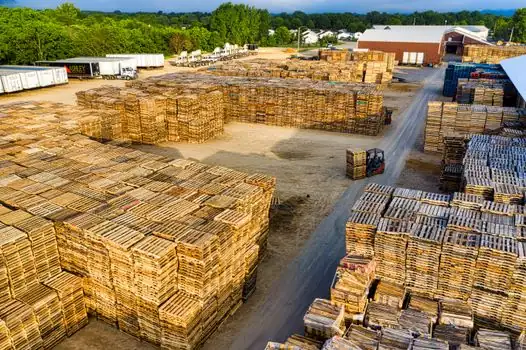
Autonomous cycles are deterministic. A robot moves the thousandth pallet exactly like the first, with cycle-time variance near zero when LIDAR natural-navigation units are placed at ±10 mm accuracy on each load [S5]. Industry references put order cycle-time reductions at up to 34% and inventory accuracy at nearly 97% on autonomous workflows [S2].
Safety drives a real slice of TCO. Manual forklifts contribute to billions in annual U.S. workplace injury costs, per the National Safety Council, and AI-driven collision avoidance plus LiDAR and high-resolution cameras materially reduce accidents in mixed-traffic facilities [S4]. Each avoided rack strike, dropped pallet, or OSHA-recordable event shifts the TCO ledger in the autonomous column. A pallet rack damage event on a typical selective rack costs USD 2,000–8,000 in rack repair and downtime, which compounds quickly on a multi-shift site.
Throughput ceiling matters too. Where manual trucks cap out around 60–80 pallets per hour per operator in a typical shuttle run, autonomous fleets can be stacked: one supervisor oversees a swarm, and the marginal labour cost per additional truck is software licensing, not a new hire and 90-day onboarding.
Decision matrix: manual vs automated by operating profile
The honest answer is a criteria-based split, not a blanket rule. The comparison below lines the two options against the four decision criteria that move the cost-per-pallet-move number most. [S5]
Upfront capital: manual wins, USD 25,000–35,000 vs USD 85,000–120,000 for the same payload class, and integration can double the autonomous figure again [S1][S4][S8].
Cost-per-pallet-move at >2 shifts/day, >500 moves/shift: autonomous wins, because three operator salaries, benefits, and turnover cost outweigh the amortised capital plus software fees [S3][S5].
Cost-per-pallet-move at 1 shift, <300 moves/shift, high variability: manual wins, because the human's flexibility on exception handling and odd-sized loads offsets the labour line [S5].
Throughput consistency: autonomous wins, ±0 cycle-time variance versus drift with operator fatigue and shift length [S2][S5].
Safety record per 100,000 pallet moves: autonomous wins, because obstacle detection, speed zoning, and interlocks remove the distracted/fatigued operator failure mode [S2][S4].
Flexibility for one-off, ad-hoc tasks: manual wins, because a human adapts instantly to a new SKU, a non-standard pallet, or a blocked aisle [S5].
Where manual still wins, and where autonomy fails
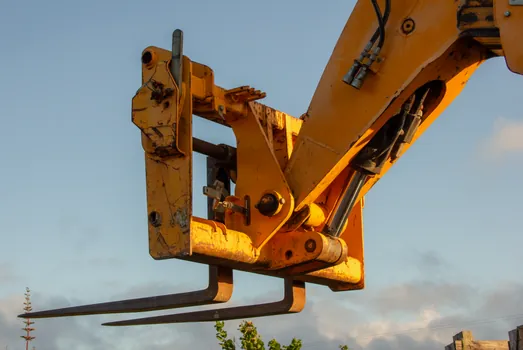
Manual forklifts dominate on low volume, high variability, small footprints, and ad-hoc work, exactly the segment where a USD 30,000 truck with a licensed operator on it is the cheapest pallet-mover available [S5]. They are also simpler to fix: fewer parts, faster repairs, and lower-cost service intervals [S7]. For a small shop running a single shift, the autonomous case does not close on dollars.
Autonomy also has real failure modes. LiDAR struggles in heavy dust, fog, and direct sunlight on outdoor yards; vision systems fail on feature-poor, mirror-like, or highly symmetric aisles; magnetic-tape systems fail when tape is damaged or floor is recoated. The 2026 autonomous forklift market was valued at USD 5.61 billion and is forecast to grow at a 4.60% CAGR to USD 8.79 billion by 2036, a measured pace that reflects these integration realities, not a hype curve [S3]. China leads growth at 6.8% CAGR, followed by India at 6.2%, South Korea at 5.5%, Germany at 4.8%, USA at 4.5%, Japan at 4.0%, and UK at 3.8% [S3].
For higher-rack and VNA work, an AGV robot or autonomous stacker can replace a turret truck in narrow aisles, but the price jumps to USD 150,000–200,000 per unit, which only amortises on very high throughput [S4]. Stacker-class automation in a lower-rise application is covered in the pallet stacker reference.
Sourcing and standards that govern the spec
Autonomous forklift systems that integrate to a WMS or MES are typically programmed against IEC 61131-3 PLC standards, with OPC UA and MQTT as common bridging protocols [S4]. Network upgrades such as Wi-Fi 6 or 5G are common prerequisites for low-latency fleet control in large facilities [S4].
Navigation stack selection matters more than the truck brand. LiDAR navigation dominates the 2026 market because it provides the obstacle detection accuracy and environmental mapping resolution required for safe autonomous operation in dynamic warehouses where workers, manual forklifts, and inventory configurations change continuously [S3]. The 2023 MHI Annual Industry Report remains a cited industry source for warehouse automation productivity benchmarks around 30% [S2].
For a single mixed fleet, the typical pattern in 2026 is: automate the repeatable shuttle runs and high-volume lanes, keep manual trucks for the exception work, and standardise on one autonomy vendor so the WMS integration, safety case, and service contract are not split across stacks.
See also our earlier report, Saddle vs Sunk Key for Light-Duty Friction Drives.