An industrial automation project in 2026 typically breaks down into three spending blocks: hardware (PLCs, robots, sensors, drives, panels), engineering and integration labor, and software plus lifecycle services, with the hardware share alone running roughly $200,000+ for a single automated station and $1.5 million or more for a full turnkey production line [S3][S6].
The split is rarely the 60/30/10 that finance teams expect. Industry sources note that equipment often represents only one portion of total industrial automation price, with engineering design, system integration, software development, installation, commissioning, training, cybersecurity, and after-sales service also contributing to overall project cost [S4].
Hardware Cost: The Visible 25-40% of the Budget
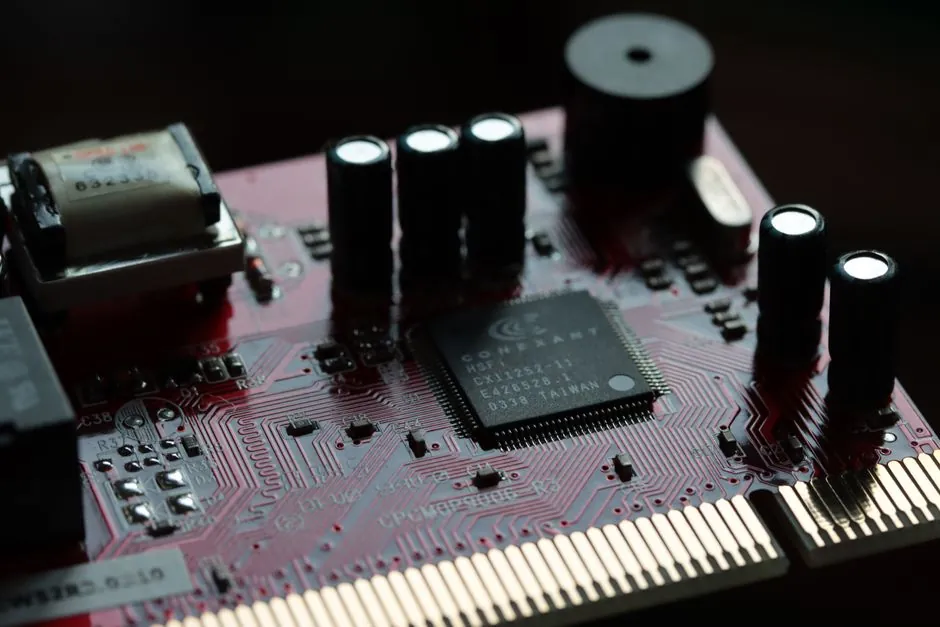
Hardware cost covers PLCs, robot arms or Cartesian axes, servo drives, VFDs, sensors, machine vision, conveyors, safety hardware, and the control cabinet itself; realistic ranges from a 2,500-project dataset put a single-station automated machine at $200,000+, a robotic cell at $350,000-$1 million+, and a multi-station assembly system at $500,000-$1.5 million [S6].
Within that envelope, mechanical structure, actuators, and steel typically drive the largest line items, while controls hardware (PLC, HMI, I/O, network switches) often accounts for only 10-18% of equipment cost; sensors and machine vision add a further 5-12% depending on the number of inspection points and tolerance requirements [S3][S4]. Buyers who compare quotes on robot brand alone routinely miss that one integrator is using harmonic-drive servo gearboxes while another is using planetary units at half the resolution, a difference that shows up in price first and in cycle-time variance later.
Engineering and Integration Labor: The 30-50% Hidden Block
System integration is the largest single hidden factor in industrial automation price, because connecting independent devices into one stable production line requires extensive engineering time; a standalone robotic cell is fundamentally simpler than a synchronized line with upstream feeding, downstream packaging, barcode verification, MES links, and energy monitoring, and each additional interface increases testing effort, fault scenarios, and exception-handling logic [S4].
Engineering effort scales non-linearly with interface count: projects with multi-brand equipment communication, legacy machine retrofits, custom end-of-arm tooling, vision inspection calibration, precision motion synchronization, and digital twin validation can consume 800-2,000 engineering hours before a single part is produced; electrical cabinet build, FAT (factory acceptance test), and SAT (site acceptance test) add another 200-600 hours, and facility upgrades (power, compressed air, foundations) frequently add a further 10-20% to the total [S1][S4]. For teams evaluating the AS/RS vs AMR goods-to-person decision matrix, the same labor-multiplier logic applies, since the WMS/WCS interface and traffic management drive most of the integration cost rather than the vehicles themselves.
Software and Digital Architecture: 15-30% and Growing
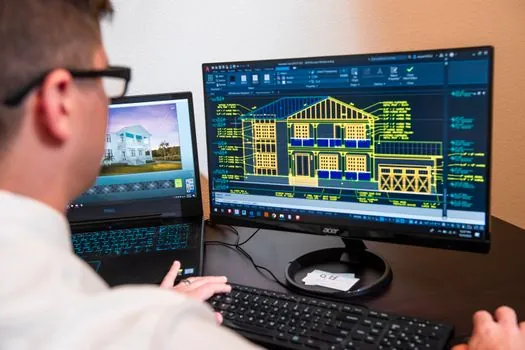
Software now plays a decisive role in industrial automation price, because mechanical systems execute motion while software determines coordination, traceability, visibility, and upgrade potential; basic control logic costs less than modular software designed for expansion, remote diagnostics, predictive maintenance, and data analytics, and in 2026 many projects include edge devices, cloud dashboards, alarm management, recipe control, and cybersecurity hardening [S4].
Typical software cost drivers are PLC and motion programming hours, HMI screen design and user permissions, database and traceability setup, alarm and downtime/OEE reporting, remote access configuration, and the SCADA software layer that ties them together; AI-enhanced inspection systems are an explicit add-on of $50,000-$300,000 on top of the base system, justified only when training datasets can be collected at run-off [S3]. For plants already running an MES or ERP, the historian and OPC-UA bridge layer alone can add 5-10% to the software block, a cost that disappears if the integrator is reusing an existing electrical automation platform with published semantic tags.
Compliance, Safety, and Documentation: The Non-Negotiable Floor
Regulatory compliance and safety systems form a non-negotiable cost floor that scales with the hazard category of the line, not the throughput; common cost blocks in a 2026 budget must include safety systems and compliance validation, factory acceptance and site acceptance testing, operator training, maintenance documentation, and spare parts plus support contracts [S1][S4].
Cost Driver Comparison: What Moves the Price Most
Across the four main cost drivers, hardware has the widest absolute spread but the lowest coefficient of variation project-to-project, engineering hours are the single most variable line item (small line vs full turnkey can vary 5-10x), software scales with interface count and data-architecture ambition, and compliance scales with hazard category and documentation depth; the table below ranks the typical impact of each driver on final price, drawn from project ranges of $200,000 to $1.5 million [S3][S4][S6].
Hardware costs for automation systems typically range from $200,000 for single-station or focused automated machines to $1.5 million or more for multi-station assembly systems [S3]. The dominant takeaway: cutting engineering hours by 10% saves more dollars than cutting hardware by 10%, which is why name-brand controls hardware is often the better bargain even when its sticker price is 20-30% higher [S5].
Total Cost of Ownership Beyond the Sticker
Implementation cost is only one half of the lifecycle equation; recurring costs include routine maintenance, spare parts, software licensing or updates, ongoing operator and technician training, and service agreements for long-term support, and a properly maintained automated system often remains in service for up to 20 years or more, well beyond the common 18-month to three-year ROI target for a first automation project [S5].
Energy consumption is the line item most often omitted from the purchase-order comparison, since servo-driven axes and robot fans run continuously even in light-duty cells; typical industrial robot power draw is 2-8 kW per unit, and a 10-robot cell at $0.10/kWh adds $15,000-$60,000 per year to the operating budget, which materially shifts the engineering plastic vs metal-arm decision for high-mix cells where motion profiles are aggressive. The verifiable next node to track: how your integrator allocates hours between FAT and SAT, because a project that schedules 80% of test hours in-house before shipment consistently commissions 30-50% faster at site than one that defers testing to the customer floor.