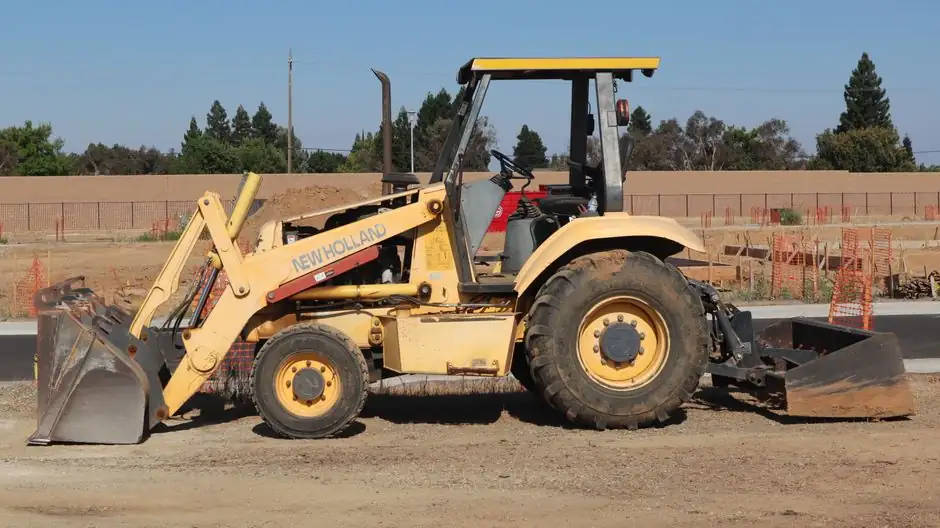
Backhoe loaders for municipal solid-waste (MSW) landfill work are typically specified in the 70-110 hp class, with operating weights of roughly 8,000-11,000 kg (17,500-24,000 lb), dig depths of 5.5-7.3 m (18-24 ft), and 4WD hydrostatic steering for traction over tipping decks and leachate berms [S1][S2].
The two reference data points that matter most for landfill duty are backhoe dig depth (for cell excavation and leachate trench work) and loader lift/breakout figures (for pushing cover material and loading shredded refuse), both of which scale with engine power and operating weight per OEM spec guides [S1][S5].
Why 70-110 hp Is the Landfill Sweet Spot
Backhoe loaders below 70 hp (e.g. Kubota B26TLB at 24.3 hp, 4,001 lb, 8'3" dig depth) are usually matched to landscaping, farming, and small trench work; their 1,300-4,000 lb loader lift and sub-2,500 lbf breakout force are too light for daily cover compaction assist and load-out of mixed MSW [S1].
The 70-110 hp class is where landfill-relevant breakout, lift, and dig-depth figures converge: the JCB 4CX Super at 98 hp delivers 16,387 lbf backhoe bucket breakout, 10,245 lbf stick force, 9,652 lb lift at maximum height, and 241 in (20.1 ft) extended dig depth, with a 20,952 lb operating weight that gives enough ballast for cover-soil push-out [S2]. In the same band, the Bobcat B760 publishes a class-leading 18.4 ft dig depth from a standard extendable arm, 7,985 lb loader lift capacity, and nearly 180 degrees of backhoe working range, which is critical when sorting around cell liners and gas-collection laterals [S5].
Operating Weight, Ground Clearance, and Tire Selection on the Tip Deck
Cat-class backhoe operating weights run approximately 25,000-30,000 lb, with heavier units favoured for traction on waste faces and tipping decks where ground-bearing pressure and landfill gas exposure punish under-ballasted machines [S7].
The JCB 4CX Super publishes a 13.5 in ground clearance, 92 in overall width, and 440/80 R28 tires on all four corners, paired with 4WD and 4-wheel steer for tight cell-to-cell maneuvering where a conventional skid-steer loader would lose tire life to wire and rebar [S2]. Hydrostatic steering with a 4F/4R powershift is the standard driveline in this class, and 4-wheel steer is what differentiates landfill-spec machines from roadbuilding-spec machines of the same hp [S2].
Solid-Waste Variant: What JCB India Publishes for Landfill Fleets
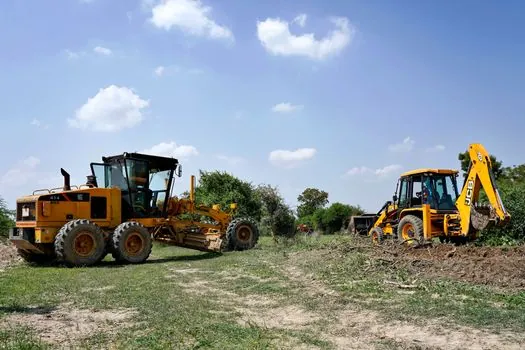
JCB's solid-waste backhoe-loader variant for the Indian market is published with a 1 m³ loader shovel capacity, 55 kW (74 hp) max engine power, 2.93 m (115 in) loader dump height, and 0.3 m³ (10.6 cu ft) backhoe bucket, the lighter of the two data points in this article, but explicitly configured for solid-waste management applications including transfer-station loading and cell-side refuse handling [S3].
For higher-volume transfer stations and regional landfills, fleets typically step up to the 4CX-class machine: 22.0 gal hydraulic tank, 33.4 gal hydraulic system capacity, 42.5 gal fuel tank, 41.0 gal/min pump flow at 3,650 psi main relief, and EROPS as the operator protection class [S2]. Those hydraulic and fuel figures are the realistic baseline for an 8-10 hour shift running a landfill compactor-support cycle.
Selection Criteria: A Side-by-Side Comparison for Landfill Specifiers
Four decision criteria dominate landfill backhoe procurement: dig depth for cell/trench work, loader lift for cover material, breakout force for compacted refuse, and operating weight for ballast on the tip face. A spec-first comparison looks like this: [S2]
JCB 4CX Super (98 hp, 20,952 lb, 241 in extended dig depth, 16,387 lbf backhoe bucket breakout, 9,652 lb lift at max height) sits at the top of the standard-production landfill envelope [S2]. The Bobcat B760 trades absolute lift for reach, with an 18.4 ft (220 in) dig depth, 7,985 lb loader lift, and a tighter footprint that suits transfer stations and small cells [S5]. The JCB India solid-waste variant (55 kW / 74 hp, 1 m³ loader shovel, 0.3 m³ backhoe bucket, 2.93 m dump height) is the lighter end, used where refuse density and cell access are less punishing [S3]. The 40+ hp Kubota/John Deere/JCB 1CXT class (4,001-9,572 lb, 8'3"-10'7" dig depth, 1,300-1,653 lb loader lift) is generally under-spec for landfill duty and is reserved for landscaping, farm, and utility trench work [S1].
Where Backhoes Beat Wheel Loaders (and Where They Don't)
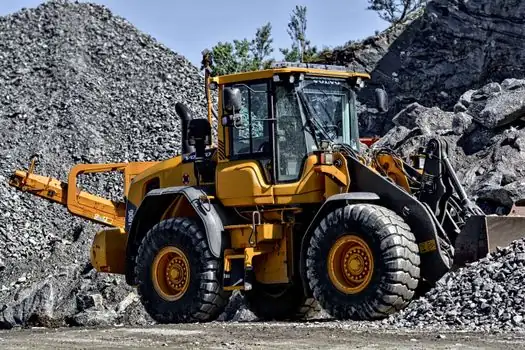
Backhoe loaders are the practical choice on projects that require precise digging, defined excavation depth, and simultaneous loading, the exact three-task profile of a landfill cell (excavate leachate trench, dig gas-well laterals, load cover soil) [S6].
For high-volume, long-haul push work above ~3 m³ per pass, a wheel loader is generally a better tool: cycle times are faster and bucket payloads larger. For trenching, sorting, and any work that needs a rear excavator alongside a front loader on a single chassis, the backhoe loader wins on fleet count, since one operator and one machine replace two dedicated units [S6].
Limitations and Failure Modes in Landfill Service
The three failure drivers specific to landfill backhoes are: (1) hydraulic contamination from dust and abrasive fines, (2) undercarriage/tire wear from wire, glass, and rebar mixed into the working face, and (3) thermal stress on the EROPS HVAC from continuous low-speed loading cycles in summer cell work [S2].
Specifiers should plan a 250-500 hour hydraulic filter service interval (shorter than the OEM default) and budget for solid or foam-filled tires on machines dedicated to the active tipping face. A 3,650 psi main relief pressure and 41.0 gal/min pump flow give plenty of hydraulic headroom for a mulcher or a shearing bucket, but that headroom evaporates fast if suction-side filtration is not landfill-rated [S2]. For crawler crane landfill duty and similar heavy-triage maintenance, the crawler crane maintenance in landfill operations reference is the closest parallel for undercarriage and dust-management discipline.
Trackable next signals: OEM releases of factory landfill-spec variants (armoured hydraulic lines, elevated air intakes, and solid-tire options), and the next revision of MSW fleet procurement guides, which historically track 70-110 hp backhoe penetration in regional transfer-station tenders.