A cold planer that is regularly serviced typically lasts 5 to 10 years on the job, while the milling drum inside it reaches end-of-life around 3,000 working hours, equivalent to roughly 2 years of operation [S2]. Cutting teeth on the drum are consumables, not service items: average replacement cadence sits near 24 working hours or 7,000 to 9,000 m² of milled asphalt, depending on tooth quality and material hardness [S1].
For fleet managers, the practical question is not how long a machine can run, but which sub-assembly is consuming the budget: the chassis, the drum, or the wear metal on the drum. Cold milling, defined by Wirtgen as the controlled removal of asphalt and concrete layers to a specified width and depth, concentrates wear in the drum, tool holders, and teeth, while the engine, hydraulics, and crawler tracks follow a much longer replacement horizon [S3].
Whole-machine lifespan: 5 to 10 years under normal duty
Industry guidance places a well-maintained cold planer at 5 to 10 years of service life, with heavy usage, abrasive surfaces, and deferred maintenance pulling the lower bound down sharply [S2]. The structural frame, diesel engine, four-track crawler undercarriage, and operator cab routinely outlast the first and second drum, which is why OEM programs (Wirtgen's compact, small, and large classes) treat the machine as a platform with multiple drum rebuilds [S3].
Real-world variation is large: a cold planer that runs two seasons on highway rehabilitation can be retired, while a municipal unit on partial-depth patch work often clears 8+ years. The differentiator is operating hours per year, not calendar age, which is the same metric used in adjacent mobile equipment, including the wear groups tracked in skid steer spare parts interchange and service interval work.
Milling drum: 3,000 working hours, then rebuild or swap
The milling drum is the single most expensive wear assembly on a cold planer, and it is also the one with a published service interval. A new drum is rated for approximately 3,000 working hours, after which tool holder bores, base seats, and shaft bearings are typically worn past field-repair tolerance [S2]. Acquisition cost for a replacement drum spans roughly $30,000 to $100,000 USD depending on cutting width, tooth count, and whether it is a standard, fine-milling, or ECO cutter configuration [S2].
Drum failure rarely arrives as a single event. It shows up as uneven milled surface texture, escalating fuel burn per square meter, and tool holder retention loss that damages adjacent bases. Once one base is compromised, weld repair of the drum shell is usually uneconomic, and the unit is swapped for a remanufactured drum rather than a new machine, a decision matrix that mirrors the hydraulic-versus-engine triage used in skid steer failure-mode analysis.
Cutting teeth: 24 work-hours or 7,000 to 9,000 m²
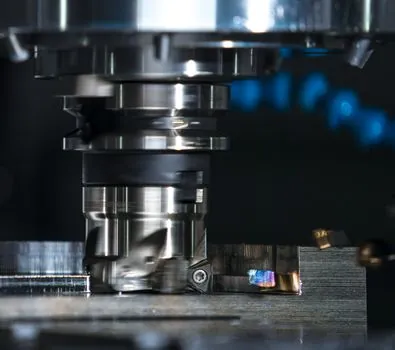
Milling teeth are the consumable layer on the drum, and their replacement cadence drives the bulk of routine maintenance cost. The widely cited benchmark is 24 working hours of drum run time, or 7,000 to 9,000 m² of milled surface, whichever comes first [S1]. Higher-grade carbide tips, correct tip geometry for the milled material (asphalt vs. concrete vs. rock), and proper tool rotation on the holder extend the upper end of that range; inferior steel and mismatched holders shorten it.
Tooth failure cascades: a worn tooth that fails to self-rotate accelerates wear on its holder, which then damages the welded tool base, which finally takes the drum shell with it. Replacing teeth in matched sets, rather than as singles, keeps the drum in balance and is the single highest-ROI maintenance habit for a milling fleet [S1].
Tool holder and base: matched to drum, not to teeth
The tool holder is the bolted interface between tooth and base, and it is designed to be changed without removing the drum from the machine. The base, by contrast, is welded to the drum shell and shares the drum's 3,000-hour life [S1]. A holder that has lost its centralizing lip, or that lets the tooth sit proud of the rotation plane, will shred the base in a single shift; the same failure mode is observed on milling cutters across other industries, where the holder is treated as a planned wear part, not a permanent fitting.
Inspection interval: holders should be checked at every tooth rotation, typically once per shift, and pulled for measurement when the tooth pocket shows elongation. Bases are checked during drum removal, which on a well-run fleet aligns with the 3,000-hour drum swap.
Drum replacement vs. whole-machine replacement: a cost matrix
Decision rule from industry sources: replace the drum, not the machine, unless the chassis, engine, or undercarriage has independently failed [S2]. A new cold planer in the small or compact class is a multi-hundred-thousand-dollar purchase; a remanufactured drum at $30,000 to $100,000 recovers milling performance at a fraction of the capital cost, and the rebuilt drum often comes with a warranty matching a new drum's hour rating.
Replace the whole machine only when two conditions stack: drum wear is at end-of-life, and the chassis has logged enough hours that the next major service (engine overhaul, hydraulic pump replacement, track rebuild) approaches the residual value of the unit. For most contractors, that crossover sits beyond 8,000 chassis hours, well past the second drum change.
Operating standards and OEM documentation that govern the call
Cold milling is classified by Wirtgen into small, compact, and large machine classes, each with different drum widths, engine power, and loading configurations, and the replacement intervals above scale with class [S3]. Fine-milling drums and ECO cutter drums are specified for different surface textures and recovery rates, and the choice of drum affects both productivity per hour and wear-metal consumption per square meter [S3].
For procurement teams, the verifiable next step is to pull the hour-meter log for each machine, the drum-swap history, and the tooth consumption per 1,000 m² milled, and benchmark against the 3,000-hour drum rating and the 7,000 to 9,000 m² tooth benchmark [S1][S2]. Two trackable signals confirm the rebuild-versus-retire decision: a sustained rise in diesel consumption per square meter, and a rise in tooth cost per square meter above the 24-hour/9,000 m² baseline.
For the relevant spec sheets and selection criteria, see cold milling machine, cold chamber machine, and cold box core machine.