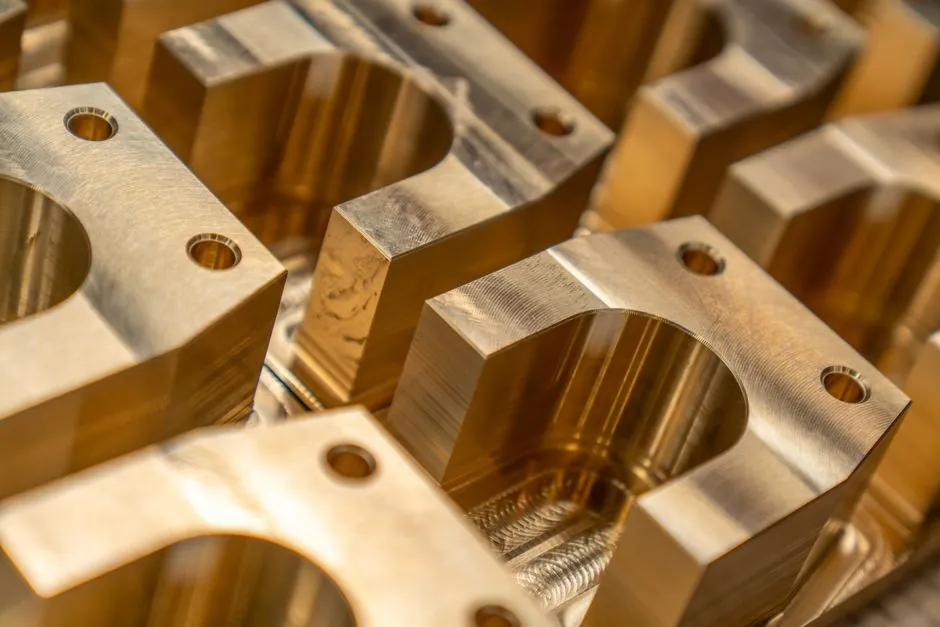
Spare parts and consumables on a cold milling machine split into four wear-driven families: cutting technology (round-shank picks, PCD tools, quick-change toolholder systems), track-unit components (track pads, idlers, rollers, sprockets), conveyor belts (primary and discharge), and maintenance consumables (filter packages, lubricants) [S2]. For a typical Wirtgen-class half-lane or large milling machine, the cutting-tool and track-pad families account for the majority of scheduled spend because they sit in the abrasive wear path between tungsten carbide and reclaimed asphalt pavement (RAP).
Wirtgen's published Parts Guide treats these as separate subassemblies with their own wear models, and the same four-family structure maps cleanly onto the cold milling machine category in the Wirtgen small/large model split, from W 35 / W 50 / W 100F compact units up to W 250i class machines used in full-depth removal [S1][S4]. When the question is "what wears, when, and at what order-of-magnitude cost", the answer is always: picks first, track pads second, conveyor belts third, filters and oils as a fixed hourly overhead.
Cutting tools: GENERATION X² picks, PCD, and HT22 toolholders
Wirtgen's current pick line is the GENERATION X² round-shank pick for cold milling, paired with the HT22 quick-change toolholder system and supplemented by PCD (polycrystalline diamond) milling tools for fine-milling drums [S2]. A standard 22 mm shank round-shank pick is the baseline consumable; PCD tools are specified only on fine-milling drums where surface texture rating, not metal-removal rate, drives the cut. PCD tools typically outlast standard carbide picks by a wide margin on asphalt-only cuts, but are priced accordingly and are not interchangeable with the X² body.
The HT22 system is the modern holder interface across the Wirtgen small and large milling line. Its value is not the holder itself (it is a wear part, but a long-life one) but the change time: a worn pick can be swapped in seconds without removing the holder from the drum. For contractors running multiple shifts, the HT22 interface is what makes pick replacement an in-shift task rather than a drum-pull task. Operators should stock X² picks, HT22 retainer springs, and a small number of complete HT22 holder assemblies as rotating spares; a cold milling machine drum typically carries dozens to low-hundreds of picks depending on drum width and tool spacing, so pick inventory scales with drum, not machine.
Track-unit wear parts: pads, idlers, rollers, sprockets
Track components on a milling machine face a brutal duty cycle: continuous abrasion from milled RAP, high static load from machine mass, and frequent direction reversal. The Parts Guide flags four sub-components: track pads (steel or polyurethane), idler rollers, track rollers, and sprockets [S2]. Polyurethane track pads have become the default on most asphalt milling machines because they resist the cutting-induced abrasion better than bare steel and reduce surface marking on milled pavements; aftermarket lines such as the EV PRO / EV Standard polyurethane track pad families target this exact duty [S3].
Track-pad life is driven more by operator technique and ground conditions than by hours alone: tight-radius turns, frequent tracking on freshly milled surfaces, and operation on contaminated sub-base all accelerate wear. Idlers, rollers, and sprockets are longer-life rotating components, but their seals fail first, and a seal failure on an idler roller will destroy the bearing within a single shift if the machine continues to run. Stocking policy for a fleet operation: 1 full set of track pads per machine per 1,000–2,000 engine hours (varies by surface), 1 set of idler/track rollers per 2,000–4,000 hours, and sprockets inspected at the same interval. [S2][S3]
Conveyor belts: primary and discharge systems
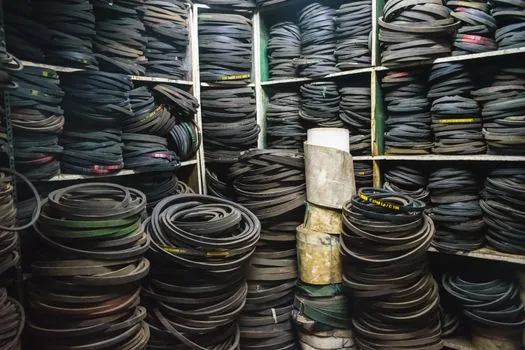
The primary conveyor on a cold milling machine moves cut material from the milling drum housing to the discharge conveyor, which then loads trucks. Both run abrasive, high-tonnage loads, and the Parts Guide gives them their own dedicated section [S2]. Belts are not "consumables" in the pick-replacement sense, but they are a wear part with a measurable life: cuts, gouges, and tracking misalignment are the three failure modes operators see first.
Replacement intervals on a conveyor belt are driven by hours, tonnage milled, and cut material hardness, but a well-maintained primary belt on a half-lane machine typically runs 1,500–3,000 hours before cover wear forces replacement. The more common intervention is repair: mechanical splices, edge repair, and tracking adjustment. Stock the splice kit, edge-repair rubber, and a small roll of cover stock; keep one full replacement belt on the shelf for half-lane units and consider consignment stock from a local belt service for W 2000-class and larger machines where the belt is long enough that downtime cost dwarfs belt cost. [S2]
Maintenance consumables: filters, lubricants, and service packages
Wirtgen sells maintenance parts as filter packages, maintenance packages, and lubricants, which the Parts Guide groups together [S2]. These are the only consumables on a milling machine with a fixed hourly cost, independent of how hard the machine is cutting: engine oil and filter at every service, hydraulic return and pressure filters at defined intervals, and coolant and air-filter changes on a separate schedule.
The practical point for fleet buyers is to standardize on the manufacturer's recommended filter and lubricant grade, then negotiate a single annual maintenance-kit contract rather than ad-hoc ordering. The same logic applies to pick inventory: a contractor running a W 100F or W 150 should carry at least one full pick-and-holder service kit per machine so that a mid-shift pick failure does not become a multi-day downtime event. For context on how picks and drum condition interact over the life of the machine, see drum replacement timing, and for the field-side audit that catches consumable neglect before it becomes a failure, the pre-start inspection checklist is the matching reference. [S2]
Wirtgen model coverage and parts-catalog availability
The Wirtgen cold milling line spans compact machines such as the W 35, W 35DC, W 50, and W 60, through the W 100 / W 100F / W 120F / W 130F / W 150 / W 350 / W 350E / W 500 / W 600 mid-range, and into large half-lane and full-lane units including the W 1000, W 1000F, W 1000L, W 1200F, W 1300F, W 1500, W 1900, W 2000, W 2100, W 2200, and W 2200CR / W 2200SM [S4]. Each model has a published spare-parts catalog with hydraulic and electrical diagrams, and the 2200CR / 2200SM variants are cold-recycling / soil-stabilizing derivatives that share the cutting technology and many track components with the pure milling line [S4].
For older or niche models, third-party catalog aggregators keep service-manual and spare-parts PDFs for the 1000 CBA, 1300 DC, 2000 DC, and 2100 DC as well as the legacy W 35 through W 2200 names, but the genuine parts channel for active production models is the Wirtgen Group Parts website, where the Parts Guide is the structured reference [S2][S4]. When in doubt about a specific part number on a legacy machine, the model code in the format "W [number][suffix]" (for example W 100F, W 2200SM) uniquely identifies the variant and its drum / track / engine configuration, which controls which picks, pads, and filters are correct [S4].
Comparison: where the four families sit on cost, cadence, and consequence
Across the four spare-parts families, the decision criteria are: replacement cadence, unit cost relative to machine hour cost, and consequence of running past wear limit. Cutting tools (X² picks, PCD) replace most often and at lowest unit cost, but running a milling machine with a single missing pick damages the holder and the drum skin within hours, so the consequence is severe; track pads and conveyor belts sit at mid cadence and mid cost, with lower consequence (a worn pad reduces traction; a torn belt stops the machine but does not damage the drum); filters and lubricants replace on the strictest fixed schedule, at low unit cost, and the consequence of skipping them is engine or hydraulic failure, the most expensive failure mode on the list. [S2][S3]
Stocking implication: hold a generous pick and HT22 spring inventory (they are cheap and the wear is high), hold a small track-pad and belt inventory (mid-cost, mid-cadence), and standardize on filter / oil kits bought on annual contract (low unit cost, schedule-driven, no negotiation at the parts counter). For the broader machine-class reference that frames these wear numbers, the construction equipment category entry covers where milling machines sit against pavers and rollers in the road-rehabilitation chain. [S2]
For contractors planning a major overhaul on a half-lane or larger unit, the verifiable next steps are: pull the model-specific spare-parts catalog from the Parts Guide or third-party catalog for the exact "W [number][suffix]" code [S2][S4], request a current Wirtgen pick and HT22 toolholder price-and-availability quote through the Group Parts website, and lock a 12-month filter and lubricant kit contract against the engine and hydraulic service intervals listed in the Cold Milling Manual [S5]. Wirtgen field notes on milling depth control and stabilizer selection are the matching operational reference for the consumables decision above [S7].
Detailed specification references: cold chamber machine.