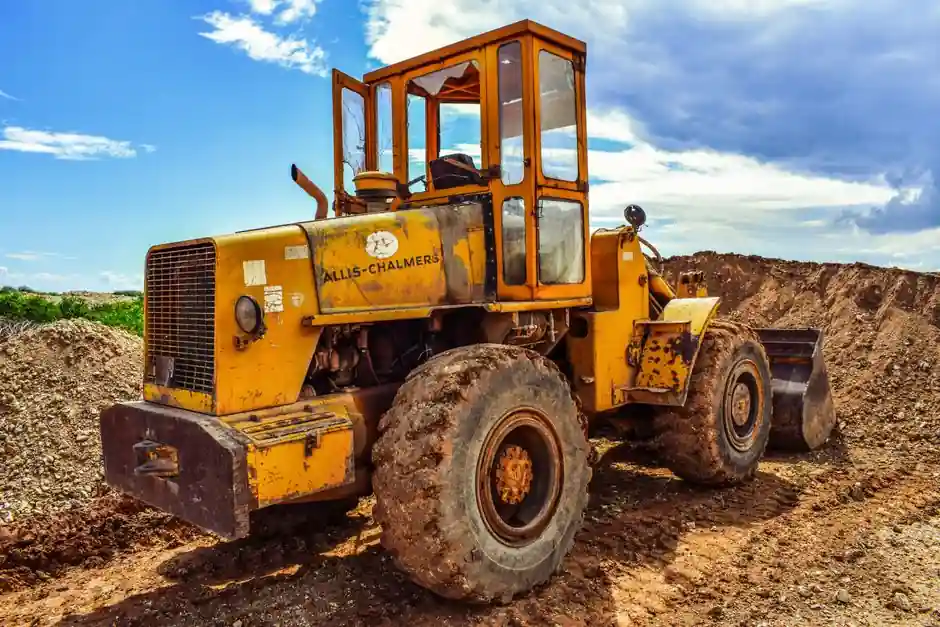
A backhoe loader combines a rear excavator-style boom with a front loader bucket, while a skid steer loader is a compact, skid-steered carrier built around quick-change front attachments, making the two machines functionally overlapping but operationally distinct [S1].
Rated operating capacity for compact skid steers spans roughly 1,600 to 4,000 lb depending on frame size and counterweight, which is the same envelope most rental fleets partition their fleets by [S1]. Backhoes trade that agility for one-machine versatility: digging, trenching, lifting, loading, and roading between job sites on a single chassis [S2].
Steering, Drive Train, and Footprint
Skid steers steer by driving the left and right wheels in opposite directions, which produces a zero-radius turn but a skidding motion that scuffs turf and pavement during direction changes [S4]. Compact track loaders share the same skid-steer control logic but replace wheels with rubber tracks, distributing machine weight over a larger contact patch for better flotation on mud, snow, or loose soil [S4].
Backhoe loaders use conventional steering on a longer wheelbase, so they have a wider turning radius than a skid steer of comparable class but reach road speeds high enough to drive between public-works job sites without a trailer [S2]. Trailerability is part of the same trade-off: a skid steer and a mini excavator can ride on a smaller, lighter trailer than a backhoe loader of similar duty rating, which materially changes mobilization cost [S2].
Digging Reach vs Lift Capacity
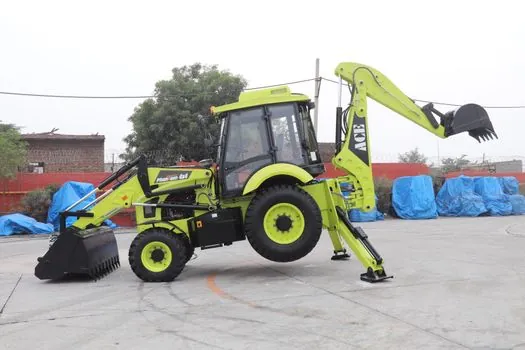
Backhoes carry an excavator-style rear boom that delivers deeper dig depth, greater breakout force, and straighter trench walls than any skid-steer attachment can match in the same footprint [S1]. The front loader on a backhoe also typically lifts more than a comparable-class skid steer bucket, and the boom can be used to load trucks, set pipe, and strap down lumber or palletized material for short moves [S2].
Skid steers have no rear boom, so trenching depends on a backhoe attachment mounted on the front coupler; the geometry is workable for shallow utility work but cannot match a purpose-built backhoe for depth and trench-wall control [S3]. A review of backhoe loader capabilities shows the category is sized around dig depth and loader lift curves, not around attachment count, which is the inverse of the skid steer loader design logic.
Attachment Economics and Job-Site Versatility
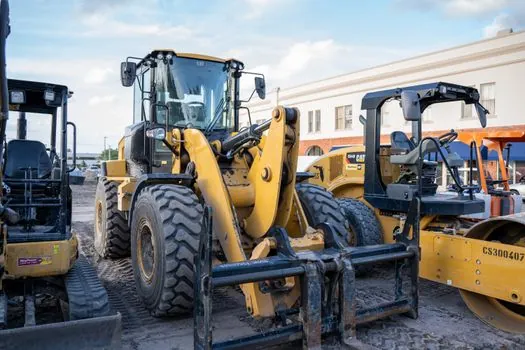
Skid steers accept dozens of quick-change work tools, including standard and toothed buckets, augers, brooms, hammers, trenchers, and snow blowers, which is why fleets partition attachment inventory around a common skid-steer coupler [S1][S4]. A tracked skid steer is the default carrier for soft-ground landscaping, snow removal, and site cleanup, while a wheeled skid steer remains the lower-cost option for paved surfaces and hard-pack yards [S3].
Backhoes accept a narrower attachment set, primarily buckets, hammers, and pallet forks on the rear, with pallet forks and standard buckets on the front loader [S2]. The backhoe's real versatility is internal: it replaces a wheel loader plus a mini excavator on small commercial sites, eliminating one operator, one trailer, and one fuel-burning engine from the fleet [S1].
Operator Skill Curve and Cab Visibility
Operating a skid steer or mini excavator is generally easier for new or inexperienced operators than running a backhoe, because the controls map directly to the work tool without managing a second boom [S2]. Backhoe operation requires coordinating front loader, rear boom, swing, stabilizer, and roading functions simultaneously, which lengthens the training curve even for seasoned equipment operators.
Visibility is the backhoe's quiet advantage: the operator sits higher with a more expansive view of the work area than a skid-steer operator in a low-mounted cab, which matters on congested residential and urban sites [S2]. Skid-steer cabs have improved with side- and rear-view camera packages, but the seated eye height on a backhoe is still a structural plus for spotting crew, utilities, and overhead hazards.
Decision Matrix: Backhoe vs Skid Steer by Site Condition

On flat, open commercial sites with frequent utility trenching, a backhoe covers dig, load, and road between sites on one machine, which is the lowest-friction answer [S2]. On tight residential or urban lots where the machine must enter through a 6 ft gate and work within a few feet of a foundation, a skid steer or compact track loader outmaneuvers any backhoe of similar duty class [S2][S3].
For municipalities running seasonal work, the backhoe doubles as a winter plow, salt loader, and summer ditching machine, which justifies its higher daily rate on a year-round utilization basis [S2]. For landscapers, demolition crews, and snow-removal subcontractors, the skid steer's attachment breadth and compact transport footprint deliver more billable hours per dollar of capital tied up in iron [S1][S3]. A related spec-driven comparison for earthmoving fleet logic shows the same pattern at a larger size class: pick by job-cycle, not by sticker price.
Rental Cost Reference and Total Job Cost
Published daily rental rates in mid-2025 reference data put backhoe loaders near $350 per day, skid steers around $500 per day, and mini excavators in a $300 to $600 band depending on size [S3]. Weekly rates cluster at roughly $1,000 for a backhoe, $1,500 for a skid steer, and $1,200 to $2,500 for a mini excavator [S3].
Total job cost is rarely the daily rate, because mobilization, operator skill, and the number of machines on site dominate the bill. A backhoe plus a single operator can replace a skid steer plus a mini excavator plus two operators on small commercial digs, which is why fleet planners keep both options on the rate sheet rather than standardizing on one [S1][S2].
Failure Modes and Sourcing Constraints
Skid-steer failure modes cluster around tire or track wear, hydraulic coupler leaks, and quick-attach latch failures when operators skip the visual confirmation step. Backhoe failure modes are higher-stakes: hydraulic cylinder seals on the boom, swing motor wear, and stabilizer pad deformation on rocky ground drive most rebuild budgets above 5,000 hours. [S1]
For buyers cross-shopping a related category, a bulldozer vs road roller fleet logic review applies the same hours-vs-utilization lens at a heavier duty class. Two trackable signals: watch how OEM 2026 model-year telematics bundle per-attachment hour metering, and watch whether municipal bids in Q1 2026 split between single-machine backhoe and two-machine skid-steer-plus-excavator configurations.
The underlying component specifications are covered under wheel loader.