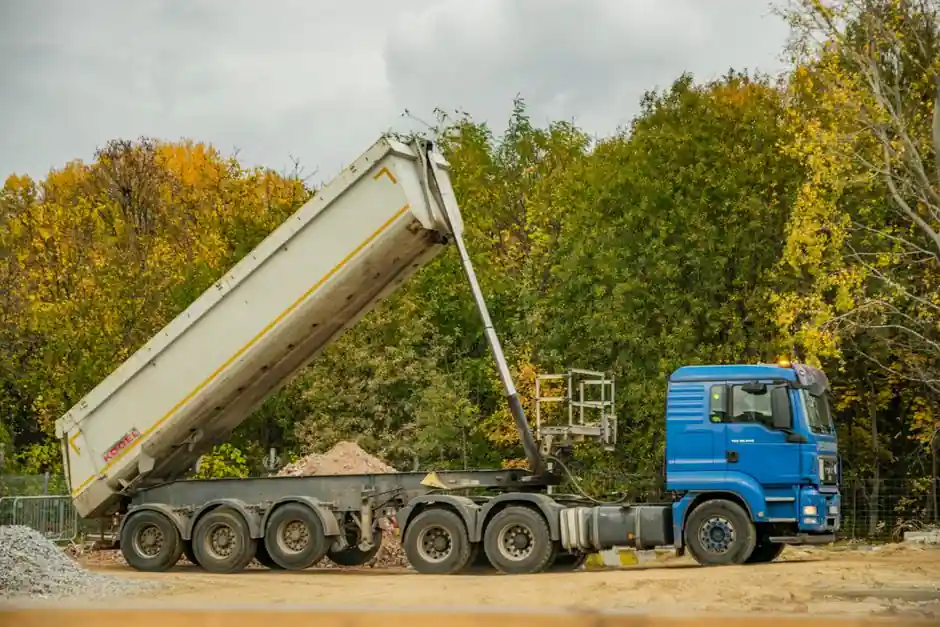
For tunnel drives and underground hard-rock headings, the practical operating envelope is set by drift cross-section and ramp gradient before payload class is even considered, with 5–20 t low-profile trucks the dominant choice for headings below roughly 6 m wide [S1][S2].
The trade is between LHD-style load-haul-dump units, compact rigid underground trucks, and small articulated dumpers, with electric and diesel variants now both available and autonomous/remote-controlled operation common in production headings [S2][S4].
Match Truck Class to Drift Geometry, Not the Other Way Round
Underground hard-rock trucks are engineered as a distinct product line separate from surface rigid haulers, with manufacturers explicitly designing for narrow vein drives, limited ceiling height, and restricted ventilation [S4][S5]. The 5–10 t class is the standard fit for small mines, tunnel drives, and small quarries, the 10–20 t class suits medium mines and general earthwork, and the 20–40 t class is the threshold for large open-pit work rather than typical tunneling [S1]. For a typical 4–6 m wide ramp, compact LHD-style machines navigate sharp bends more efficiently than larger heavy-duty models, which need more spacious headings to keep cycle times inside target [S2]. A useful cross-check is the mining dump truck class envelope, which confirms that ultra-class rigid haulers above 300 t payload are open-pit only and have no place in a tunnel [S5].
Drivetrain and Power: Diesel Versus Electric Underground
Diesel LHDs remain the workhorse for long-distance underground haulage and high-demand cycles because of robust torque and extended range, while electric LHDs reduce diesel particulate load and improve underground air quality, which directly cuts ventilation air-volume requirements on long drives [S2][S4]. Choosing between them is a ventilation-driven decision as much as an emissions decision: a longer tunnel with limited raise-bore ventilation shaft capacity will hit a diesel-fume ceiling well before payload becomes the constraint. For headings where compliance or CSR targets push toward zero diesel, battery-electric underground trucks from the major OEMs are now catalog items rather than prototypes [S2][S4].
Articulated Versus Rigid Frame Inside the Tunnel
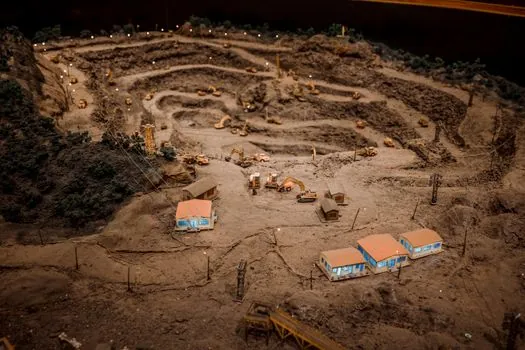
Articulated dump trucks carry a permanent all-wheel-drive drivetrain and a central pivot that lets them traverse soft ground, steep grades, and rough in-development headings, while rigid-frame underground trucks dominate only where the heading is wide enough, the floor is competent, and cycle speed is the priority [S3]. For tunneling specifically, the relevant comparison is articulated low-profile ADTs in the 10–20 t range against compact rigid underground haulers, with ADTs winning most development drives because ramp gradients commonly exceed 1:8 and the heading floor cycles through wet, blasted, and shotcreted states within a shift [S3][S2]. The wider dump truck class map confirms that articulated designs are the only option for soft, steep, or inconsistent ground, which describes most tunnel development faces.
Selection Criteria That Actually Move the Decision
Four variables drive the spec, and each maps to a verifiable design threshold. (1) Drift cross-section: width and height set the maximum machine width, height, and tipping-clearance envelope; trucks that exceed the drift by even 100 mm cannot operate and are dead capital. (2) Gradient: ramp grades above roughly 12% require a drivetrain with sufficient engine torque and a retarder rated for continuous descent to avoid brake thermal runaway. (3) Haul distance: short tramming under 200 m favors compact LHDs, while longer hauls favor a truck with higher travel speed and a larger bin. (4) Ventilation: diesel-powered headings must budget roughly 0.06–0.10 m³/s per kW of installed diesel power for dilution airflow, which forces a hard cap on machine power on long single-heading drives. Truck payload then follows from the bucket match on the loading unit, not from the truck's nameplate alone [S1][S2][S3].
Use Cases and Where the Standard Truck Does Not Fit
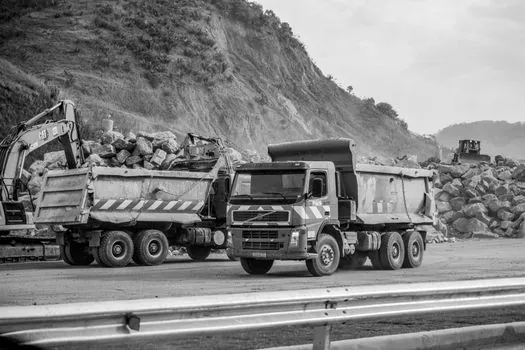
Low-profile articulated trucks in the 10–20 t class are the typical fit for main haulage ramps on rail tunnels, road tunnels, and hydro headrace drives, while 5–10 t compact LHD-style machines handle cross-passages, niche excavations, and pilot tunnels where the heading is below roughly 4.5 m wide [S1][S2]. They are not the right tool for soft-ground EPB or slurry TBM backup decks, where segment carriers, muck cars, and continuous conveyors take the haul, and they are not a substitute for a concrete mixer truck on the invert concrete train. For deeper coverage of class, geometry, and haul-cycle match, the tunnel dump truck selection guide lines the same decision up against cycle-time modelling. Specifications for dynamic ground improvement on the same headings, where dynamic compaction intersects tunneling, are mapped separately in dynamic compactor selection for tunneling.
Limitations and Common Failure Modes
Three failure modes repeat across tunneling fleets: tire damage from rebar and wire-mesh debris on the invert, brake thermal fade on sustained descents without a retarder sized for the gradient, and diesel-fume build-up on long single-heading drives that throttle utilization. Each is a specification miss at procurement, not a maintenance issue: tire spec should be L-5S or thicker for headings with reinforcement, retarder continuous-power rating must exceed the worst-case descent duty cycle, and diesel-power ceiling is set by the ventilation simulation, not by the OEM brochure [S2][S3][S5].
Two trackable signals for the next planning cycle: monitor OEM releases of battery-electric 10–20 t low-profile underground trucks for confirmed cycle-time parity with diesel on a 1 km+ ramp, and confirm the in-tunnel emissions threshold that the next revision of the project's ventilation plan will adopt, because that single number will reset the diesel-versus-electric decision for every heading on the job.