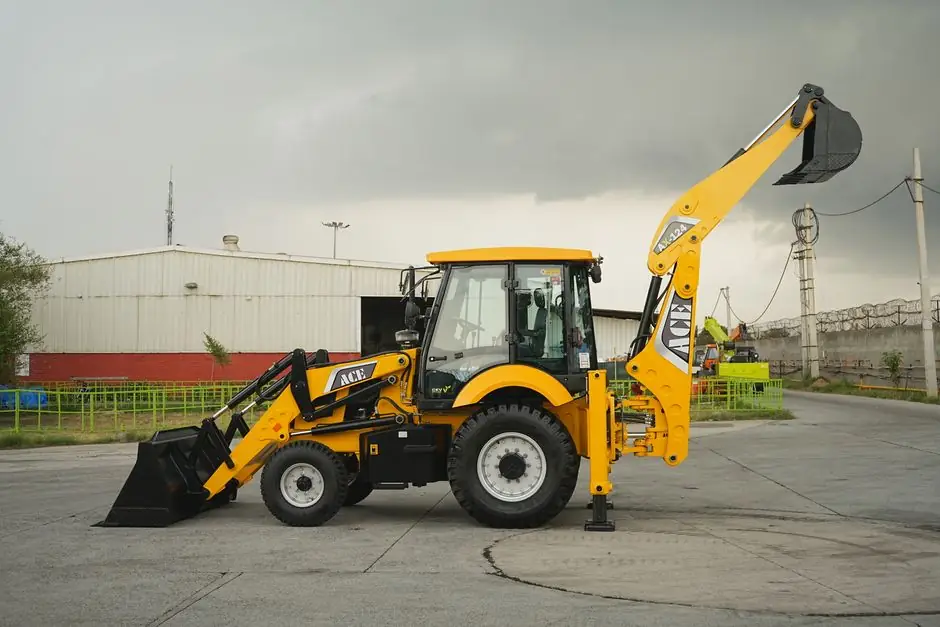
A wheel loader is a four-tire bucket machine built to scoop, carry, and load fragmented material; a road roller is a steel-drum (or pneumatic-tire) compactor that densifies soil, gravel, or asphalt through static weight and vibration, typically in the 1-20 ton operating weight band [S1][S6].
Both machines appear on the same road job, but they are not substitutes: the loader feeds the paver or truck, the roller follows the paver to lock in density. Choosing the wrong one costs either cycle time on the load-and-haul side or long-term pavement failure on the compaction side [S2][S4].
Core Machine Definitions and Operating Weight
A wheel loader uses four rubber tires and a front bucket sized to the machine's operating weight class, with travel speeds high enough to cycle between load and dump points on a paved or hard-packed site [S2]. Load-and-carry is its native mode, and tire wear plus rolling resistance are the dominant operating cost lines.
A road roller is defined by its compaction drum(s): single-drum (drum front, tires rear) for prep work on subgrade and tighter spaces, double-drum (drum front and rear) for finished asphalt passes, plus padfoot and pneumatic-tire variants for cohesive soils and asphalt sealing [S1][S6]. Modern rollers span roughly 1 to 20 metric tons, with heavier machines delivering higher static linear load per pass [S1][S5]. For a deeper reference on the compactor category, see the road roller spec page.
Surface and Ground-Pressure Match
Wheel loaders are specified for paved, compacted, or hard-packed surfaces; they travel faster, burn less fuel per hour, and damage finished asphalt far less than a tracked alternative would [S2][S3]. On soft, muddy, or uneven ground, the same tire machine loses traction, sinks, and burns fuel fighting slip.
Rollers apply ground pressure in the opposite direction: they need to press the surface down. A single-drum roller with the drum on soil generates 30-70 kN of centrifugal force on vibrating models, and heavier 15-20 ton rollers are routinely used for deep lifts of rockfill or clay where a lighter machine would only compact the top 10-20 cm [S1][S4]. Padfoot sheepsfoot drums are specified for cohesive soils; smooth double-drums are the asphalt finish choice.
Productivity: Cycle Time vs Pass Count
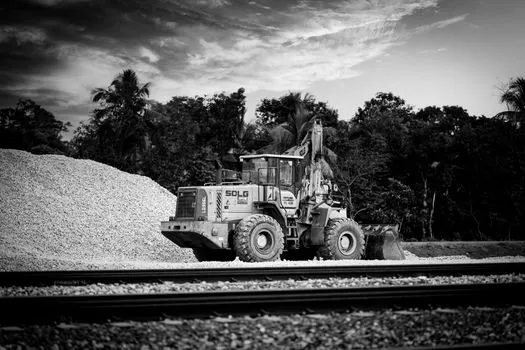
Loader productivity is bucket volume times cycle time, with wheel machines typically hitting 25-40 m/min travel speeds versus 6-10 m/min for tracked loaders on the same site, so on a hard-surface yard the wheel loader will move 2-3x more tons per shift-hour [S2][S3].
Roller productivity is pass count times width, typically 1.4-2.1 m drum width for ride-on tandem rollers, with 3-6 coverages required to reach spec density on a 100-200 mm asphalt lift. Production rate drops fast if amplitude or frequency is mis-set for the layer thickness; under-compaction shows up as rutting and fatigue cracking months later, not on the day of placement [S4][S5].
Decision Matrix: Loader or Roller for the Task
Use this four-criterion match when sizing a road-build fleet: (1) Task - loading/hauling aggregate or compacting subgrade and asphalt; (2) Surface - hard-packed/asphalt favors wheel loader, loose soil/clay favors padfoot roller; (3) Weight class - 1-20 ton rollers for most road work, while wheel loaders scale 1-7 ton compact class up to 30+ ton mining class; (4) Pass count vs cycle - rollers win on density per pass, loaders win on tons moved per hour [S1][S2][S3][S4].
Concretely, on a 5 km two-lane asphalt job the standard pair is a 3-5 ton wheel loader feeding the paver and a 12-14 ton tandem vibratory roller for the wearing course, with a 18-20 ton single-drum padfoot on the subgrade before paving starts [S1][S5]. If the haul distance is over 200 m on finished surface, the loader hands off to a truck; a mining dump truck is the usual next link in that chain.
Who Each Machine Is For (and Who It Is Not For)
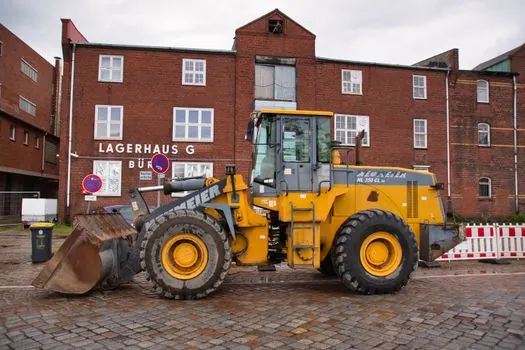
Buy or rent a wheel loader when the dominant work is truck loading, stockpile build, or snow removal on a paved or hard yard, and the operator will cycle more than 200 m per load. Do not specify a wheel loader as the primary compactor: it will not reach spec density, and warranty claims on the bucket pins will follow within a shift. [S2]
Buy or rent a road roller when the spec calls out a target density (often 95-98% of modified Proctor on subgrade, or a Marshall target on asphalt) and the lift thickness is documented. Do not use a smooth double-drum roller on cohesive clay; the drum will bridge and the top 50 mm will over-densify while the core stays loose [S4][S5]. For a broader view of how rollers fit with other compaction options, the dynamic compactor selection guide covers heavier impact-class machines.
Fuel, Maintenance, and Total Cost Signals
Wheel loaders carry a tire and brake wear cost that rollers largely do not, but they avoid the undercarriage cost that track loaders and bulldozers carry: a 3-5 ton class wheel loader averages 8-12 L/hr diesel in load-and-carry, while a 12-ton vibratory roller averages 6-9 L/hr in rolling mode [S2][S3][S5].
Roller maintenance is dominated by drum bearings, vibration bearings, and water-system nozzles on asphalt models, with water-system failure the single most common cause of pickup (asphalt sticking to the drum) and surface tearing. Wheel loader downtime is dominated by tire cuts and bucket-edge wear on abrasive aggregate. A fleet manager who treats both as one cost center typically under-specs the roller; the right move is a separate PM schedule for the compaction drum, not a shared one with the loader [S1][S4].
Common Spec Pitfalls on Road-Build RFQs
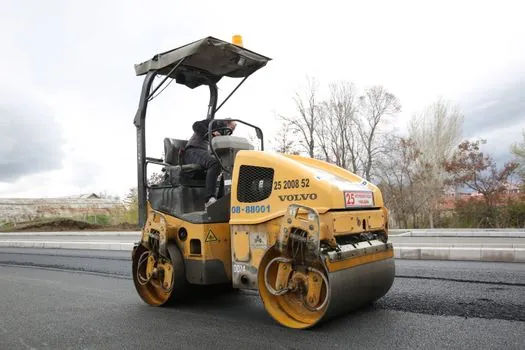
Three errors repeat on tender documents: (1) calling for a 'compaction loader' or a 'loading roller' as a single line item, which forces the vendor to pick one role and the buyer to rent the other; (2) omitting lift thickness and target density, leaving amplitude and frequency up to the operator; (3) under-weighting the roller, with a 6-8 ton tandem specified on a 150 mm asphalt lift that really needs 12-14 ton to reach density in 4-6 passes [S4][S5].
On the loader side, the parallel error is over-specifying bucket size to chase cycle-time numbers without checking static tipping load at full turn; an overloaded 3 ton class loader at full articulation is the most common cause of loader rollovers on yard work [S2]. For a side-by-side look at the loader family options, the wheel loader and skid steer loader spec pages cover the lighter end of the bucket-equipped range.
Sourcing Notes and Trackable Signals
Standard nomenclature follows ISO 6165 for the compactor family and ISO 7130 for loader terminology, with operating-weight class usually quoted per the manufacturer's own datasheet rather than a third-party test. For an asphalt wearing course, spec the tandem roller by drum width, vibration frequency (typically 30-50 Hz), and nominal amplitude (0.3-0.8 mm) rather than by operating weight alone; these three numbers actually predict pass count. [S1]
Trackable signals for the next planning cycle: lift thickness in the pavement design (drives roller class), haul distance on finished surface (drives loader vs truck-truck handing off), and target density expressed as a percentage of Proctor or Marshall (drives pass count). The backhoe loader reference page covers the hybrid that some smaller road-build sites use in place of a dedicated wheel loader where trenching and loading both show up on the same BOQ.